













































"I didn’t know what to expect or how to process it."
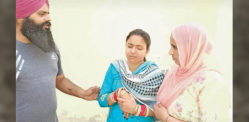
Narinder Kaur made history in 2001 when she entered the Big Brother house as the first Asian person on UK reality TV.
Her presence was groundbreaking, but it also sparked controversy and harsh public judgment.
In the years that followed, she endured tabloid smears, cultural backlash, and relentless criticism, all for simply being herself.
Now, 25 years after Big Brother first aired, Narinder is taking control of the narrative.
In her new book Big Brother: The Inside Story, she shares her own experiences and includes more than 30 raw, revealing interviews with housemates across the Channel 4, Channel 5, and ITV eras.
It’s a blisteringly honest account that doesn’t just revisit the iconic TV moments but lifts the lid on what really happened behind the scenes – mental health crises, production manipulation, and a lack of duty of care.
With total creative control, Narinder challenges the gatekeeping that has defined the publishing world and the media industry’s treatment of Asian voices.
In an exclusive interview with DESIblitz, Narinder shared her writing process and revealed some of the show’s behind-the-scenes secrets and scandals.
Big Brother Experience

Reflecting on her Big Brother debut, Narinder admits the experience was polarising.
“It was completely polarising and at the time, I didn’t know what to expect or how to process it.”
Narinder was on the second series in 2001, before the explosion of reality TV, as she said:
“It all felt quite new and even a bit quaint looking back. I was considered shocking.”
However, in the Indian community, there were cultural expectations placed on her.
Narinder said: “I think there was this expectation that I’d be this ‘good Indian girl’, a ‘good representative’.
“But I wasn’t trying to be a good or bad representative. I just wanted to be myself.
“I wore a bikini, I drank alcohol, I swore, I behaved like any young woman in her twenties.
“For me, I’d already done everything I was ‘supposed’ to do.
“I went to uni, got a law degree, got married, had a good job. But even when I ticked all the boxes, it was still never enough.
“So going on Big Brother was my way of saying: I’m going to live my life, for me.”
However, her TV appearance led to brutal backlash.
Narinder revealed:
“I was even banned from praying at my local Gurdwara because they said I’d brought shame on the community.”
“It was relentless. And honestly, I wasn’t remotely prepared for what came next.”
Years later, Narinder feels both sadness and pride:
“Part of me feels sadness for that version of me, because she went through a lot. But I’m also really proud of her.”
Today, she regularly receives messages from younger South Asian women thanking her.
Writing Big Brother: The Inside Story
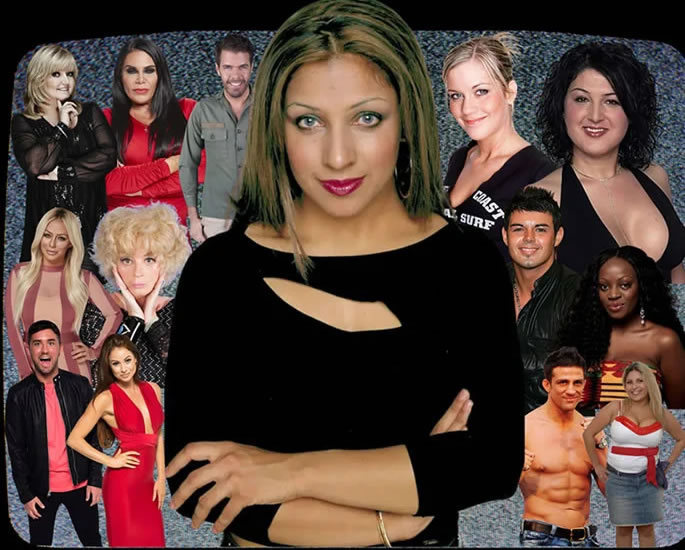
Narinder Kaur first wrote Big Brother: The Inside Story in 2007, prompted by the Shilpa Shetty racism scandal. It was published by Penguin but “went largely under the radar”.
Things changed when she got a new agent.
Narinder said: “He was looking over all my previous work and encouraged me to revisit it.”
He helped her regain publishing rights from Penguin, which was no easy feat, and she reworked the book from scratch.
“As the 25th anniversary of Big Brother approached, I realised I was still hearing incredible behind-the-scenes stories.”
That’s when she decided to open the book up and invite others in.
And this time, Narinder chose to self-publish.
But even the updated version faced rejection, which Narinder believed was part of an industry-wide problem:
“There’s still this attitude, especially with Asian talent, where publishers say they’re ‘taking a chance on us’.”
She referenced Nadiya Hussain’s fight to write about her own faith and the resistance faced.
“We shouldn’t have to justify telling our stories or be made to feel our community isn’t big enough or good enough to sell to. The default is the ‘mainstream’.”
She also criticised how much authors are financially exploited:
“Writers get absolutely fleeced. It’s worse than record labels in some cases!”
Self-publishing meant she owned the rights, retained the IP, and could build something to pass on to her children.
Telling Stories

Some of the interviews in the new book came from Narinder’s original research.
“Back then, I spent about six months travelling all over the UK, while I was having my first child, interviewing former housemates and people who worked on the show.”
Her husband helped transcribe hours of audio, which Narinder called a “real labour of love”.
Explaining why she rejected using a ghostwriter, Narinder said:
“I wanted the industry to see I could do it myself… and I felt the housemates would open up more if it was me asking the questions.”
For the new edition, she started fresh. Some housemates were already contacts. Others, like the late Linda Nolan, were connected through her agent.
“Some had great experiences. Others had incredibly difficult ones. But that was the point, to show the full spectrum.”
On why they trusted her, Narinder said:
“I knew what it was like to be under that microscope and to deal with the aftermath.
“People know I speak my mind… but it comes from a place of truth.”
Big Brother Shocks & Scandals

Narinder Kaur revealed that the most disturbing revelations came from housemates’ mental health struggles:
“There were housemates who’d felt suicidal and some who even attempted to take their own lives.
“But back then, there was absolutely no sympathy.”
“If we spoke up about what we went through, it was seen as complaining or being ungrateful. I remember being called ‘uppity’ for even raising it.”
The industry has only recently shifted, as Narinder said:
“It’s only really in the last 7 or 8 years, sadly after the deaths of Sophie Gradon and Mike Thalassitis from Love Island, that society began seriously talking about duty of care.”
Despite the shocking stories, Narinder revealed that some were too extreme to publish:
“For every shocking story we managed to include in the book, there’s an even more shocking one we couldn’t publish.
“Maybe they’ll go in the 50th anniversary edition!”
A Candid Take on Life after Big Brother
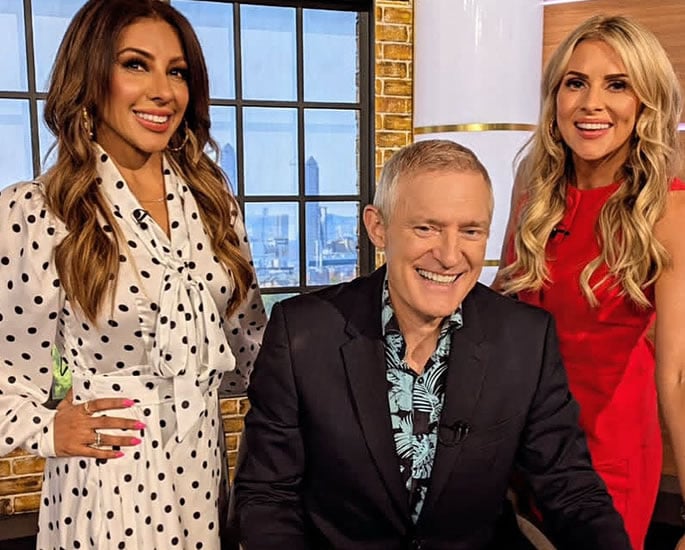
Narinder Kaur’s most memorable moment in the Big Brother house was her friendship with Brian Dowling, whom she called her “rock”.
They were close for 17 years but she admitted:
“Sadly, we’re no longer friends, but I’ll always cherish those times.
“We travelled the world together. I was a bridesmaid at his wedding; he was there at the births of my children.”
After Big Brother, Narinder had some “incredible and frankly bizarre” experiences, which included hosting a radio show and fronting a dating show.
Narinder even auditioned for the West End production of Bombay Dreams.
Although that was the enjoyable side, there was a brutal side where the tabloid media was especially ruthless to her.
Narinder recalled: “One example that’s always stayed with me is a completely fabricated story the News of the World ran, accusing me of cheating on my husband.
“Rav Singh, who was showbiz editor at the time, paid £10,000 to an Indian man to falsely claim I had sex with him in a lift.”
“He had the man wear a turban and chose someone with a beard, which was shaved off after the story ran, so he wouldn’t be recognised in the community.
“It was a targeted hit, weaponising cultural stigma in the most cynical way.
“My mum was getting calls from extended relatives, sat around the kitchen table with the newspaper laid out in front of them, asking, ‘What are we going to do about her?’”
She eventually received an apology, “buried on page 37”.
In another case, a columnist in The Mirror used her column to “wish death on” Narinder.
She said: “Her ‘wish for the year ahead’ was for me to be killed in a car crash.”
Looking back, Narinder added: “It’s strange now, because people know I was on Big Brother, but many have forgotten what I was actually like in the house.
“I think going into social commentary and being on shows like Jeremy Vine, Good Morning Britain, has shown a different side of me.
“And there’s now a whole generation who don’t even associate me with Big Brother at all. Which is kind of freeing in a way.”
Big Brother’s Evolving Legacy
Narinder Kaur believes Big Brother reshaped the TV landscape:
“It made reality TV mainstream and laid the blueprint for what came after.
“Today, people go on reality shows with management lined up… hoping for brand deals.”
The media landscape was brutal.
“If newspapers weren’t phone hacking, they were doorstepping your relatives, or making up completely false stories.”
She recalled magazine covers with “circles of shame”, pointing out cellulite, VPLs, bad botox and facial fillers, but not aimed at her.
Today’s stars have more power:
“Social media gives you your own platform… You can reclaim your own narrative in real time.”
Still, Big Brother‘s cultural influence remains.
Narinder said: “It held a mirror up to society. Sometimes flattering, sometimes brutal, but it always reflects where we are.”
How Big Brother continues to Divide Opinion

Since first airing, Big Brother has divided opinion but according to Narinder Kaur, the show “always reflects where we are”.
She explained: We’ve seen real progress on some issues, but also steps backwards.
“Take the conversation around transgender people, for example. When Nadia Almada won Big Brother, it was because the public truly connected with her and loved her. Her win was a huge moment.
“But fast-forward to today and the inclusion of a trans contestant on any show is often labelled ‘political’ or dismissed as ‘tick boxing wokery’.
“The discourse has shifted in a way that feels a lot more hostile and sinister than it was 20 years ago.”
Narinder admitted that if Nadia’s story was handled the same way today, there would be huge backlash and she would be “accused of being deceitful or ‘hiding something’, which is a sad reflection of where we are”.
There is also more of a generational split today.
Narinder explained: “Younger viewers might be discovering Big Brother for the first time and finding it fresh and exciting, especially compared to more filtered formats like Love Island, where everyone fits a certain mould, especially physically.
“Big Brother still offers a mix of people and personalities you don’t see elsewhere.”
“The biggest shift has been in how we watch and talk about it. We’re not all glued to the TV at the same time anymore.
“People stream it, catch up on demand, and the conversations happen on social media, not around the office watercooler. But the cultural impact is still there, it just looks different now.”
Big Brother: The Inside Story is a powerful act of reclamation.
By weaving together more than 30 housemate testimonies, Narinder Kaur offers a rare and unfiltered view of the show’s legacy, from the raw excitement of the early days to the darker undercurrents of exploitation and neglect.
Her book stands as the most comprehensive insider account of Big Brother ever written.
But it’s also deeply personal.
For Narinder, this project was about reclaiming her voice after years of being misrepresented and maligned.
She was vilified for being bold, outspoken, and unapologetically herself, traits that were ahead of their time, especially for a South Asian woman on national TV.
Now, decades later, she’s finally telling the full story. Not just of the show, but of survival, resilience, and cultural change.
In doing so, she reminds us that Big Brother didn’t just shape TV; it shaped lives. Hers most of all.