
















































"First pregnancy, I did it, and I suffered."
Desi women becoming pregnant is often celebrated as a significant life milestone, filled with joy and anticipation.
Socio-culturally, being pregnant and a parent is assumed to be something all Desi women will want to experience if they can.
For South Asian women, pregnancy can be fraught with challenges.
Desi communities originating from India, Pakistan, and Bangladesh have rich cultural traditions and a powerful emphasis on family. These elements can significantly influence a woman’s pregnancy experience, often creating a complex interplay of expectations and realities.
As Desi women navigate the journey of pregnancy, they can encounter pressures and expectations around, for example, their behaviours, dietary choices, and roles within their families.
Moreover, women may encounter difficulties in accessing healthcare and addressing mental health concerns.
The challenges when pregnant can be profound and leave a lasting impact on women, couples and families. Yet, there can be a taboo around discussing the challenges faced.
DESIblitz explores some of the challenges Desi women can face when pregnant.
The Challenge of Intimacy with Partner

Pregnancy can transform intimacy in a relationship, often creating emotional and physical challenges. For Desi women, cultural and family norms and expectations can add complexity.
Hormonal shifts, fatigue, and body changes may affect a woman’s desire for intimacy.
Moreover, cultural taboos around discussing physical or emotional intimacy can hinder open communication between spouses. Thus leading to tension or isolation.
Thirty-year-old British Bengali Saba* reflected on her first pregnancy:
“A few times, my hormones were super low, think third trimester especially, and I wasn’t interested in bedroom play.
“But that wasn’t the case throughout me being pregnant; there were times I really was… well aroused.”
“My mother-in-law told me privately after we announced the pregnancy that I had to be super careful to protect the baby. Indirectly hinting no bedroom play.”
Indian gynaecologist and obstetrician Dr Padmini Prasad stated:
“Women don’t have to worry about harming their baby. The amniotic fluid and strong muscles of the uterus easily protect the baby during intercourse.”
Provided the pregnancy is low-risk and without complications, engaging in sexual activity is generally safe.
Saba continued: “Malik* [husband] was understanding, but it was also hard, and I wanted to know what was fact and fiction.
“I googled, then spoke to my husband and went to the doctor. I realised that a lot of it was cultural, not medical.
“There were times, weeks and months when Malik wanted to have bedroom play, and I just wasn’t in the mood.
“Mood was killed by my swollen feet, aching back, extra sensitive breasts and tiredness.
“Once we had an honest talk, he got it; he was understanding. But I have friends where their husbands were tools.”
Access to Culturally Competent Healthcare when Pregnant

Healthcare disparities significantly affect Desi women during pregnancy, particularly in Western countries.
Desi women can report challenges finding providers who respect their cultural preferences and understand cultural nuances.
In Britain, the NHS’s work on improving maternal outcomes for Desi women highlights significant disparities in care and outcomes.
Reports like the “Safer Maternity Care Progress Report” reveal that Brit-Asian women experience worse outcomes in maternal health. This includes a higher risk of maternal mortality compared to White women.
These challenges stem from systemic issues, including barriers to accessing culturally sensitive care and delays in recognising critical conditions like preeclampsia and gestational diabetes.
Another challenge women can face in accessing healthcare while pregnant can stem from language barriers, especially for women who have migrated to another country.
Steps are being taken in some places to overcome such barriers and support Desi women.
For example, in 2023, the Leicestershire Local Hospital Trust and the University of Leicester formulated a new pregnancy app for South Asian women.
The free Janam app provides women with information about their pregnancy in six languages. The app enables patients to make informed decisions throughout pregnancy, birth, and postnatal care.
It is crucial for culturally competent healthcare services to be provided to Desi women to ensure they receive the care and support they deserve during pregnancy.
Dealing with Stereotyping and Discrimination in Healthcare

For some Desi women, issues of stereotyping and racism can bring challenges and impact how they feel about engaging with healthcare services.
Thirty-five-year-old American Indian Sara revealed: “Generally everything was fine, but one time there was a White nurse who made assumptions.
“I wear traditional clothes a lot. Before I opened my mouth, she thought English wasn’t my first language and that I didn’t know the right way to do things when pregnant.
“Forced myself to be very calm and not verbally rip into her.
“Never thought I’d experience that. Even after she realised I was American-born and not dumb, she looked down on me.
“I didn’t see her again after that, but it stained my memory. I was cautious, waiting for another one to do it. It took me a while to relax and not expect it to happen again.
“I wish I hadn’t let it slide and made a complaint.”
In turn, British Bengali Neelam’s* interactions with healthcare providers throughout her pregnancy and childbirth have resulted in a profound distrust and aversion to the system:
“The audacity was amazing; they truly thought I would stay quiet.
“Because I wasn’t White, they thought I should just shut up and do as I was told, but I refused to.”
“I challenged and asked questions. I knew my body and the baby inside me and what was happening.
“They claim they take your ethnicity into account in terms of how it’s going to affect your pregnancy, but they have no idea. They don’t know cultural nuances.
“One of the specialists kept on trying to find out if me and my husband are cousins and related.
“The fact she kept prompting me was disgusting. I angrily told her we’re not and broke it down for her. Then she shut up.
“Another incident was where one of the nurses thought I was Pakistani, and she made assumptions about what I’d want.
“It was very hard to get her to understand that we didn’t have those traditions; as a Bengali, it doesn’t happen in my culture.
“They can position all Asians as the same, with no awareness of differences and nuances.”
Neelam’s interactions with healthcare providers during her pregnancy were adversely impacted by cultural and racial stereotypes and assumptions held by some professionals.
Working and Family Expectations

Pregnant South Asian women can be expected to carry on as usual with all professional and family responsibilities, particularly in more traditional households.
These expectations can lead to stress and physical and emotional fatigue.
Alina*, a 58-year-old British Pakistani, disclosed: “During my time with my family and in-laws, you worked and worked all the way through.
“My mother-in-law would moan if I sat too long or said, ‘I need a break’. It is not like that for all, but it was and still is the way for some in our family.
“First pregnancy, I did it, and I suffered. Suffering was quiet, but I suffered. Even when I was as round as a whale, I did all the housework and helped at the shop.
“Second pregnancy, I put my foot down, saw it was different with other families. My sister’s mother-in-law was great with her throughout her pregnancy.
“I didn’t do that with either of my daughters-in-law; their mothers would have killed me if I tried.
“We pampered them and helped. That’s the beauty of good South Asian families; there is plenty of help on hand throughout pregnancy and after.
“One sister-in-law thinks the complete opposite, led to arguments with her son and daughter-in-law. They eventually moved out.”
In contrast, Nasima, a 26-year-old Canadian of Indian Gujarati descent, told DESIblitz:
“I had to persuade my family and husband that I was fine to work. My job made me smile, and I didn’t just want to be home.
“Yes, we could afford it, but I didn’t see the need to stop working until I wanted to nest, and it was time.
“I was healthy, and the doctor said no issue. My family made sure I didn’t stress about home, cleaning and cooking during the pregnancy.”
Dealing with Expectations and Mental Health
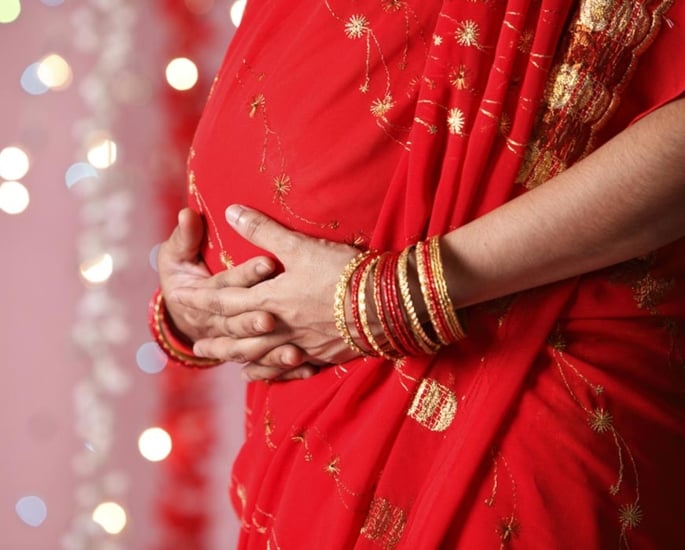
Pregnant Desi women can also face the challenges of dealing with family expectations and attitudes.
Saba asserted: “I loved my family’s help; it made the experience better. But there were times early on when I had to say, ‘I want to do this my way’.
“I valued their advice, but there was a slight expectation from female relatives. Some thought I’d take all their advice and expectations as gospel and just do.”
Historically, the gender of a baby has been a significant concern in Desi communities, with boys preferred. While this preference has “diluted”, some Desi women have the challenge of dealing with such attitudes while pregnant.
Herleen Kaur Arora is the Co-Founder and Managing Director of the South Asian & Tamil Women’s Collective in Canada. In 2022, on X, she wrote:
I am pregnant and having another baby girl – and my family responds with congratulations but if you were having a boy you would have a complete family.
The ignorance, expectations on women’s bodies, & son preference needs to stop in the south asian community.
Filled with rage
— Herleen Kaur Arora (@HerleenArora) May 19, 2022
Thirty-eight-year-old British Kashmiri Halima* said:
“I always just wanted a healthy baby, but my grandmother kept doing duas [prays] that it would be a boy. She knew three was the number we were stopping at.
“I had two girls already, so I tried to zone her out, but it was annoying. Everyone said, ‘Just ignore’, but I couldn’t.
“But when I spoke to her, it went in one ear and out the other, so I started to avoid her.
“It was causing me more stress and anger, and me and the baby didn’t need it.”
“Being pregnant can be an amazing time, but each pregnancy is different, and with the last, I did struggle with my mental health.
“My grandmother wasn’t helping the situation.
“It wasn’t until my husband spoke to me that I acknowledged out loud my anxiety and stress.”
Desi women may not only deal with the physical challenges of pregnancy but also with emotional and mental health issues that are not often addressed in their communities.
The stigma around mental health and the idea that pregnancy should be a joyous experience can lead to a lack of support for women struggling with anxiety, depression, or other mental health conditions.
Pregnancy for Desi women is often celebrated but also comes with unique challenges. Socio-cultural expectations, healthcare disparities, and mental health issues can profoundly affect their experiences.
While rich traditions can offer support, they can also lead to tensions, making it vital for families and communities to foster understanding and adaptability.
Addressing these challenges requires culturally competent healthcare, supportive families, and open conversations.