

















































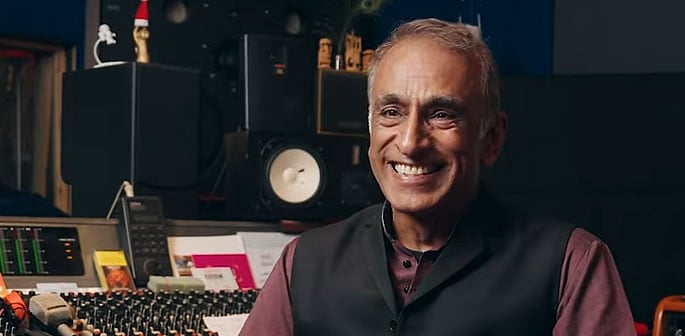
"my idea was to really revisit my old world of acoustic Punjabi music"
Kuljit Bhamra remains a defining force in British South Asian music.
The British composer and record producer helped pioneer the British bhangra sound.
His influence continues to shape generations of artists across the UK and beyond and his latest album, DESI – The Soul of Punjab, released on April 10, 2026, features a range of celebrated artists.
The project revisits his acoustic roots while embracing contemporary collaboration.
In an interview with DESIblitz, Kuljit Bhamra reflects on the inspiration, artistry and cultural significance behind his new album.
Revisiting Acoustic Roots
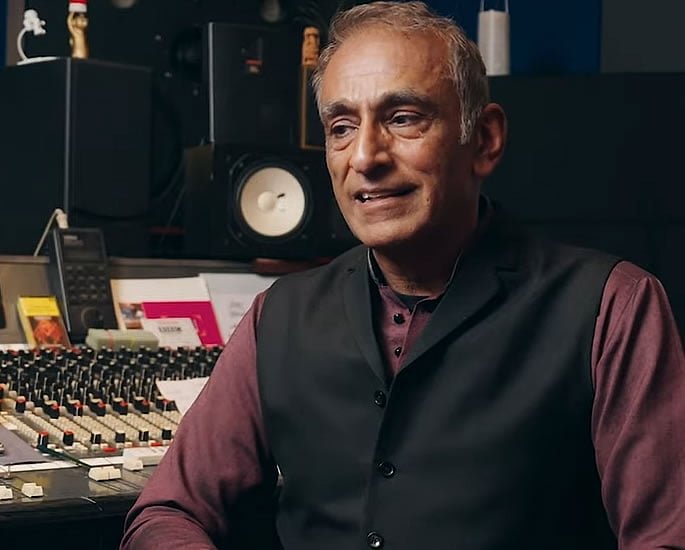
Kuljit Bhamra returns to familiar territory with DESI – The Soul of Punjab, marking a significant moment in his storied career.
The album represents a reconnection with his musical foundations while embracing contemporary influences through carefully selected collaborators.
Reflecting on the vision behind the record, he said: “DESI – The Soul of Punjab is a Punjabi album, as the title suggests, and it’s the first Punjabi album that I’ve done for about 25 years.
“So my idea was to really revisit my old world of acoustic Punjabi music and bring it into current times with my favourite singers.”
It is a deliberate return to the acoustic textures that shaped the early British bhangra movement.
By bridging past and present, Bhamra reinforces his legacy as a pioneer who continues to innovate while honouring tradition.
Its nostalgic tone is intentional, reflecting both artistic conviction and audience expectation.
Known for his mastery of the tabla and dedication to live performance, Bhamra sought to recreate the organic sound that defined his earlier work.
He explained:
“I’m a big fan of recording live instruments in the studio and I’ve got the space.”
“I have nothing against loops and using computers but I’m a big fan of live musicians working together and capturing that moment because that’s a magical moment when someone plays an instrument with someone else.
“I think it’s also what people would expect from me as a tabla player and a musician, that the music is performed live. So yeah, it’s totally deliberate.”
This philosophy highlights the enduring value of human connection in music-making.
In an era dominated by digital production, Kuljit Bhamra’s emphasis on live instrumentation preserves the spontaneity and emotional depth that define Punjabi musical traditions.
Tailor-Made Compositions
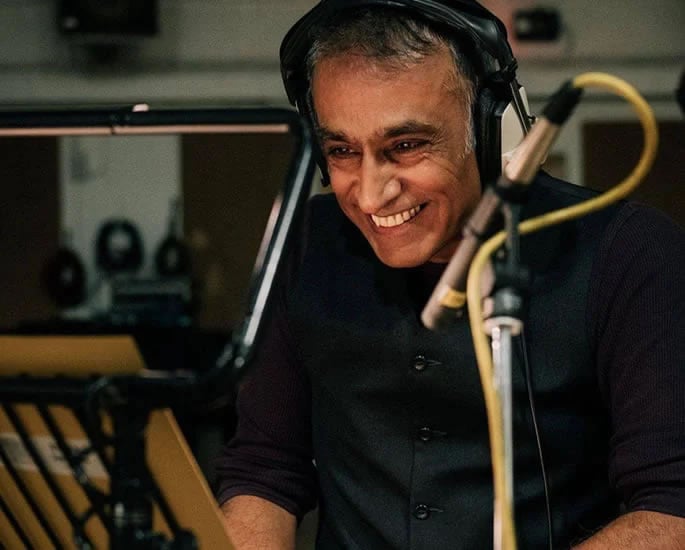
A defining feature of the album is its bespoke approach to songwriting.
Kuljit Bhamra composed music with specific artists in mind, ensuring each track complements the strengths and styles of its vocalist.
Discussing the creative process, he said: “I think on this particular album, I wrote the tunes for all the singers. So they were all tailor-made.
“A couple of the artists had their own tunes like Premi Johal and also Heera [Group]. They came with their own compositions.
“But I wrote all the songs with the singers in mind and a bit like a tailor-made jacket. I think it fitted them really well.”
While selecting favourites proved challenging, one particular track stood out for its lyrical originality and emotional nuance.
Bhamra revealed: “I have lots of favourite songs.
“It would be unfair for me to choose one, but a song by Abira Shah is where she talks about her eye flickering, remembering her lover. And I quite like that because that’s an unusual topic.”
Through these collaborations, Kuljit Bhamra demonstrates his enduring ability to unite heritage with innovation.
Each track is rooted in tradition yet shaped for contemporary audiences, reflecting his meticulous approach to composition and production.
Music, AI and the Meaning of Being ‘Desi’
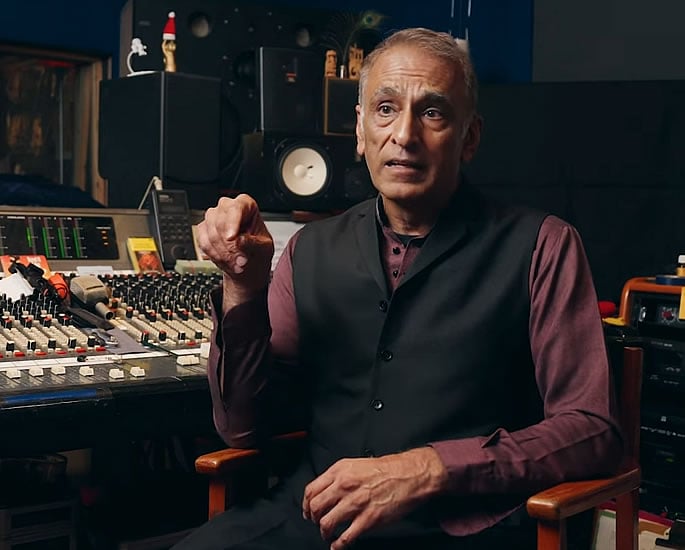
As technological advancements reshape the music industry, Kuljit Bhamra offers a measured and insightful perspective on the role of artificial intelligence.
While acknowledging its capabilities, he remains steadfast in his belief that true music is defined by human interaction.
He said: “I have to say that for me it’s important to define what music is and AI can make musical sounds and beautiful sounds that are sort of pleasing to the ear.
“I will upset quite a few people by saying this, but I think music must be played live. So, actual music is a communication between a performer and a listener. And with a listener in your presence as a musician, it affects how you play.”
While digital tools can enhance production, they cannot replicate the spontaneity of live performance.
He added: “Computers can make very good sounds. And I’m not dissing them as compositional tools, but I don’t think AI will ever replace music.
“So I’m not scared of AI. I think if you were to do a good job with AI, you would need to be a musician to do it in the first place.”
Addressing concerns about automation, Bhamra elaborated:
“It’s not like I know many people are scared of it taking away work and jobs from other musicians, but I don’t think that’s a problem myself.
“I think the community and people and listeners will be able to tell whether something’s AI or not.
“Right now it’s new, so we can’t sort of tell what’s real and what’s not. But after a while, we will be able to tell what’s done by a human and what’s not done by a human.
“And then you can choose which one you like.”
Beyond music and technology, Kuljit Bhamra also explored the cultural significance of the term “Desi”.
He said: “I find it very interesting and I’ve done a bit of research on what Desi is.
“Desi, originally it was a Sanskrit word, ‘Desh’ means country so like like Bangladesh for example, so ‘Desh’ or ‘Desi’ refers to the homeland and it’s interesting because I travel a lot and I’ve noticed that people in India don’t use the word Desi because they’re they’re at home and it’s usually a word used by Indian immigrants from India, Pakistan and Bangladesh to refer to the homeland.
“It’s not just a word that refers to the homeland. It encompasses culture, love, food.
“If you go to the shop to buy ghee, everyone goes for Desi ghee because it’s like the purest and richest form. So for me, the word Desi encompasses the whole cultural love that we have for our homeland.”
Together, his insights on music, technology and heritage reinforce his enduring influence as an artist who continues to shape and define Punjabi cultural expression.
DESI – The Soul of Punjab reaffirms Kuljit Bhamra’s enduring legacy as a pioneer of British bhangra.
The album bridges tradition and modernity through live instrumentation and thoughtful collaboration.
His insights into music, identity and technology underscore his continued relevance in a changing industry.
Together, they highlight an artist committed to authenticity and cultural preservation. As his work continues to resonate globally, Bhamra’s influence remains firmly rooted in the soul of Punjabi music.
Watch the Full Interview