

















































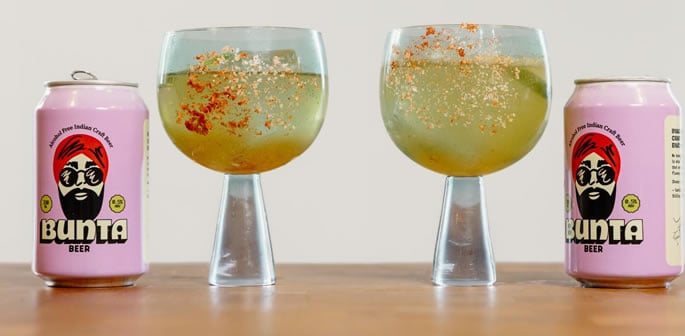
"We wanted to build something that matches the energy"
Bunta Beer is changing how Britain approaches its long-standing “curry and a pint” ritual.
It is the UK’s first non-alcoholic Indian craft beer, brewed specifically to pair with Indian food. The concept is simple but overdue, placing flavour compatibility at the centre of the drinking experience.
At 0.5 per cent ABV, it delivers the structure of a lager without overpowering complex dishes.
The brand has quickly moved from concept to credible contender within the drinks industry. Its first draught listing at The Latimer marks a defining moment for both the product and its wider ambition.
That move brings Bunta Beer into the heart of pub culture, where shared pints still define social connection.
It also raises larger questions about inclusivity, flavour pairing, and evolving British-Indian identity.
Rethinking ‘Curry and a Pint’
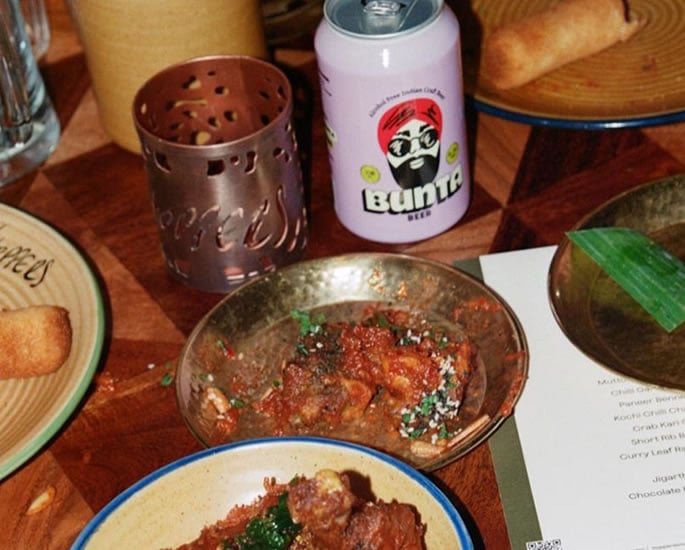
For decades, beer choices alongside Indian food have remained largely static. Popular lagers often prioritise refreshment over thoughtful pairing.
That disconnect is exactly what founder Gunikka Ahuja set out to address.
Ahuja explained: “Indian food is deeply cultural and expressive, but beer has remained generic.
“We wanted to build something that matches the energy, complexity and spice of the food itself.”
Bunta Beer’s flagship citrus lager has been designed with that purpose in mind. Brewed with orange peel and coriander seed, it mirrors flavour compounds found in Indian cooking.
The result is a drink that works with the food rather than competing against it.
Its low carbonation reduces bloating and allows drinkers to continue eating without feeling overwhelmed. That detail reflects a deeper understanding of how Indian meals are experienced, often shared and layered with spice.
Ahuja recalls the frustration of limited non-alcoholic options in pubs and restaurants:
“So many times I’ve walked into a pub wanting a proper beer experience, only to find there’s no non-alcoholic craft option on draught, so you end up with a bottle or, worse, a half pint, which completely defeats the point.
“You’re not really part of the same shared experience.”
“I always knew I wanted to change that, to make sure people who aren’t drinking or moderating still have access to the same quality, ritual, and feeling of having a fresh pint.”
That thinking positions Bunta Beer within a broader cultural shift.
Drinking habits are changing, particularly among younger consumers. Moderation is no longer seen as exclusion. Instead, it is part of a more flexible social identity.
The beer’s design reflects that shift.
It is gluten-free, vegan, and low in calories, appealing to modern preferences without compromising flavour. Each element serves a purpose, reinforcing its role as a functional pairing rather than a novelty alternative.
Innovation to Cultural Statement
Bunta Beer’s journey from launch to recognition has been rapid.
Founded in October 2025, it quickly secured a Gold award at the London Beer Competition in April 2026.
Its expansion into draught service marks a new phase.
The listing at The Latimer brings the product into a setting where beer culture is most visible, allowing Bunta Beer to compete directly with traditional options on equal terms.
Ahuja said: “Draught was always part of the long-term vision for Bunta, but honestly, wanting to push this side of the business came from personal frustration.
“The opportunity with The Latimer just accelerated that vision.”
Beyond the drink itself, Bunta Beer operates at the intersection of food, culture, and design.
Its name references North India’s traditional Banta soda bottles, known for their citrus sharpness. That heritage informs both its flavour and identity.
The brand’s visual identity also reflects this thinking.
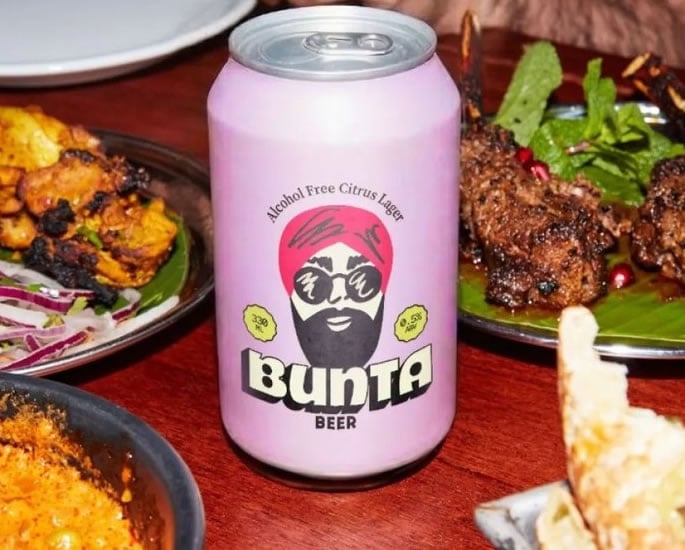
Its pink can features a bold illustration inspired by Ahuja’s brother, representing a new generation of drinkers redefining participation without alcohol.
She added: “The character represents a new generation of drinkers who don’t feel the need to drink alcohol to be part of the moment.
“It could be anyone you see in Shoreditch or Brixton – culturally rooted, making different choices.”
That positioning speaks directly to modern British-Indian identity. It acknowledges tradition while refusing to be confined by it.
Bunta Beer becomes both product and symbol, reflecting changing attitudes within the diaspora.
Bunta Beer arrives at a time when both food and drink culture are evolving in the UK.
From traditional curry houses to contemporary restaurants, the food has diversified and matured.
Beer, however, has lagged behind that evolution.
Bunta Beer challenges that imbalance by prioritising compatibility, inclusivity, and cultural awareness.
It reflects a broader change in how people approach eating and drinking, not to disrupt for the sake of it, but to enhance what already exists.
In doing so, Bunta Beer offers a new way to think about one of Britain’s most familiar rituals.