

















































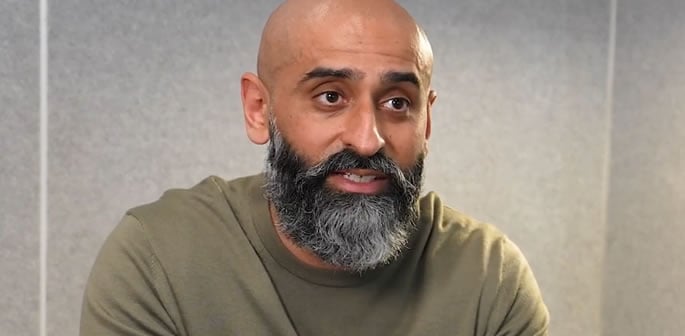
"on the inside, I felt empty.”
Alcohol addiction is often told as a story of loss, but Navraj Dhesi’s journey moves beyond that familiar frame.
It traces a shift from dependency and disconnection to recovery, reflection and reinvention.
On paper, he describes a life that appeared stable, shaped by work, marriage and family, yet internally marked by emptiness and escalating dependence on alcohol.
What began as a coping mechanism quickly developed into a cycle defined by loss of control, blackouts and emotional rupture, affecting not only him but those closest to him.
His eventual path into recovery did not simply end his relationship with alcohol; it reshaped how he understood identity, culture and connection.
That personal transformation would later feed into a much wider idea, one that sits at the heart of NEKTA Drinks, an alcohol-free brand co-founded by him and his brother-in-law Jagroop Singh, who has never drunk alcohol.
In an interview with DESIblitz, Navraj Dhesi reflects on addiction, recovery and the creation of a brand designed to reimagine how people socialise without alcohol.
Identity and Denial

Navraj’s account of his relationship with alcohol begins with an unvarnished framing of identity.
Stripping everything back to a single sentence, he says:
“I’d just simply say, ‘My name’s Navraj and I’m an alcoholic. I’ve been in recovery for some time now, and I managed to find a way to get well, and so can you’.”
That directness sets the tone for how he understands addiction today. He is equally clear that alcoholism is frequently misunderstood, especially when judged from the outside.
“As soon as you mention that you’re an alcoholic, people have a lot of misconceptions around it.
“And at its heart, an alcoholic is just somebody who’s struggling with their relationship with alcohol. I was never a daily drinker.
“At the height of my drinking, I had a fantastic job. I was married. At the end of it, my wife was expecting.
“So, on paper, I had what had looked like an amazing life, but on the inside, I felt empty.”
Alcohol, as he describes it, was never simply a habit. It became a perceived form of release that slowly eroded control.
He explains: “For me, it felt like being sober was the problem. Stress, pressure, all these things I was putting on myself.
“So, for me, the drink was the release. Once I started drinking, I couldn’t stop. I was never a one or two drink kind of guy. Once I started, I couldn’t stop.
“The real problem was that once I tried to stay stopped, I couldn’t stop. My head would always take me back to it.
“I’d go a couple of weeks without a drink, and everyone around me would think, ‘Oh, he’s alright, he hasn’t had a drink’.
“But my head would be saying, ‘It’ll be different this time, it’s okay’. But over time, the consequences start to catch up with you.”
What emerges is not just addiction, but a pattern of rationalisation, where short-term abstinence creates a false sense of control, even as the underlying dependency remains unchanged.
Noticing the Signs too Late
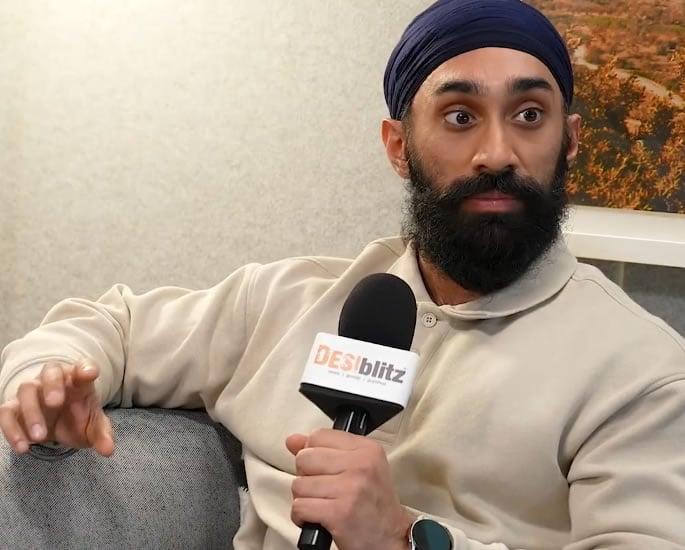
For Jagroop Singh, Navraj’s brother-in-law, his perspective is shaped less by addiction itself and more by confusion, cultural normalisation, and hindsight.
He says: “He’s my brother-in-law. He was married to my older sister and so I kind of did look up to him, but there was no emotional attachment to Nav at that time.”
At the time, behaviour that would later be understood as problematic did not register as abnormal. It blended into a cultural environment where drinking was already familiar.
Recalling one moment, Jagroop says:
“It was about 12 or 1 pm in the afternoon and Nav was like, ‘Let’s just go out’. I was like, ‘Okay, that’s fine. That’s what we usually do’.
“As he went out at that time, he purchased a small bottle. At the time, I thought maybe this is normal. I didn’t understand.
“When I look back at it, 12 or 1 in the afternoon, purchasing a bottle, that was a red flag. A trigger.
“But as a family member at the time, I didn’t understand.”
The shift in understanding also reflects cultural framing around alcohol itself, where behaviour can be dismissed rather than questioned.
Jagroop adds: “It was only when I thought about it two or three years later that it clicked. A normal person doesn’t do this.”
This gap between observation and interpretation becomes central to how families often experience addiction. What looks ordinary in the moment can later appear as early warning signs that were simply not understood.
The Collapse of Control

Navraj’s own description of his drinking patterns removes any illusion of stability.
He describes a lifestyle that outwardly appeared functional while internally becoming increasingly unmanageable.
“It looked quite normal to be honest.
“A lot of times people think, ‘Oh, it must have been something like park bench drinking’.
“But it was the same as you see other people drinking, parties, events, weddings. The only difference was I was that guy at the end of the night…”
That “end of night” pattern became a defining marker.
“Because for me, I always needed that next drink. And when the bar closed, it was always, ‘Where are we going next?’ One was too many, but ten was never enough.”
The escalation was not always visible to others, partly because it was embedded in social settings rather than isolation. But internally, it was increasingly driven by compulsion rather than choice.
“I was that happy-go-lucky guy. I was loud. I’d be telling the jokes…”
Alongside alcohol, cocaine entered the picture as part of a dangerous cycle of self-regulation.
Navraj says: “I was drinking such volumes. I was starting to use cocaine as well. What that would do is it was almost like, when you’re tired, you have a Red Bull.
“I was in complete blackout from drinking. By the time I came to my senses, I was meant to go to Manchester. I found myself at Watford Gap Services at a petrol station.
“That’s when I just dropped to my knees crying going, ‘What am I doing?’”
That moment is presented as disorientation, a physical and emotional realisation that control had already been lost long before recognition arrived.
Recovery and Building NEKTA Drinks
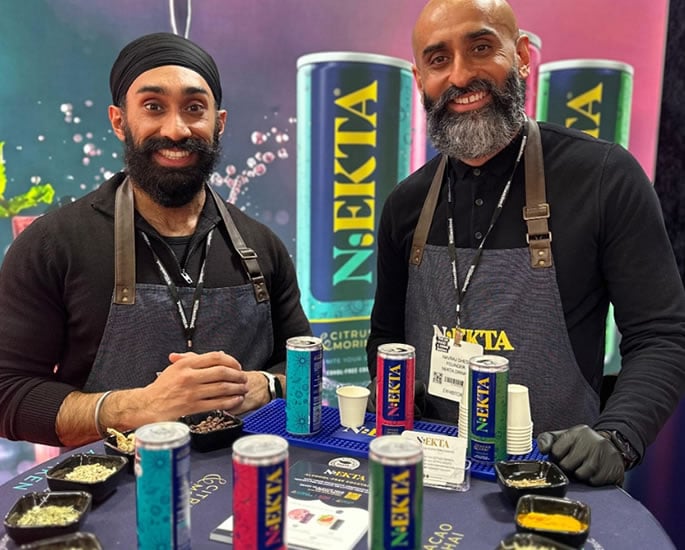
The shift into recovery did not immediately resolve identity. Instead, it exposed how deeply alcohol had been embedded in how Navraj understood himself in social spaces.
He says: “I didn’t know how to be. I didn’t know how to operate at a party without a drink.”
Jagroop observed that change externally as well, adding:
“There was a time where you couldn’t find Nav. And then gradually, what I’ve seen is that he grew that personality back without the drink, where he was still engaging and socialising.”
Recovery required emotional regulation and confronting the internal narratives that had sustained addiction.
Navraj reveals: “I tell myself these stories. And the thing is when you tell yourself a story, you believe it because it’s your voice.”
Over time, recovery also became structurally supported rather than individually managed, as Navraj says:
“It’s a combination of faith, family, and my friends in recovery around me. Having all that support, they’re the glue that holds my recovery together.”
Out of that process came No More Pretending, an initiative aimed at addressing gaps in South Asian recovery spaces, alongside the early thinking that eventually became NEKTA Drinks.
The business itself emerged from both lived experience and practical gaps in the market.
Navraj says: “For me, it was pretty much just orange juices or water… quickly realising that’s just full of sugar, syrups.
“There had to be more from a drink. There had to be more. It wasn’t enough.”
NEKTA was positioned as a different category entirely, built around inclusion, function, and social parity.
He says: “We specifically made a flavour cacao, and that’s our testament to that older generation saying, ‘These guys want to celebrate and have something more than just juice’.”
The brand’s wider purpose is tied back to its structure, with a portion of profits directed into recovery support and community work.
“For us, it was about actually using a portion of the profits to make sure that organisations like No More Pretending could be more self-sufficient.”
Even the name reflects that intent, combining personal recovery with cultural meaning.
“NEKTA is a play on words. It’s a play on the word nectar and also ‘ekta’, which means unity.”
At its core, the project is framed not around alcohol alone, but around connection, identity, and what social inclusion looks like without it.
Navraj Dhesi’s story does not end with sobriety; it continues through the ongoing work of recovery, self-awareness and rebuilding meaning from lived experience.
What stands out most is not only the severity of his past dependency, but the way he now interprets it through responsibility, honesty and a sustained commitment to change.
NEKTA Drinks emerges from that context, shaped as much by personal recovery as by cultural observation and a recognition of what was missing in social spaces.
It reflects a wider attempt to challenge assumptions about drinking, inclusion and what it means to belong in environments where alcohol has long been the default.
Alongside its commercial identity, it carries a broader social intent rooted in conversation, community and support for those still navigating similar struggles.
Ultimately, the story leaves a reminder that recovery is rarely a single turning point, but an ongoing process of rebuilding connection, both with oneself and with others.
Watch the Full Interview