















































"I was cut off by friends on social media."
In recent years, smartphone addiction has emerged as a global concern, reshaping how societies function, communicate and interact with technology.
Japan, a nation renowned for its technological innovations and fast-paced urban lifestyle, is no stranger to this trend.
As smartphones have become integral to daily life, their overuse has led to significant social and psychological challenges, particularly among younger generations.
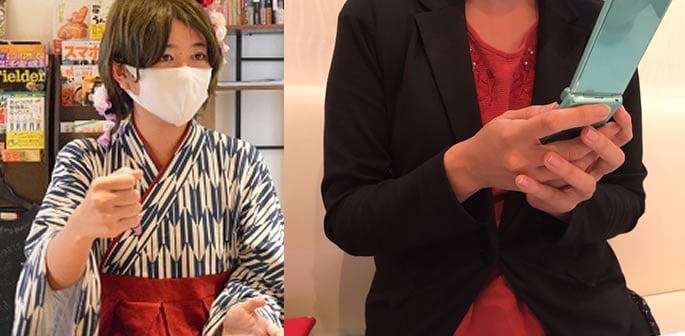
Mikan Oshidari was addicted to her smartphone.
But after switching to a ‘dumbphone‘, her life changed for the better.
She has written a book about her experience and given talks, raising awareness about this issue and the changes people can make.
DESIblitz exclusively spoke to Mikan about the effect smartphone addiction had on her and the work she is doing to raise awareness.
What made you switch from a smartphone to a flip phone? How did this change affect your mental health?
I almost got into a traffic accident because I was looking at my smartphone while walking.
Looking at your smartphone while walking has become a social problem in Japan.
Not only while walking, but also while driving or riding a bicycle, many fatal accidents have occurred while looking at your smartphone.
I was almost hit by a car while walking while using my smartphone to update my social media.
At that time, I thought, “Do I want to look at my smartphone even if it means putting my life at risk?”
I was cut off by friends on social media.
I started blogging using my computer and flip phone around 2007. My friends around me were also blogging. Around 2011, Twitter and other social media became popular and I started using social media.
I got hooked on social media because it was easier to access than flip phones and computers. Other than my school friends… I made many friends I had never met.
But online friendships depend on the like button. I thought social media was everything to me.
But social media is so empty, so I felt foolish for being so obsessed with it.
Since I started using a smartphone, I have felt the negative effects on my health.
Those who are concerned about the negative health effects of using smartphones are in the minority.
If there is a majority and a minority, the majority is stronger and easier to live with. I thought, shouldn’t I be part of the majority too?
It’s been less than 20 years since smartphones were invented, and there is no medical data that shows that they have a negative effect on health.
But in a few years, the negative health effects of smartphones may become a problem.
There may come a day when we realise that the era in which we used smartphones was not good.
If we are aware of the negative health effects now, we can’t pretend not to notice them.
I wanted to take care of my health.
What are you doing to raise awareness?
I publish books, give lectures, get interviewed by newspapers, and appear on TV and radio.
The book was published in 2019, and after that, I received requests to give lectures from local governments and appeared in newspapers, TV, and radio.
Then in 2022, I published an updated version.
And recently I’ve been watching YouTube in English and sending emails to overseas media.
The reason why I do YouTube in English and send emails overseas is because Japanese people are weak to peer pressure, so digital detox doesn’t take root.
I’ve featured on Japanese TV but I’ve been slandered when I appear on TV.
I felt the limits of educational activities in Japan, where peer pressure is strong.
In the midst of all this, I’ve seen comedians who aren’t famous in Japan become popular on overseas audition programmes, and singers who are unknown in Japan break out overseas and become popular in Japan.
So starting this year, I’ve started to do YouTube and emails from overseas media in English.
Tell me about your book I Want to Stop Being a Slave to My Smartphone

At first, I used my computer to share my experience with social media.
I was very happy to be able to share my opinion with the world. But something even more exciting happened.
I received a letter through the newspaper from someone who read the newspaper. The person was a mother who said she was worried about her child’s smartphone addiction.
“This inspired me to write a book. But publishing a book is difficult.”
I was 23 years old at the time and had no publishing experience.
Not many people took me seriously. But I didn’t give up and kept trying, and then I met my current publisher. And I published a book.
How do you deal with negative reactions from people who don’t see smartphone addiction as a serious problem?
Even if you explain the dangers of smartphone addiction, they often don’t understand. That’s very sad.
But I can’t force my opinion on them.
When someone makes fun of me, I don’t get angry, but I try to say, “I know you like your smartphone, but for me, this (dumbphone) is easy.”
If I force myself to get angry back, it will become a pointless argument.
But there are some things that made me happy.
I have a friend who loves smartphone app games. When I got a dumbphone, that friend made fun of me.
But after reading my book, he said, “I realised I was addicted to my smartphone” and “I’ll try to limit my smartphone use.”
Some people bought a dumbphone after reading my book.
Why is smartphone addiction not considered a serious problem in Japan?
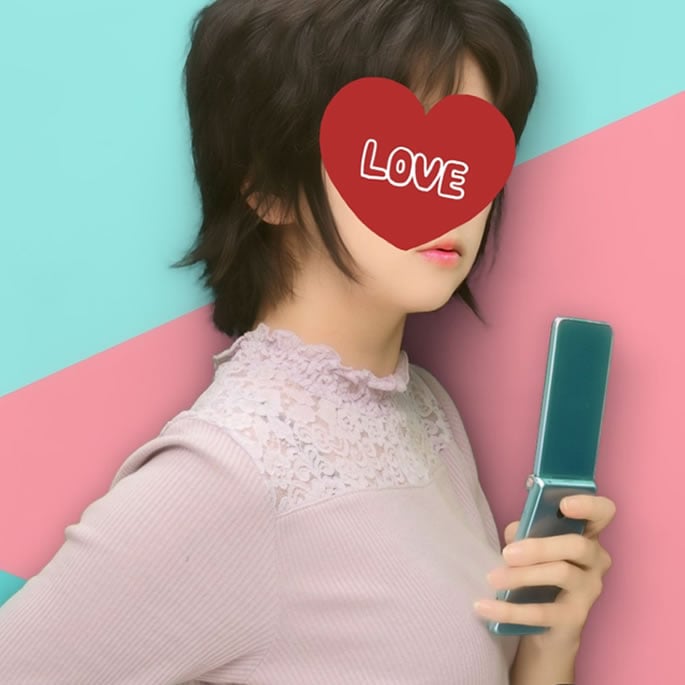
I think one reason is the pressure to conform because everyone is addicted to smartphones.
I think the reason is that even though people are aware that their mental and physical health is being damaged and that they are tired, they find it difficult to talk about it.
When I was addicted to my smartphone, I rarely heard my friends around me say, “I’m tired because of my smartphone.”
Instead, I heard them say, “I was on my smartphone until midnight.”
After I published my book, my friends quietly said “I’m tired of my smartphone too” and “dumbphone is better.”
Smartphone addicts are the majority, so it’s difficult to talk about minority issues.
How do you think smartphone addiction affects children and young people in particular?
I know someone who has a child.
Her child is only about 5 years old, but he is addicted to smartphones.
Since he was a baby, he has been watching YouTube on his smartphone, so even now, he throws a tantrum if his smartphone is taken away.
And not just children, parents too. The other day, a parent was taking their child to and from kindergarten, and they were riding their bike with their child on the back.
They had a smartphone in their hand. They were operating the smartphone while riding.
Young people, especially teenagers, often have trouble with smartphones and social media.
Recently, a high school girl was killed by a girl her age over a social media post.
Many children also commit suicide due to bullying, ostracism, and social media problems.
“There is also a lot of sexual exploitation on social media.”
When I was addicted to smartphones and obsessed with social media, there were people who sent sexual photos to my social media accounts.
As a countermeasure, I think it is effective to remove functions from smartphones.
That’s why I think children should have a phone that doesn’t connect to the internet like a dumbphone or an email phone.
And now that we live in a world where having a smartphone is a given, I think that should also be reconsidered.
What differences do you see in the behaviour of people who are dependent on smartphones in public places, such as on Tokyo trains?
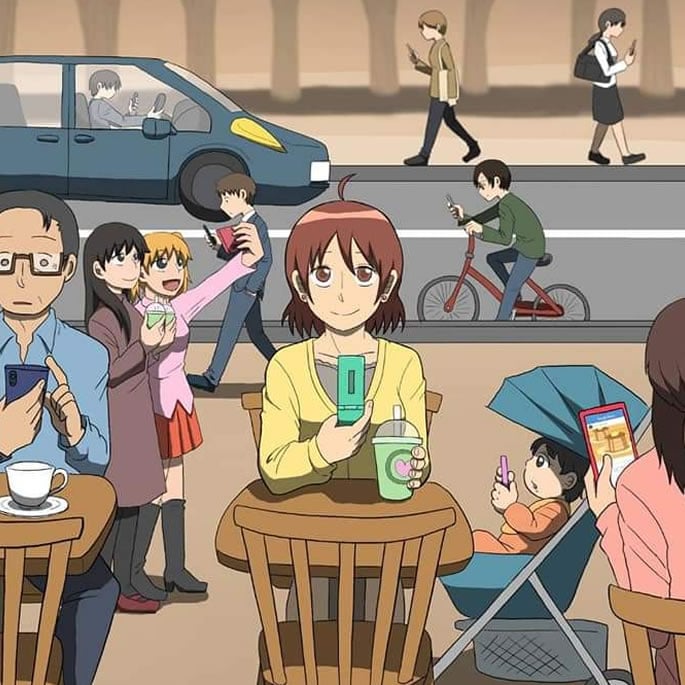
They just stare at their smartphones.
And they hang their heads like zombies and stare at the screen.
Even after they reply to messages or finish their errands, they continue to aimlessly watch videos or social media timelines.
It’s not that they’re using their smartphones but that their smartphones are using them.
Can you explain in detail the physical and mental health problems that seem to be related to excessive smartphone use?
Physically, strain on the neck and shoulders. Decreased eyesight. Harmful effects on the brain.
Mentally, it makes you more irritable and depressed.
In my case, I would get annoyed if my social media posts got fewer likes than my previous posts. Then I would get depressed. I would cry for no reason.
As I spent more time looking at screens, I lost my mental space.
Social media and what was on my smartphone screen became everything to me.
What lessons can Japan learn from countries like the United States that are making efforts to restrict children’s smartphone use?

I think it’s important to regulate children’s smartphone use.
Right now, it’s left up to each family. That’s why there are differences between families.
Children of parents who don’t let their children use smartphones and parents who don’t let their children have smartphones will not suffer from health problems.
But they will be left out by children who have smartphones.
Children of parents who let their children have smartphones and parents who let their children use smartphones freely will become more and more dependent on smartphones and their health will be damaged.
That’s why I think the national and prefectural governments should set the rules.
Some states in the US have made such laws, and schools in the UK are distributing Nokia dumbphones instead of smartphones.
If dumbphones were distributed, they would be perfect not only for children but also for adults who want to digitally detox.
What message would you like to convey through your books and advocacy activities to people who are sceptical about the dangers of smartphone addiction?

Some people mock me, calling me a “crazy person”.
Smartphones are very convenient, so I can understand why people would mock me for saying and doing things that deny that.
Smartphones are convenient. That cannot be denied. I’m not working to eliminate smartphones from this world. I’m not an enemy of smartphones.
But smartphones are also called the “opium of the modern age”.
It’s certainly convenient.
But do you remember your days before you started using it? Is your health the same as it was then? Are you living a life like a human being? Has the screen become your whole world? Aren’t you a slave to your smartphone?
I want to appeal to the world.
“Smartphones are supposed to be tools, but before you know it, they seem to control humans.”
They’re convenient, but they’re too convenient. I think a little inconvenience makes it easier to live peacefully.
You don’t need to keep up with your friends’ latest updates on social media. We look at our smartphone screens whenever we have a little free time, but it’s good to have some free time to just stare blankly.
I’ve stopped being a slave to my smartphone.
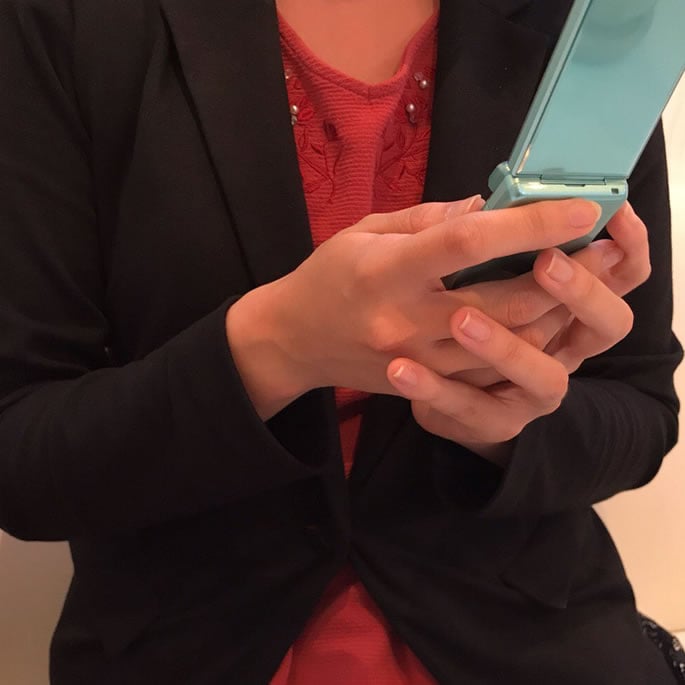
I don’t have Amazon Prime or Netflix, so I go to video rental stores. I take notes with a pen and notebook, not a smartphone. Even when I have free time, I don’t stare at my smartphone, I use a dumbphone.
I’m in the minority, but this way of life suits me.
As Mikan explained, smartphone addiction is prevalent in Japan.
However, it is an issue that people do not take seriously.
As Japan grapples with the consequences of this digital dependency, it becomes crucial for individuals, families, and policymakers to recognise and address the issue.
Promoting healthy digital habits, fostering greater awareness of the risks, and encouraging a balanced approach to technology can help mitigate the impact of smartphone addiction.
This is to ensure that the benefits of these devices do not come at the expense of mental well-being and social harmony.