

















































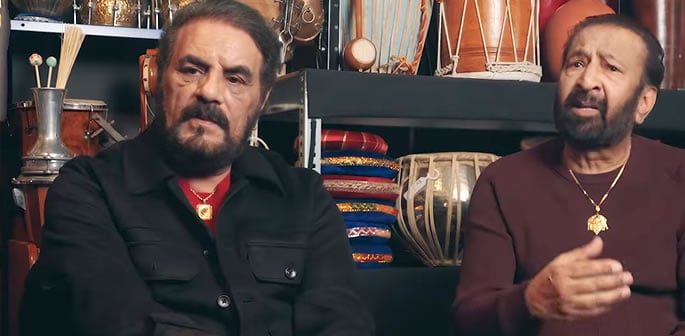
"it reminds you of the days we have worked with him before"
Heera Group are pioneers of the British Asian Bhangra scene, known for blending traditional Punjabi rhythms with contemporary sounds that have shaped the UK South Asian music landscape.
Consisting of Palvinder Dhami and Kumar Heera, the group’s latest work sees them collaborate with British composer and record producer Kuljit Bhamra, who helped pioneer the British Bhangra sound.
His influence on UK South Asian music remains significant, making this partnership both timely and culturally important.
The collaboration forms part of his upcoming album DESI – The Soul of Punjab, set for release on April 10, 2026, which brings together a range of artists.
Heera Group features on ‘Sabh Note Waar De’, presenting Punjabi music in a familiar, celebratory setting.
In an exclusive interview with DESIblitz, Heera Group explain what it was like working with Kuljit Bhamra again, the creative process behind the song, and their thoughts on the current state of Punjabi music, from its evolution to its challenges in a fast-paced digital world.
Reuniting with a Familiar Sound
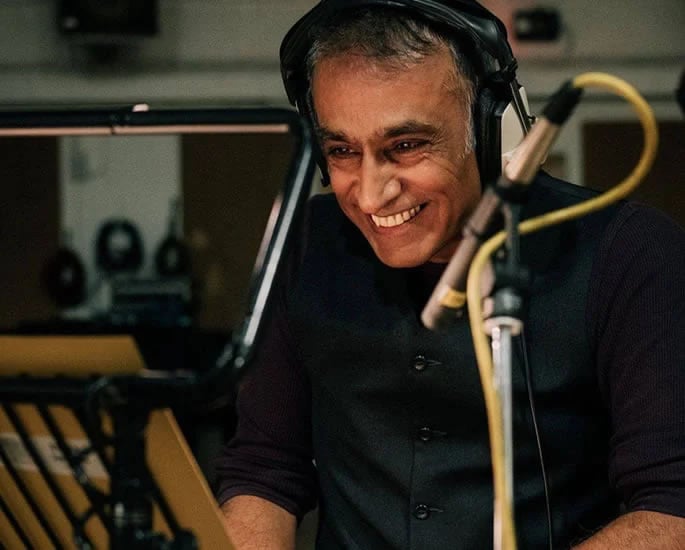
For Heera Group, reconnecting with Kuljit Bhamra carried history, chemistry and a shared understanding built over decades in Punjabi music.
That sense of familiarity quickly returned the moment they were back together. The creative dynamic, shaped in an earlier era of album-focused music, still holds weight today.
They said: “His sense of charm is such that when you see him after a long time, he comes out with great one-liners and it reminds you of the days we have worked with him before and is inspiring.”
Producers like Kuljit were central in shaping Punjabi music.
That environment allowed artists to experiment more freely. Albums were conceptual, not just collections of tracks. Each song had a place within a wider narrative, giving projects longevity and depth.
For Heera Group, returning to that mindset offers a contrast to today’s fragmented approach. The industry may have evolved, but the value of creative synergy remains unchanged.
A Wedding Song Rooted in Tradition

Their track ‘Sabh Note Waar De’ leans into one of Punjabi music’s most enduring themes: weddings.
But rather than relying on surface-level celebration, the track is built around something more culturally grounded.
Heera Group explained: “The lyrics are traditional and very catchy. So everyone can join in, enjoy and dance. The lyrics are very traditional.”
At its core, the song reflects how Punjabi weddings function as collective experiences. They are not centred on individuals alone, but on families, relationships and shared participation.
By weaving in references to different relatives, the track mirrors real wedding environments. Aunties, uncles, siblings and extended family all become part of the narrative.
This inclusivity gives the song a wider emotional reach, making it instantly relatable across generations.
There is also a deliberate emphasis on traditional lyricism. In an era where many tracks prioritise hooks over meaning, this approach restores balance.
Heera Group also had to navigate modern constraints, such as song durations.
“We are used to longer songs, three or four minutes. The minimum was four and a half to five minutes, that was the shortest, but people are looking for two and a half minutes now, so you can’t even get the story of the song.
“In one or two verses, you cannot explain a full story or theme.
“This is a wedding theme song, so you have to relate all the family members and relations involved, aunties, uncles, sisters, brothers and all that. I’ve tried that. This is the trend, so it worked out good.”
While the format has changed, the intention remains rooted in storytelling and cultural authenticity.
Bhangra’s Shift
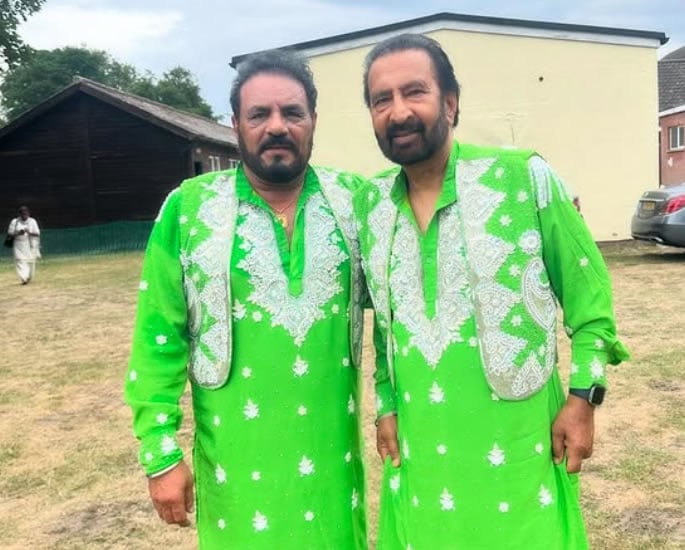
Punjabi music and Bhangra have witnessed a decline and for Heera Group, the changes are undeniable, and not all of them are positive.
“It is sad. I think people don’t have time to invest into the music these days. They want a quick answer, making quick hits.
“It is the dedication more than anything else. The creation has been left out.
“Before, people used to spend time creating a song lyrically and composing it musically. That has moved with the trend. They are looking for a quick hit and not enough thought goes into it.”
When working with Kuljit in the past, Heera Group thought about the concept of the entire album.
Their reflections point to a broader industry shift. The move towards fast-paced digital consumption has prioritised quantity and immediacy over craft. Songs are often designed for quick impact rather than lasting value.
At the same time, they acknowledge that change has brought certain advantages.
“Obviously, you have to move with the trend because in the olden days we used to make assets, vinyls and CDs, and now it’s digital platforms. Everything has changed.
“Life has gone too fast and everyone wants to work quickly, but it doesn’t last. At the end of the day, it comes back to creation.
“You have to spend time to create something different, something new that everyone can relate to and enjoy.
“As far as gains are concerned, the distribution of music has gone beyond borders more easily than before.
“Before, it was only hard copies sold in shops. Now, anybody in Australia can download it.
“But what we have lost is the individuality of each band. Only certain producers can keep that, like Kuljit, who has kept the Heera sound separate.
“Working with Kuljit is not easy to get time together, and that goes for many producers and bands. There is no continuity in sitting down, composing and getting the concept of an album right.
“With this, we had one concept. Each person in the family is mentioned so they can all come in and do their own bit.
“There are limitations in lyrics, composition and timing.”
“We have to create in such a way that we mention only limited relations, but we try to cover everyone. I wrote more verses, but it would have been too long, so Kuljit Bhamra decided to keep it within the timing, and it came out brilliant.”
The duality is clear. Digital platforms have expanded global reach, allowing Punjabi music to travel further than ever before. Audiences are no longer limited by geography or physical distribution.
However, that same accessibility has diluted certain aspects of the craft. The loss of individuality, reduced collaboration time and shorter production cycles have reshaped how music is made.
For Heera Group, the challenge lies in balancing both worlds.
Embracing modern distribution while preserving the depth, identity and storytelling that once defined the genre remains key to sustaining its legacy.
Heera Group’s collaboration with Kuljit Bhamra demonstrates the enduring value of dedication, creativity and cultural authenticity in Punjabi music.
While the industry has shifted towards shorter tracks and faster production cycles, their work shows that careful storytelling, strong relationships and attention to detail remain central to the craft.
‘Sabh Note Waar De’ is a reminder that, even in a changing musical landscape, songs rooted in tradition and collaboration can still resonate widely, bringing families and communities together to celebrate both music and heritage.
Watch the Full Interview