




































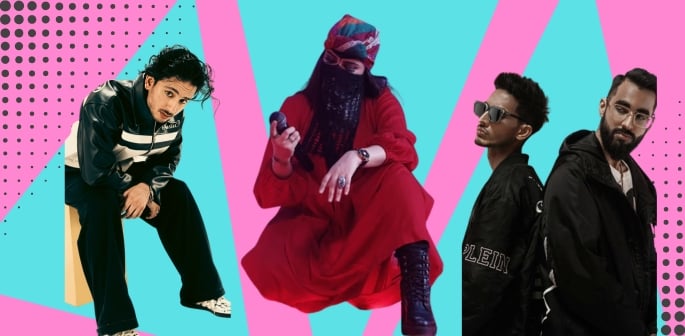
“Rap in Pakistan is really starting to break through."
In recent years, Pakistani rap has captured the nation’s restless spirit.
Once dismissed as a Western import, it has become the unfiltered voice of young Pakistanis navigating a world of social change and personal struggle.
From back-alley recordings to international collaborations, rap has grown from an underground movement into a cultural force. Its appeal is rooted in honesty, rhythm, and the courage to confront issues most avoid.
This rise can be attributed to Pakistan’s musical roots, where folk traditions such as qawwali long relied on rhyme and rhythm to tell stories, challenge norms, and unite communities.
Building on these musical roots, Pakistani rap began to find its own rhythm, shaping a voice that is both contemporary and deeply connected to the past.
From Basements to Global Streams
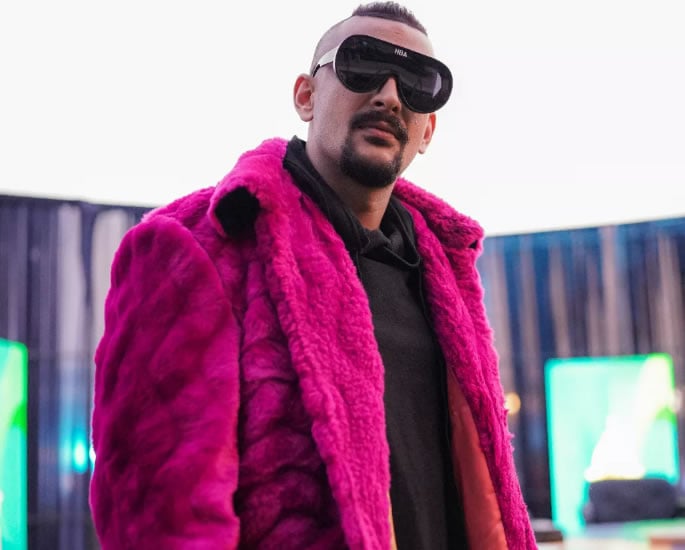
Rap in Pakistan did not start with sleek videos or corporate backing.
Early artists relied on inexpensive microphones, pirated software, and sheer determination to tell their stories. Platforms such as YouTube and Patari offered lifelines, allowing musicians to bypass industry gatekeepers.
This independence fuelled an underground scene defined by authenticity.
Bohemia helped pave the way. His Punjabi rap tracks, including ‘Kali Denali’, fused hip-hop swagger with desi aesthetics and connected with South Asian audiences worldwide.
While commercial in approach, Bohemia inspired a generation of rappers eager to shape the genre on their own terms.
Pakistani rap quickly evolved into a platform for social critique.
Artists confront issues like economic inequality, mental health stigma, gender inequity, and urban alienation.
Empowerment, defiance, and ambition define the music, giving voice to a generation’s hardships and hopes.
Who are the Leading Voices?
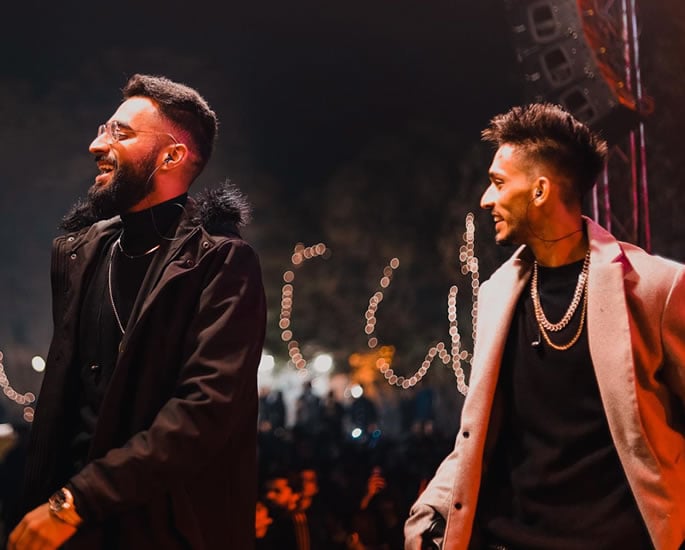
Young Stunners, the Karachi-based duo Talha Anjum and Talha Yunus, are redefining Pakistani rap.
Tracks like ‘Gumaan’ and “Afsanay’ balance intimacy with universality, while ‘Dear Zainab tackles mental health and grief, blending emotional honesty with cultural commentary.
Their work feels like a conversation, drawing listeners into stories that resonate across cities and backgrounds.
Faris Shafi represents another side of Pakistani rap: provocative, fearless, and unapologetic.
His lyrics confront social hypocrisy and mental health, while his delivery matches the intensity of his message.
Shafi says: “Rap in Pakistan is really starting to break through. It used to be this niche thing, but now it’s everywhere.
“What’s awesome about rap is how accessible it is. You don’t need much to get started; you just need to share your thoughts and find a way to connect with your people.
“It’s a real reflection of our culture and what we’re about.
“It’s also giving rise to a whole new generation of artists and is becoming one of our biggest exports.
“People are noticing, and international labels are getting interested in what Pakistan’s doing with rap.
“It’s connecting us with people worldwide, and some amazing collaborations are happening.
“The future of Pakistani rap here is looking really bright; it’s giving Pakistan a spot on the map and bringing our culture to the global stage.”
From ‘Blockbuster’ to ‘Nazar’, Shafi’s tracks have an unstoppable flow, filled with humour and unfiltered emotion.
Indian artist Yo Yo Honey Singh has also endorsed Shafi, saying:
“Nothing is better than Faris in Desi hip-hop right now. I am excited to be producing his next album.”
For women in Pakistani hip-hop, Karachi-based Eva B is rewriting the rules.
Her track ‘Kana Yari’ fuses Urdu and Balochi, delivering a sound that is bold and distinctive. Her lyrics explore identity, resilience, and strength, proving that Pakistani rap is inclusive and transformative.
The influence of Pakistani rap is now international, with artists reaching global audiences through streaming platforms and collaborations.
International labels and producers are taking notice, and cross-border projects are emerging, showing that Pakistani rap has a reach far beyond its origins.
As the genre grows, it remains tied to its underground roots while embracing new possibilities.
Pakistani rap is a societal force as much as a musical one, giving youth a platform to share their stories, challenge norms, and demand change.
From basements in Karachi to global stages, it proves that Pakistan’s voice will not be quiet, and its rhythm will not be ignored.