


















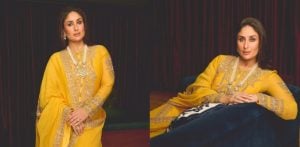































"I've been manifesting that for a long time now."
Abira Shah is steadily carving out space as a versatile South Asian vocalist, moving between Hindi, Urdu and now Punjabi folk.
Her latest work sees her collaborate with British composer and record producer Kuljit Bhamra, who helped pioneer the British Bhangra sound.
His influence on UK South Asian music remains significant, making this partnership both timely and culturally important.
The collaboration forms part of his upcoming album DESI – The Soul of Punjab, set for release on April 10, 2026, which brings together a range of artists.
Abira Shah features on three tracks, including ‘Channak Channak Chanakaawangi’, marking a clear shift into Punjabi folk, a genre deeply tied to her identity and artistic direction.
In an interview with DESIblitz, Abira shares her creative process, inspiration, and experience collaborating with Kuljit Bhamra.
Working with Kuljit Bhamra & Stepping into Punjabi Folk
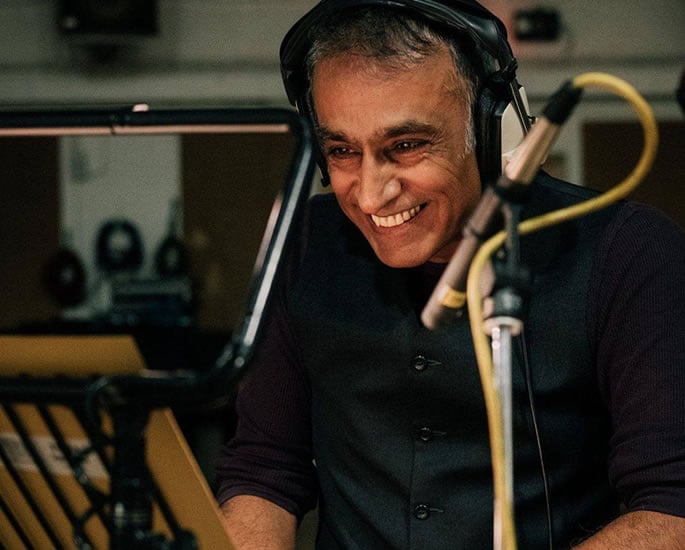
Abira Shah’s collaboration with Kuljit Bhamra was years in the making.
She said: “So, the collaboration for this album, I’ve been manifesting that for a long time now.
“And Kuljit Ji had told me that he would get me to sing something Punjabi folk which I have been wanting to do because I mostly sing Hindi and Urdu ghazals, so I never got to show that side of my singing.”
That moment arrived through a direct call, setting the tone for a fast-moving creative process.
Abira continued: “I got the chance one lucky day, I received a call from Kuljit and he said whenever you’re free, I want to talk to you about these songs, they are folk Punjabi so I would like you to come to the studio.
“Let’s prepare those. Let’s get these done. And I was like, ‘I’m ready. Let’s go. Let’s do this’.”
The opportunity came with pressure as the compositions demand precision and emotional control, especially for singers stepping into folk.
Abira explained: “The only scary thing is his compositions are very tough, very you know, scary.
“As a singer, you’re always thinking, would I be able to do justice? Would I be able to record the whole song in one day?”
That concern quickly shifted once she entered the studio. The process became collaborative and instructive.
She said: “But believe it or not, when you’re sitting with Kuljit Ji, he’s teaching you, you’re learning from him. We ended up recording all three tracks.”
The session reflected how collaboration in South Asian music often blends performance with mentorship, especially when working across genres.
Punjabi Identity and Musical Expression

For Abira Shah, Punjabi music is tied directly to identity and upbringing.
She said: “I’m Punjabi. My roots my mother tongue is Punjabi and we speak Urdu but mostly Punjabi at home.”
Despite that connection, her professional work has largely been in Hindi and Urdu. This project allowed her to bridge that gap.
The focus on Punjabi folk made the opportunity more meaningful. The genre prioritises emotion and storytelling over polish.
She said: “So I’m really happy that because of Kuljit Bhamra, I actually got this opportunity to actually show what I can do in Punjabi singing and specifically, I would say folk Punjabi because when we talk about Punjabi, there’s two different genres or maybe many more, but folk is always something that I really enjoy singing.
“Because in folk singing, you’re singing from your heart so that’s why it’s really close to me. It’s my culture.”
This positions Punjabi folk not just as a genre, but as a form of cultural expression within her wider catalogue.
A Lifelong Musical Foundation

On Kuljit Bhamra’s album, Abira worked on three songs, including ‘Channak Channak Chanakaawangi’.
But her favourite is ‘Ni Akh Meri Farki Jaandiye’ because its a “rollercoaster type of song” when it comes to the singing and variations.
It also allowed her to explore expression more fully.
She said: “Another reason for liking that one or keeping that one in my top favourites is because I got to show some expressions, emotions in that one.
“So, it’s very dramatic. So, that’s what I really enjoyed about that song.”
That balance of technique and emotion is rooted in her upbringing. Music was introduced early through her mother’s career.
She said: “When I was two, my mum caught me singing and since then she introduced Lata Mangeshkar to me and she said your tone is different and mum was able to do that because she herself was a singer.”
Her mother’s background in playback, TV and radio provided early exposure to the industry.
She said: “She’s done playback singing and TV radio in Pakistan. So she’s also a student of the very famous legendary singer Madame Rojahaji.
“So I was lucky enough to be able to learn and get some inspiration, get some teaching from my mother as well as her introducing Lata Ji to me.
“Since then, I’ve been listening and learning from Lata’s music, her style, her expressions.”
Watching her mother perform left a lasting impact on how Abira understands audience connection:
“Apart from that, I did go with mum to her shows, her concerts and there I used to just watch her and be mesmerised, and you know it was amazing watching her perform, how she was so loved and people were so happy every time she was on stage.
“So that was a memory just in my head. So that’s how it all started.”
Abira Shah’s collaboration with Kuljit Bhamra places her within a lineage that continues to shape British South Asian music.
The project signals a broader expansion of her artistry rather than a change in direction.
By balancing complex compositions with emotional delivery, she strengthens her position as a versatile vocalist.
Watch the Interview with Abira Shah