


















































Missing one workout does not undo progress.
Building a fitness routine often feels frustrating because intellectual awareness of exercise benefits rarely translates into consistent, repeatable action within daily life.
Across South Asian communities in the UK and beyond, cultural expectations, long working hours, and family commitments often widen the gap between intention and execution.
Public health research increasingly shows that sustainable fitness is not driven by discipline or motivation alone.
Instead, it emerges from how effectively physical activity aligns with the brain’s reward systems, emotional regulation, and everyday environments.
When fitness relies solely on willpower, it becomes vulnerable to stress, fatigue, and competing responsibilities.
Lasting habits develop only when movement feels familiar, rewarding, and structurally supported rather than mentally demanding.
How the Brain Turns Repetition into Routine
 The human brain prioritises efficiency, automatically outsourcing repeated behaviours to lower-level systems to conserve energy for complex decision-making.
At the beginning of a fitness routine, the prefrontal cortex manages planning, motivation, and self-control, which is metabolically expensive and easily disrupted.
This explains why exercise feels hardest during periods of stress, poor sleep, or emotional overload.
With consistent repetition in a stable context, behavioural control gradually shifts to the basal ganglia, the brain’s primary habit centre.
Through a process known as chunking, multiple actions consolidate into a single automated sequence.
Over time, neural pathways physically restructure, allowing exercise to feel as routine and effortless as everyday self-care behaviours.
Dopamine, Motivation and the Desire to Move
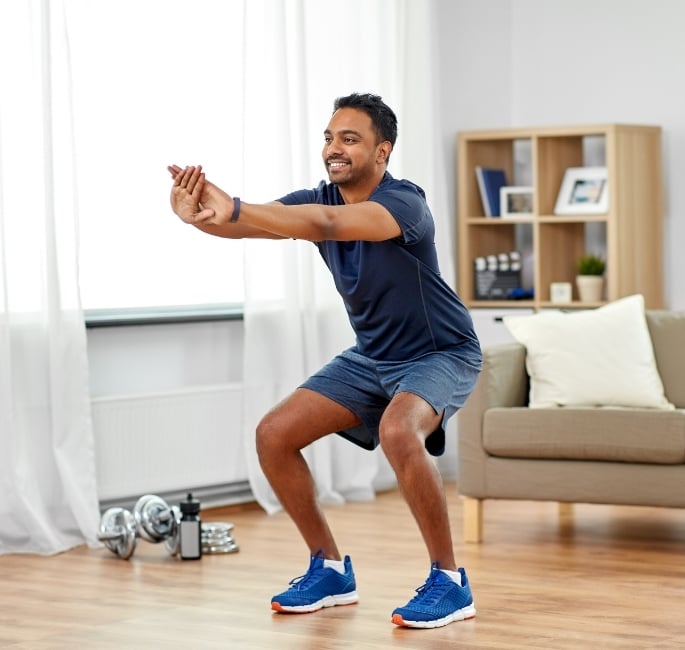 Dopamine is often misunderstood as a pleasure chemical, yet its central role lies in motivation, anticipation, and behavioural reinforcement.
When exercise produces a positive outcome, dopamine signals that the behaviour is worth repeating in the future.
Initially, this reinforcement occurs after the workout, strengthening feelings of accomplishment and relief.
As repetition continues, dopamine release begins to occur at the cue, such as seeing gym clothes or recognising a familiar workout time.
This shift creates craving, which drives action before conscious reasoning intervenes.
Exercise further enhances dopamine receptor availability, increasing reward sensitivity and supporting long term adherence.
Understanding the Habit Loop in Everyday Fitness
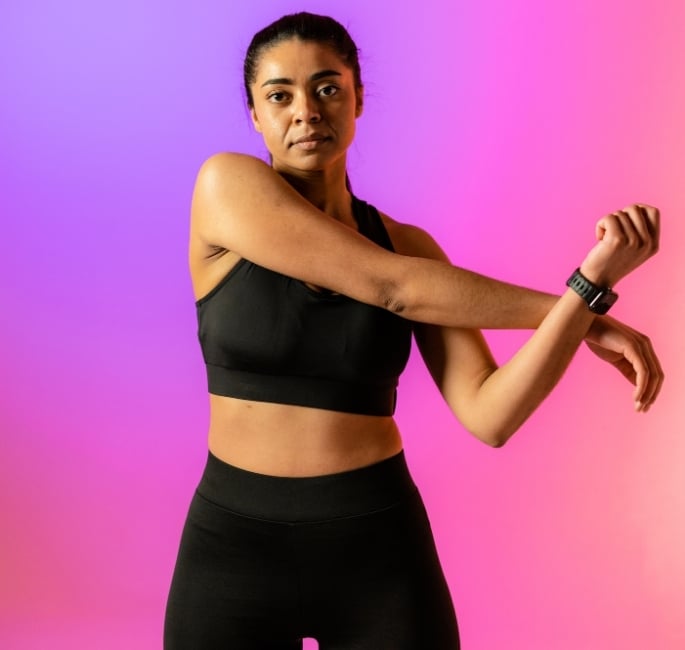 Most habits operate through a predictable loop consisting of a cue, craving, response, and reward.
In fitness contexts, cues might include time of day, location, emotional states, or routine transitions like finishing work.
The craving is not for exercise itself but for the emotional or physical state it delivers, such as clarity, confidence, or calm.
The response is the workout, whose likelihood depends heavily on perceived difficulty and accessibility.
The reward satisfies the craving and strengthens the memory loop.
When each stage is deliberately shaped, fitness becomes progressively easier to sustain.
Making Exercise Easier to Start and Finish
 Many people struggle because they attempt to begin at their ideal intensity rather than building consistency first.
Behavioural research consistently shows that initiation matters more than execution when forming new habits.
The Two Minute Rule works by shrinking workouts into actions that feel almost impossible to refuse.
Putting on trainers or moving briefly bypasses the brain’s resistance to effort.
Once movement begins, continuing requires less cognitive energy than stopping.
This strategy builds reliability and identity before performance becomes a priority.
Using Habit Stacking to Fit Fitness into Real Life
 Fitness habits are more likely to stick when anchored to behaviours already running on autopilot.
Habit stacking pairs movement with existing routines such as brewing tea, ending a workday, or winding down in the evening.
This removes decision-making from the equation, reducing reliance on motivation.
Implementation intentions use clear when-then structures that prompt action automatically.
Research shows this approach significantly increases follow-through rates.
For South Asians balancing work, family, and social commitments, habit stacking makes fitness realistic rather than aspirational.
Designing Environments That Support Movement
 The environment consistently exerts greater influence over behaviour than personal discipline.
High-friction environments make exercise feel inconvenient and optional.
Reducing friction involves placing equipment within sight and minimising logistical barriers.
Visual cues activate automatic responses without conscious effort.
Natural light, greenery, and calming spaces also improve mood and immersion during exercise.
When environments invite movement, consistency follows with far less internal negotiation.
Setting Goals That Encourage Consistency
 Outcome-focused goals often create pressure and frustration when progress stalls.
Process goals shift attention toward daily actions that remain within personal control.
This approach builds confidence through regular success rather than distant milestones.
SMART goals provide clarity while maintaining flexibility.
Scaffolding small wins over time creates a stable behavioural foundation.
Gradual progression protects both physical health and long-term motivation.
Overcoming Common Barriers to Staying Active
 Lack of time or energy often reflects deeper challenges, such as stress mismanagement or sleep disruption.
Executive function difficulties make complex routines harder to sustain consistently.
Biology also plays a role, as reward sensitivity varies across individuals.
Sleep and exercise influence each other, creating reinforcing cycles.
Social support strongly predicts adherence across cultures and age groups.
Finding enjoyment rather than obligation transforms fitness into sustainable self-care.
Using Coaching and Technology for Accountability
 Professional coaching helps translate intentions into personalised action plans grounded in behaviour change science.
Research shows coaching produces modest but meaningful improvements in activity levels.
Effective programmes build confidence through monitoring, feedback, and motivational conversations.
Fitness apps offer structure, reminders, and visible progress.
Gamification enhances engagement by leveraging reward systems and loss aversion.
When technology aligns with identity, fitness becomes part of self-perception.
Building Resilience When Life Gets in the Way
 Long-term consistency does not require perfection. Missing one workout does not undo progress or erase habit formation.
The real risk lies in missing twice and normalising inactivity. The Never Miss Twice principle creates a behavioural safety net.
Active recovery and variety prevent burnout and physical fatigue.
Self-compassion reframes setbacks as information rather than failure.
Fitness habits that stick are built through systems rather than willpower.
They respect the brain’s preference for efficiency and reward. They integrate into real environments, cultures, and emotional realities.
For South Asians navigating busy modern lifestyles, this approach offers sustainability without guilt.
Movement becomes something you do naturally rather than something you force. When fitness feels automatic, it stops being a goal and becomes part of everyday life.