

















































the discrimination extends to everyday life.
A violent attack in Dehradun has brought renewed attention to the racism faced by north-eastern Indians in major cities.
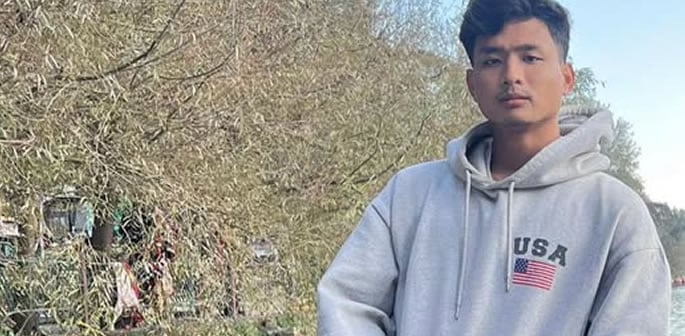
Brothers Anjel and Michael Chakma, students from Tripura who had moved more than 1,500 miles for education, were confronted by a group of men and allegedly racially abused at a local market on December 9.
They were then assaulted.
Michael Chakma was allegedly struck on the head with a metal bracelet, while Anjel suffered stab wounds. Michael has recovered, but Anjel died 17 days later in hospital.
Police in Uttarakhand arrested five people over the incident but denied the attack was racially motivated, a claim strongly disputed by the family.
The killing has triggered protests across India and cast a spotlight on allegations of discrimination against north-eastern Indians.
People from the region say they are often mocked for their appearance, questioned about their nationality, and harassed in public spaces and workplaces.
For many, the discrimination extends to everyday life.
Landlords reportedly refuse tenants from the north-east based on appearance, food habits, or stereotypes, pushing communities to cluster in specific neighbourhoods for safety and cultural support.
But violent incidents like Anjel Chakma’s death deepen fears about personal safety. India has witnessed several high-profile racial attacks in recent years.
The killing of Nido Tania in 2014 sparked nationwide protests after the 20-year-old student from Arunachal Pradesh was beaten to death in Delhi following taunts about his appearance.
Activists say such cases continue to occur.
Suhas Chakma, director of the Delhi-based Rights and Risks Analysis Group, said:
“Unfortunately, the racism faced by people from the north-east tends to be highlighted only when something extremely violent happens.”
For north-eastern residents in large cities, the attack has been unsettling.
Ambika Phonglo from Assam said: “Our facial features like narrow eyes and flat noses make us easy targets of racism.”
She recalled being racially name-called by colleagues:
“You face it and learn to move on but not without carrying a heavy burden of trauma.”
Many north-eastern Indians describe casual racism as a routine part of life in workplaces, campuses, and public spaces across India. Awareness has improved, but prejudice persists.
Alana Golmei, member of a federal monitoring committee set up in 2018 to examine racial violence in cities, said:
“How do we look Indian enough? Sadly, there are no clear answers.”
“One has to first accept and acknowledge the issue to begin addressing it.”
Anjel Chakma’s death has renewed calls for a standalone anti-racism law. Several student and civil society groups have issued open letters demanding legal reform.
After Nido Tania’s death, the government set up a committee that acknowledged widespread racism and recommended a dedicated law, fast-track investigations, and institutional safeguards.
Activists say little has changed. No specific legislation has been enacted, and many recommendations remain partially implemented.
Experts argue that legislation can help. Chakma and Golmei cite laws against dowry and caste-based atrocities, which have empowered victims and raised awareness despite not ending abuse.
Golmei said: “An anti-racism law could empower victims, improve reporting and place racial abuse clearly within the scope of criminal accountability.”
In Tripura, their father, Tarun Chakma, mourns Anjel while facing uncertainty over Michael, who is expected to return to Dehradun to complete his final year of sociology.
Tarun said he is torn between fear for his son’s safety and the belief that abandoning his education would be another loss.