

















































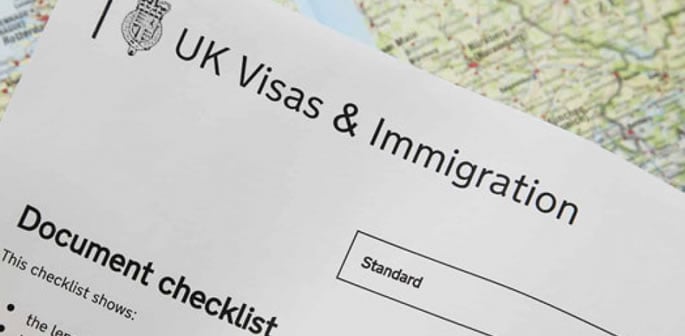
you are expected to understand the main ideas of complex text
The UK immigration system has now activated a series of updates to the English language standards for some UK work routes.
Most notably, the “Intermediate” B1 English level, long the standard for most work visas, has been retired for new applicants in favor of the more challenging “Upper Intermediate” B2 level.
If you are planning to move to the UK to work, the margin for error has vanished.
The Home Office is applying these rules with surgical precision: sitting the wrong version of an exam or providing a certificate for the wrong level is now a mandatory ground for refusal.
Passing an English test that is not on the Home Office’s approved list is treated as if you have provided no proof at all.
January 8, 2026
From January 8, 2026, any new professional applying for a Skilled Worker Visa or a High Potential Individual (HPI) Visa from outside the UK must prove they can speak, read, write, and understand English to the B2 level.
What does B2 actually mean in practice? It is a significant step up from the old B1 standard.
B2 is nearer to A-Level English, meaning you are expected to understand the main ideas of complex text on both concrete and abstract topics, including technical discussions in your specific field of expertise.
The Home Office’s goal is clear: they want workers who can integrate into high-level professional environments immediately, without language barriers affecting workplace safety or productivity.
However, if you are already in the UK, there is a vital “safety net”.
If your most recent visa was granted under the old B1 rules, you are protected. You can still apply to extend your visa or switch employers using your existing B1 level.
The higher B2 hurdle is currently a “gatekeeper” requirement – it applies at the entry stage to ensure new arrivals meet the 2026 standard.
Impact on India, Pakistan and Bangladesh
For Indian, Pakistani and Bangladeshi nationals, these changes represent a significant administrative hurdle.
While many professionals from the subcontinent are fluent or native English speakers, the Home Office does not include these three countries on its “Majority English Speaking” list.
This means that almost every applicant from these regions must provide a formal certificate. You have two main routes:
- A UKVI-Approved Test: You must sit a Secure English Language Test (SELT) specifically designed for UKVI. You cannot use “General” or “Academic” IELTS certificates that were not taken at an approved UKVI centre.
- The Degree Route: If you are using a degree taught in English from a university in India, Pakistan, or Bangladesh, you must obtain a statement from Ecctis (the UK’s official recognition agency). Crucially, you must ensure that the Ecctis certificate explicitly confirms your degree meets the B2 standard. If the certificate only confirms B1, your visa application will be refused today.
The 5 Most “Expensive” Changes in the 2026 Rules
Immigration is always a financial investment, but the 2026 rules have introduced five specific changes that significantly increase the cost and the risk for applicants.
- The B2 Retest Trap: Because the B2 exam is significantly harder than the B1, the failure rate is expected to rise. Every failed test costs hundreds of pounds, but the real expense is in the delay. A missed start date can lead to a withdrawn job offer, costing the applicant their career move and the employer thousands in recruitment fees.
- The 8,000-Application HPI Cap: For the first time, the Home Office has placed a hard limit on High Potential Individual visas. Only 8,000 applications will be accepted per year, with the cycle resetting every November 1st. If you apply after the cap is reached, you risk losing your application fee or being shut out of the route entirely.
- A Sharp Rise in Maintenance Funds: The “living costs” requirement has jumped. Students and workers must now show a significantly higher amount of money in their bank accounts for a full 28 days before applying. The base figure has increased to £1,529, and for those living in London, you must prove you have £1,334 for every month of your stay (up to nine months).
- The £500 NHS Debt Trigger: A new “Suitability” rule means your visa will be refused if you owe £500 or more to the NHS. In the past, small debts were often overlooked or handled with discretion. Today, a single unpaid hospital bill is a mandatory barrier to entry.
- Third-Party Deception Refusals: This is the most dangerous change for those using visa agents. If an agent makes a false representation or submits a false document on your behalf, even if you didn’t know about it, the Home Office will refuse your visa and may ban you from the UK for 10 years. The financial cost of a 10-year ban is immeasurable.
The ‘Part Suitability’ Framework
The 2026 rules have introduced a unified “Part Suitability” section that makes it much easier for the Home Office to cancel a visa or refuse an application.
One major trap involves the 14-day overstaying rule.
If your previous visa expired and you waited more than 14 days to apply for a new one, you will be treated as a breacher of immigration laws.
While there are very narrow exceptions for things beyond your control, the Home Office now has a much tighter definition of what that means.
Furthermore, if you are a persistent offender who shows a disregard for the law, even for non-custodial offenses, you will be refused under these new suitability grounds.
This demonstrates a shift toward a “good character” requirement that is far more strictly enforced than in previous years.
Strategy for Success
To navigate these changes successfully, you must be proactive.
- Don’t assume your English is “good enough”. Even if you are a doctor or engineer, you must have the specific B2 certificate or an Ecctis-verified degree.
- Check your debts. Ensure any old NHS charges or litigation costs are paid in full.
- Verify your agent. If you are using an agency in India, Pakistan, or Bangladesh, audit every document they submit. Under the new rules, “I didn’t know” is no longer a valid defense against deception charges.
- Watch the clock. If you are applying for an extension, submit it before your current visa expires. The 14-day “grace period” for overstayers is now incredibly difficult to claim.
The 2026 rules are designed to filter for the most prepared and most compliant candidates.
By meeting the B2 standard and ensuring your financial and suitability records are spotless, you can secure your future in the UK despite these challenging new hurdles.
We will be updating this article regularly – bookmark it to stay informed.