

















































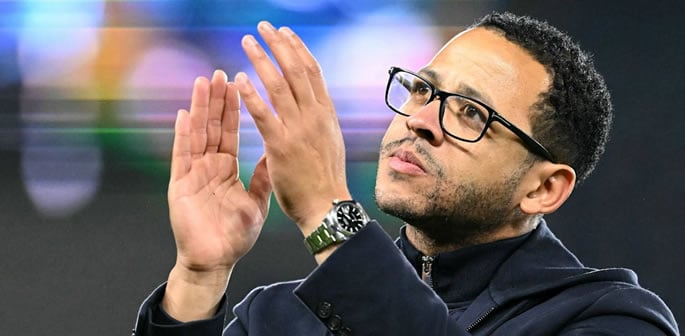
The lack of visibility at the elite level creates a cycle
Chelsea’s appointment of 41-year-old Liam Rosenior as head coach is a significant one in the Premier League.
Moving from Strasbourg, a fellow BlueCo-owned club, Rosenior replaces Enzo Maresca, taking the reins at a time when questions regarding diversity in football’s upper echelons are more pointed than ever.
His arrival at Stamford Bridge marks him as one of only 12 Black managers to hold a permanent position in the Premier League’s 34-year history.
While his six-and-a-half-year contract reflects a long-term commitment to his tactical philosophy, it also highlights the systemic barriers that remain for coaches of colour.
This transition provides a crucial lens through which to examine the broader representation gap, particularly the near-total invisibility of South Asian professionals in top-flight management and boardrooms.
The Coaching Disconnect

The statistical reality of English football reveals a profound disconnect between the pitch and the dugout.
Data from the Black Footballers Partnership 2023 report indicates that 43% of Premier League players are from Black backgrounds.
However, Kick It Out’s analysis of workforce diversity shows that across 17 of the 20 Premier League clubs, only 3.2% of board and senior leadership management teams are from ethnically diverse backgrounds.
This figure shrinks even further at the senior coaching level, where data from 11 clubs shows representation at a mere 2%.
For the British South Asian community, these figures are even more concerning, especially when you consider that 9.3% of the UK population is from an Asian or British Asian background.
While Liam Rosenior joins Nuno Espirito Santo as one of the few managers of colour currently in the top flight, the search for a South Asian head coach in the Premier League remains unfulfilled.
This absence persists despite the UK’s South Asian population being the largest ethnic minority group.
The lack of visibility at the elite level creates a cycle where talented South Asian coaches often find themselves excluded from the “meritocracy” that clubs frequently cite.
Kick It Out CEO Samuel Okafor noted the depth of talent within underrepresented communities, stating:
“We know there is loads of talent that exists… they want the opportunity to show what they can do. We need to continue to work hard to break those barriers down.”
Cultural Understanding

Liam Rosenior has frequently addressed the necessity of cultural intelligence in management, an area where South Asian representation could provide vital insights.
During his time at Strasbourg, Rosenior defended striker Emmanuel Emegha against labels of being “difficult” or “emotional”, attributing his success to understanding the player’s specific cultural background.
This nuance is often lost when coaching staffs lack diversity.
For South Asian players and aspiring coaches, the lack of representative leadership often leads to “misunderstandings of players from different cultural and ethnic backgrounds”, a point Rosenior has highlighted in his columns for The Guardian.
The structural deficit extends to the boardroom, where decision-making power resides.
Without South Asian voices in senior leadership, the pathways for coaches from these backgrounds remain obscured.
Paul Elliott, Chelsea’s first Black captain and a seasoned diversity advocate, emphasised that Rosenior’s rise is rooted in merit, yet acknowledged the powerful message it sends.
Chelsea’s first Black player, Paul Canoville, added:
“When kids see someone like Liam managing their club, someone who looks like them, who’s from their ends… that’s powerful and shows them the path is there.”
However, for a young British South Asian coach looking for a similar “path”, the Premier League currently offers no such blueprint at the managerial level.
Domestic Scarcity

Liam Rosenior’s appointment also highlights a broader trend: the scarcity of homegrown English managers regardless of background.
He becomes one of only four permanent English managers in the Premier League, joining Sean Dyche, Eddie Howe, and Scott Parker.
These figures lag significantly behind Europe’s other “big five” leagues; for instance, 16 of the 20 managers in Italy’s Serie A are Italian.
This domestic vacuum makes the entry of a young, articulate English coach like Rosenior even more notable.
Elliott described Rosenior as a figure who “represents everything that was right about the 21st century,” praising his intelligence and passion for the game.
Yet, the challenge for the Premier League remains one of consistency and expansion.
While the appointment of an English coach of colour at a “Big Six” club is a victory for representation, it serves as a stark reminder of the demographic groups still left in the cold.
To truly reflect the modern British landscape, the footballing hierarchy must address why the South Asian community, so deeply embedded in the nation’s culture, remains a footnote in the Premier League’s managerial and executive history.
Liam Rosenior’s arrival at Chelsea is an undeniable milestone in a career defined by both talent and a commitment to social progress.
Following in the footsteps of his father, Leroy Rosenior, who was awarded an MBE for tackling discrimination, Liam has consistently argued that race should not influence opportunity.
His transition to one of the world’s most scrutinised roles provides a glimmer of hope for all underrepresented coaches.
As Chelsea interim boss Calum McFarlane noted:
“It’s really inspirational for young English academy coaches to see someone get that job with that profile.”
However, the journey toward true representation in the Premier League is far from over.
While the Black community sees a high-profile figure in Rosenior, the South Asian community continues to wait for its first breakthrough in the top-flight dugout.
The data suggests that talent is plentiful, but the “broken barriers” Samuel Okafor spoke of are still being rebuilt in different forms.
For the Premier League to claim it is a truly global and inclusive brand, the appointment of managers like Rosenior must become the norm rather than an exception, and the door must finally swing open for the South Asian coaches and directors currently waiting in the wings.