

















































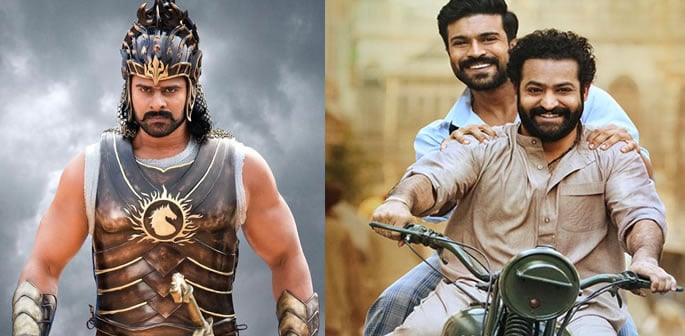
"The Telugu audience watch and accept all kind of movies."
While the world has long associated Indian cinema with the glitz of Mumbai, a seismic shift in the global entertainment landscape has placed the spotlight firmly on Tollywood.
For decades, Bollywood has long been seen as the pinnacle of Indian cinema.
But Tollywood, serving Telugu speakers across the country, has rapidly evolved into a content powerhouse that commands attention from Tokyo to Los Angeles.
With the colossal success of films such as RRR and the Baahubali franchise, the industry has proven that regional storytelling possesses the universal appeal necessary to shatter box office records.
We explore what Tollywood is and the reasons for its popularity.
What is Tollywood?
Tollywood is the colloquial moniker for the Telugu-language film industry, a production powerhouse that rivals, and often surpasses, its northern counterparts in scale and ambition.
India has several regional movie hubs, but this industry has carved out a distinct identity that operates entirely independently of Hindi-language Bollywood.
At the centre of this cinematic surge is Hyderabad, a city now synonymous with high-octane entertainment.
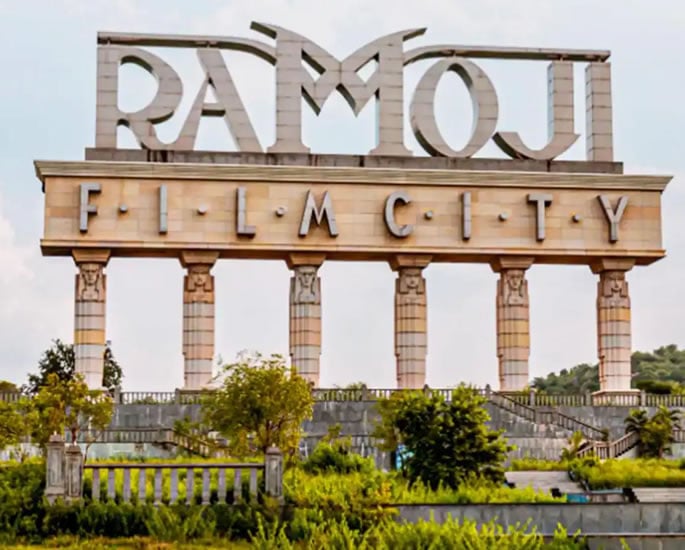
The industry’s physical scale is best seen in its infrastructure. Hyderabad hosts Ramoji Film City, a facility that goes far beyond any traditional idea of a studio.
Recognised by Guinness World Records as the world’s largest film studio complex, this 1,666-acre expanse functions as a self-contained ecosystem for filmmakers.
Inside its gates are massive studio complexes, dozens of dedicated production houses, extensive warehouses, and detailed movie sets capable of replicating everything from rural villages to royal palaces.
It also features state-of-the-art post-production facilities, allowing a film to be conceived, shot, and edited without ever leaving the site.
From this enormous base, the industry produces approximately 300 films every year.
Although this figure is slightly lower than Bollywood’s annual output, it remains one of India’s largest and most prolific regional sectors.
Its surge in visibility can be traced back to the coronavirus pandemic.
As cinemas closed and audiences sought entertainment from their homes, the rapid growth of streaming services in India democratised access to regional films.
Viewers who once relied solely on Hindi cinema began exploring Telugu narratives.
This digital shift arrived at a moment when Bollywood struggled to bring audiences back to theatres, weighed down by repetitive storylines and a wave of remakes.
By contrast, Tollywood delivered fresh energy and quickly captured a national audience hungry for something new.
What Type of Films are Made in Tollywood?

The cinematic language of Tollywood is defined by its unapologetic embrace of spectacle.
The industry is renowned for high-energy storytelling that combines family drama, mythology, and adrenaline-pumping action into a single motion picture.
These productions are heavy on visual effects and are designed to offer a larger-than-life experience that warrants a trip to the cinema.
In recent years, producers have increasingly marketed these movies as “pan-India” releases.
By dubbing them into multiple regional languages, filmmakers ensure that a story rooted in Telugu culture resonates just as deeply with viewers in the north, east, and west of the country.
A key factor in this widespread acceptance is the industry’s ability to balance bombastic action with emotional sincerity.
The films, like other big Indian productions, have crowd-pleasing visuals and feature viral songs and dances central to the narrative and usually presented as grand performance set pieces.
Yet, beneath the gloss, there is often a strong narrative spine.
Filmmaker T.V. Ravi Narayan said: “Telugu people have a lot of interest in movies.
“The Telugu audience watch and accept all kind of movies. They are cinema lovers.”
Narayan highlights the versatility of the audience, noting that their appetite extends beyond mere blockbusters:
“Because they are cinema lovers, be it Baahubali, Pushpa or RRR, be it big budget or small budget, be it realistic or biopics or fantasy movies, the audiences accept it.”
Indeed, while the industry is famous for epics, it also fosters a healthy ecosystem for smaller, low-budget films. These productions tend to focus on stories rooted in the specific cultural fabric of Telugu society.
Often set in rural landscapes, these films explore complex themes such as social issues, regional traditions, and class inequality.
One example is Colour Photo, a period romantic drama directed by Sandeep Raj that tackles caste and colourism.
Many of these grittier, realistic narratives are sent straight to streaming platforms like Netflix and Amazon Prime, where they have found significant success and critical acclaim across India.
What is the Fandom Like?
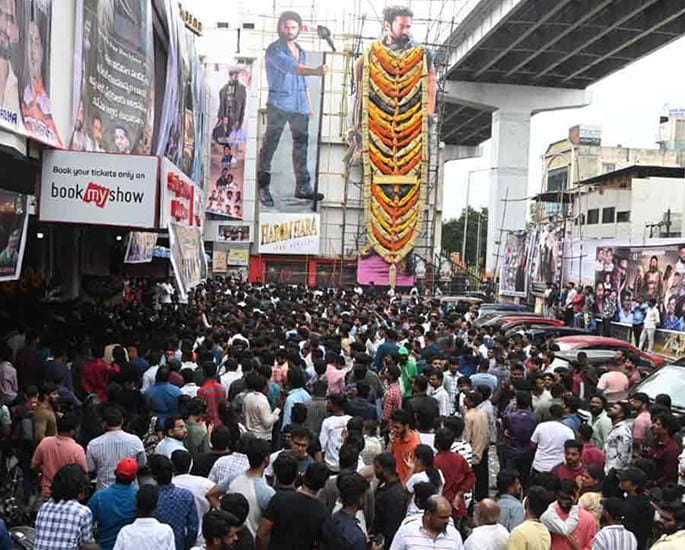
To speak of Tollywood is to speak of a fan culture that has no parallel in the Western world. The devotion exhibited by the audience transcends admiration and enters the realm of reverence.
Leading stars such as Mahesh Babu, Allu Arjun, Prabhas, Ram Charan, and Jr NTR have a following that is near-godlike in its intensity.
These fanbases span generations, creating a dynastic loyalty to specific actors and their families.
A major film release is treated less like a commercial premiere and more like a regional religious festival. These events are preceded by carefully marketed music launch events and dance performances that are spectacles in themselves.
Tens of thousands of fans attend such events, filling stadiums to catch a glimpse of their heroes, as they did recently with the first look of S.S. Rajamouli’s upcoming epic, Varanasi.
The industry has facilitated a massive fan club culture, predominantly centred around male film stars. This enthusiasm often channels into philanthropy, with fans so invested in their favourite stars that they organise charitable drives and blood donation camps in their names.
However, the devotion also manifests in ritualistic behaviours.
It is not unusual for fans to perform acts of literal worship, such as washing male stars’ cardboard cutouts or huge statues with milk.
Inside the theatres of Andhra Pradesh and Telangana, the atmosphere is electric.
Viewers commonly dance, whistle, and throw confetti in the air when their favourite star appears on screen. Outside, the city’s skyline is frequently dominated by towering billboards of major stars.
This cultural influence is so potent that it has frequently spilt over into the political arena.
One example is when N.T. Rama Rao founded the regional Telugu Desam Party. Riding on his cinematic popularity, he successfully defeated the Congress Party, led by then-Prime Minister Indira Gandhi, within nine months.
He swept the state elections to become the Chief Minister, cementing the idea that in Telugu states, the line between the screen and the ballot box is often blurred.
What has Driven its Success?

While the Telugu film industry has always been robust, its recent ascent to the global stage is largely credited to the vision of S.S. Rajamouli.
His directorial style favours larger-than-life heroes, imaginative world-building, and emotional storytelling that transcends language barriers.
Rajamouli became a household name internationally after the release of RRR in 2022.
Set in British India, this three-hour epic captivated global audiences and became a streaming phenomenon. Its success culminated in an Oscar win for Best Original Song, a historic moment for Indian cinema.
Before RRR, Rajamouli redefined the commercial potential of Indian films with his Baahubali series.
Baahubali: The Beginning (2015) and Baahubali 2: The Conclusion (2017) broke box-office records across India.
These films set a new benchmark for visual effects and scale.
The franchise remains so popular that a reedited version combining the two parts, titled Baahubali: The Epic, was released in cinemas worldwide in October 2025.
The momentum generated by these hits has paved the way for future projects with even greater ambition.
Rajamouli’s Varanasi is expected to release in 2027 and promises to blend time-travel with Hindu mythology.
The production team is acutely aware of the global expectations now resting on their shoulders.
S.S. Karthikeya, Rajamouli’s son and one of the Varanasi producers, said:
“We set out to do something very big that we all are excited about, and we just hope and pray that audiences across the world you know, embrace it as well.”
What Business Do Tollywood Films Do?

Tollywood’s artistic triumphs are underpinned by a formidable economic engine.
Just like Bollywood, the Telugu film industry draws its revenue from a diverse portfolio including theatrical releases, television and music rights, overseas distribution, and brand partnerships.
It is widely regarded as India’s second-highest-grossing film industry, trailing only Bollywood, though the gap is narrowing rapidly.
The business is characterised by a mix of corporate ambition and traditional power structures.
The industry is largely controlled by a few regionally influential film families and businessmen who hold significant power over movie distribution and screenings.
Despite this concentration of power, the industry has successfully modernised its approach to marketing.
Huge marketing campaigns have carried Telugu films across India and beyond, breaking the regional silos that previously limited their reach.
A key business strategy has been the aggressive use of remakes and dubbing.
Many Tollywood films are remade in other Indian languages, something that has become a proven formula for expanding Telugu cinema’s influence.
Furthermore, dubbing is a standard and tested practice.
This has made Tollywood more accessible to non-Telugu speakers, allowing films like Devara: Part 1 (2024) and Pushpa 2: The Rule (2024) to become nationwide blockbusters.
Talent collaborations across other regional industries have further positioned Tollywood releases as national events.
Stars often rake in substantial money from profit-sharing arrangements and brand endorsements, capitalising on their pan-Indian fame.
By treating the entire nation as a single market, Tollywood has rewritten the rules of the Indian film business, proving that a story told from Hyderabad can capture the imagination of the entire planet.
Tollywood has evolved from a regional powerhouse into a global cultural phenomenon.
By combining technical brilliance with stories that are deeply rooted in Indian ethos yet universally appealing, the industry has won over audiences who may have never previously watched a subtitled film.
With visionary directors pushing the boundaries of imagination and a fanbase that offers unwavering support, the industry is poised for even greater heights.
As Hyderabad cements its status as a global filmmaking hub, the world is watching, and cheering, along.