

















































“You tried to make us give up Korean."
Uttar Pradesh Police investigating the alleged triple suicide of three sisters in Ghaziabad said it was marked by an intense attachment to Korean culture.
The incident occurred at Bharat City Society in the early hours of February 4.
A nine-page diary recovered from the sisters’ room has emerged as a central piece of evidence, offering insight into their emotional state.
Police said the diary reflects an intense attachment to Korean culture, alongside distress linked to ongoing family conflict and parental opposition.
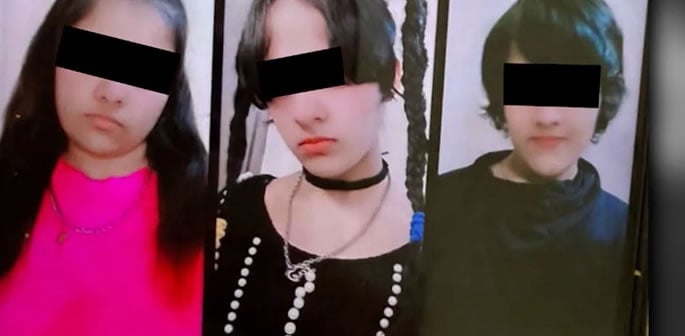
The sisters, identified as Nishika, aged 16, Prachi, aged 14, and Pakhi, aged 12, were rushed to a hospital in Loni, where they were pronounced dead.
According to police accounts, the sisters had locked their room from the inside before taking their own lives.
A senior police official said the diary contains repeated references to their love for Korean culture and resentment towards attempts to curb it.
“We love Korean. Love, love, love,” the diary states, describing itself as a “true life story” and urging readers to believe its contents.
The diary alleged frequent parental opposition to their interests and future choices, including marriage.
The diary said: “You tried to make us give up Korean. Korean was our life. You expected our marriage to an Indian, that can never happen.”
According to police, the diary ended with an apology to their father.
Investigators said the diary also refers to a younger sister, identified as ‘Devu’, describing a fractured sibling relationship.
The sisters wrote about their failed attempts to share their Korean interests with her, claiming their parents introduced her to Bollywood instead.
They described Bollywood as something they “hate more than our lives”.
The note read: “We separated Devu from ourselves and told her that we are Korean and K-Pop and you are Indian and Bollywood.”
The diary also indicated the girls’ interests also included Thai, Chinese, and Japanese films and music. References to Hollywood, English songs, and cartoons were also found.
Police are also examining the family’s financial situation.
An office-bearer of the residents’ association said the girls’ father, Chetan Kumar, was under severe financial stress.
He allegedly incurred stock market losses exceeding Rs 2 crore and, at one point, sold a mobile phone to pay electricity bills.
The financial strain reportedly led to frequent clashes within the household.
Kumar claimed the girls had been playing a Korean game for over two years and had stopped attending school.
However, police said their initial probe has not found evidence supporting the use of any Korean task-based app.
The triple suicide has reignited wider concerns around children’s mental health and digital exposure.
Mental health professionals have warned that excessive screen exposure can intensify emotional distress in adolescents.
Dr Sudhir Kumar, Neurologist at Apollo Hospital, said:
“This tragedy is a stark reminder that internet addiction is not a harmless phase.”
“The adolescent brain is still developing, and excessive, unsupervised digital exposure can distort thinking, increase impulsivity, and heighten vulnerability to self-harm.
“Parents must stay actively involved in monitoring screen time, understanding online content, and seeking help at the earliest warning signs. Early intervention can save lives.”
Dr Ravi Parkash, consultant psychiatrist, stressed parental responsibility:
“Parents must remain alert to the warning signs and be aware of what kind of content their children are consuming online. It is their responsibility to closely monitor screen use and online behaviour.”
The investigation remains ongoing, with police continuing to examine the diary, family circumstances, and surrounding events leading up to the deaths.