














































"He was the Master Poet!"
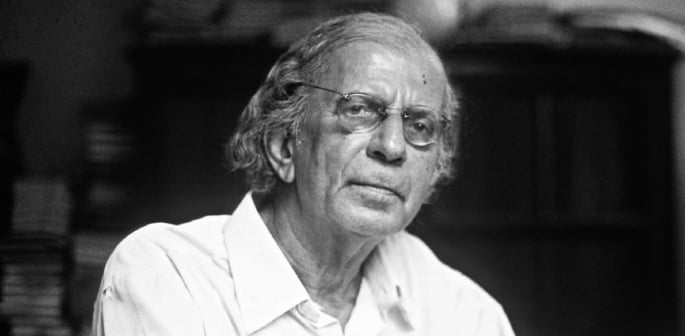
Nissim Ezekiel stood as a beacon of literature in post-colonial India.
He pioneered Indian poetry in his illustrious career.
A recipient of several awards, Nissim used modernism among his vast techniques.
As a result, this made him stand out in his chosen field.
DESIblitz delves into this intellectual’s saga and presents a journey into his many achievements.
Join us as we explore the story of Nissim Ezekiel.
Early Life & Education
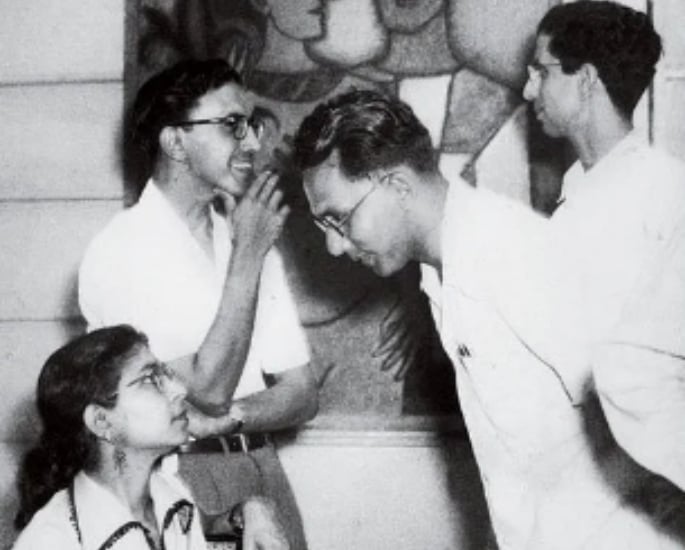 On December 16, 1924, Nissim was born in Bombay, British India, which is known as Mumbai, Maharashtra.
His father was a botany professor, while his mother was a school principal.
Nissim was thus born into an intellectual family and was arguably destined for his achievements.
In 1947, Nissim earned a Bachelor of Arts (BA) degree in English Literature.
He taught the subject for the next year, before travelling to England.
As he was teaching, Nissim published several literary articles.
While at Birkbeck College, London, he studied philosophy.
He worked his way home as a deck-scrubber aboard a ship to Indochina.
Poetry Career
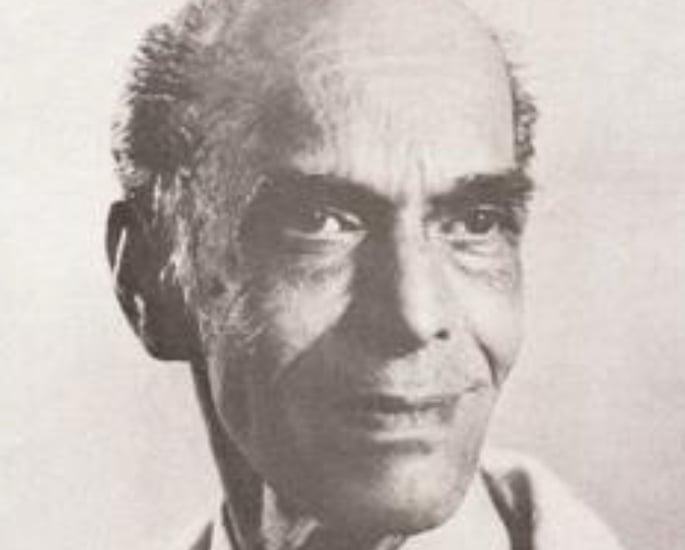 The first poetry book that Nissim Ezekiel was A Time To Change (1952).
A Time To Change introduced a change in poetry, as it pioneered Indian English poetry.
This was the newest form of poetry at that time.
Furthermore, the themes that Nissim explored in his poetry included themes of moral values and societal implications.
He also addressed contemporary ideas, proving his modernism and progressive thinking.
The book also expresses Nissim’s frustration at the world around him. He uses humour and dew stanzas to convey his thoughts.
In 1953, Nissim published 60 Poems. Despite the name, the collection comprises 16 poems.
This anthology relied on imagery, metaphors, and rhyming.
Among his work in the 1950s was a poem known as Enterprise, which creates imagery of a group of pilgrims.
“[It] also highlights the futility of looking for fulfilment outside oneself.”
“Interestingly, the last line of the poem, ‘Home is where we have to earn our grace’ is an affirmation that the effort to escape from the reality of life is utterly futile.
“At an allegorical level, the poem depicts the human quest for peace, contentment, meaning, identity, and self-discovery.
“In spite of his love-hate relationship with India, by means of the poem, Ezekiel convinces himself of the importance of accepting India as his home.”
After publishing The Deadly Man (1960), Nissim Ezekiel founded the monthly literary magazine Jumbo.
While he edited a few magazines, Nissim also worked as Head of the English department at Mithibai College in Mumbai.
Nissim also held short-term tenures as visiting professors including The University of Leeds and the University of Pondicherry in the 1960s.
He also presented a series of 10 art programmes for Indian television.
In 1976, Nissim also translated Prime Minister Jawaharlal Nehru’s poetry from English to Marathi.
All these accomplishments prove that Nissim Ezekiel was an expert and an influential figure in poetry.
Editing Career
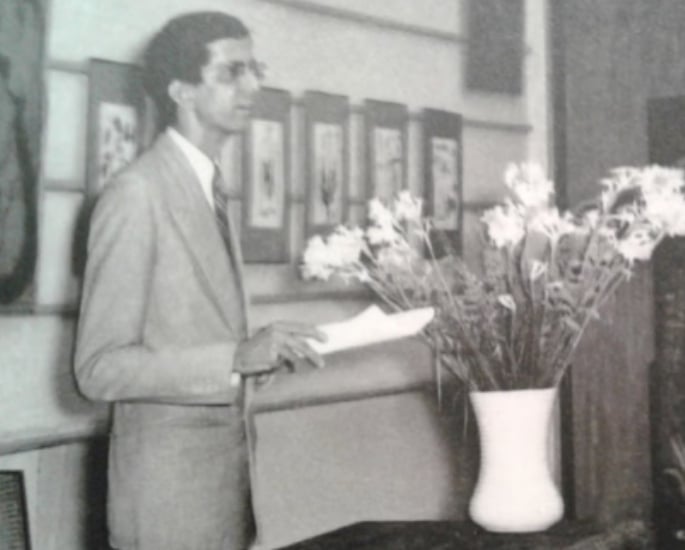 In 1954, Nissim was the founding editor of Quest.
Between 1954 and 1975, Quest was a quarterly and bimonthly magazine.
When then Prime Minister Indira Gandhi declared a national emergency, the magazine ceased its output.
In 1966, some articles from the publication, 10 Years of Quest were released.
These were edited by the writers Abu Sayeed Ayyub and Amlan Datta
In 2011, some were re-published and titled The Best of Quest.
Nissim Ezekiel also edited The Indian PEN which inspired and encouraged new writers and poets.
Awards
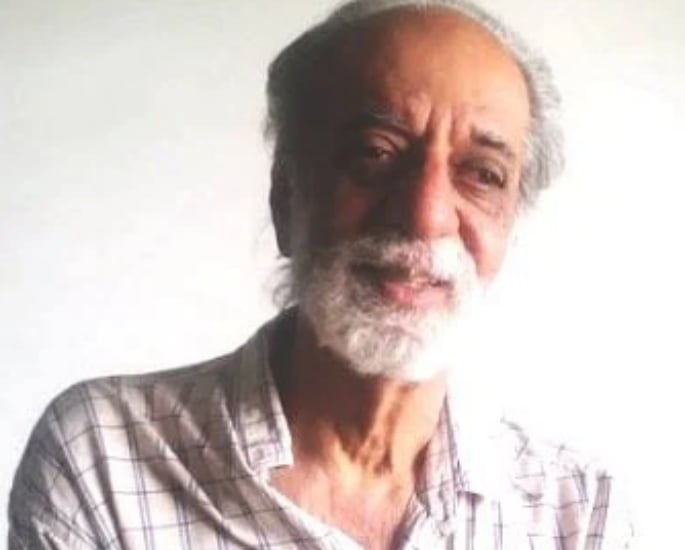 During his life, Nissim won several awards. These included the Padma Shri, which is the fourth-highest civilian award.
He won that award in 1988 and 1983, he won the Sahitya Akademi Award, which is the second-highest literary award in India.
Nissim’s daughter, Kavita Ezekiel Manonca, revealed the reaction upon her father winning the Padma Shri:
“Friends and family kept calling all day long.
“We answered every phone call, completely unable to conceal our pure joy.
“I think Daddy only found out when I made a phone call to him.
“He remained blissfully unaware.”
Kavita also spoke about Nissim winning the Sahitya Akademi Award:
“I do remember feeling immense pride on hearing the news.
“My father was a simple man with very few needs. [He] never cared for money, awards, fame, or prestige.
“[Nissim] was devoted to his work with single-mindedness and simplicity, especially to poetry and to promoting the cause of poetry.
“He was a true philanthropist. If ever there was someone who could be described as ‘unworldly’, it was him.”
The words of Kavita suggest that Nissim Ezekiel was not only a great poet, but he was also an admirably humble person.
A Legend Never Dies
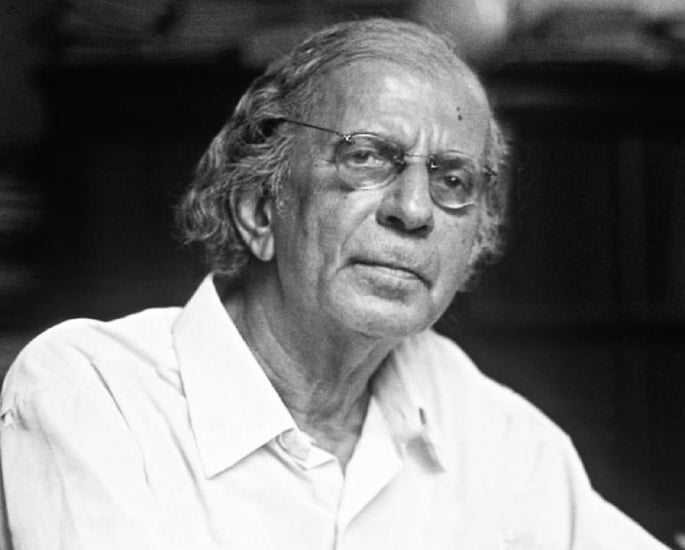 During his later years, Nissim battled Alzheimer’s Disease – an illness that eventually took his life on January 9, 2004.
He was 79 years old.
Kavita sheds light on how her father wrote poetry: “He would lie down on the bed with a handkerchief over his eyes.
“The smoke from his cigarette would keep curling to the ceiling and die out.
“When he was done, he would call me into the room, read out the poem, and ask me how I liked what he had written.
“He spoke slowly, deliberately and enunciated each word, reciting it so beautifully.
“It put you in the exact mood that matched the theme of his poem.
“He accepted suggestions with that characteristic twinkle in his eyes.
“It was not for me to know whether he made any changes based on my suggestions.
“After all, he was the Master Poet!”
Nissim once said: “Poetry is an art of language and philosophy is an art of thought.”
He was undeniably well-versed in this art.
The poet’s work stands the test of time as a lamp in the room of Indian literature.
His collections and books have inspired millions of readers to invest in poetry.
Kavita adds that her father taught her to have strong empathy, compassion, and a positive attitude in life.
With these factors, it is no wonder that Nissim was a respected man as well as a hugely gifted writer.
The poems of Nissim Ezekiel will continue to enthral generations as his name shines in glory.