

















































"So I kept expanding it and fleshing out the characters.”
Bad Queer is a luminous, fiercely alive verse novel exploring queer adolescence, first love, and the complexities of identity.
Surya, a non-binary teenager, navigates school, friendships, and the dizzying intensity of first crushes, while also exploring consent, boundaries, and self-discovery with honesty and humour.
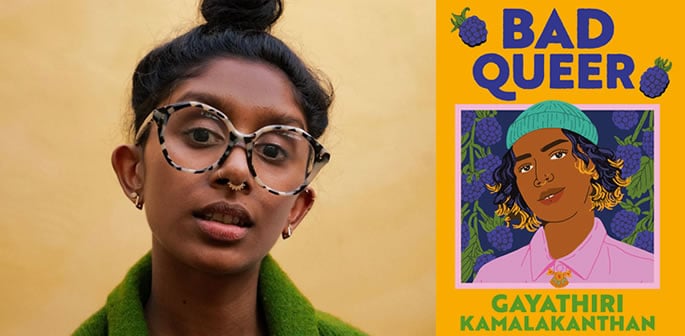
Gayathiri Kamalakanthan, a Tamil writer and producer, brings rare insight to the story, drawing on years of teaching Sex and Relationships Education across the UK and their experiences creating the trans Tamil romcom Period Parrrty, which debuted at Soho Theatre in 2025.
The book also situates Surya within a Tamil family, reflecting on diaspora identity, intergenerational dynamics, and cultural belonging with care and nuance.
Scheduled for release on March 26, 2026, Bad Queer sets the stage for a story that examines the challenges and joys of growing up queer.
This journey into identity, love, and family opens the door to the novel’s deeper themes and character experiences.
Exploring Queerness, Consent and Belonging
Bad Queer began with the kinds of conversations many young people have behind classroom doors.
For Gayathiri Kamalakanthan, teaching Relationships and Sex Education offered a close view of how teenagers navigate identity, boundaries and relationships.
They say: “I love young adult novels and I was teaching Relationships and Sex Education full-time when I started writing.
“The conversations we were having in classrooms about consent, sexuality and gender really fed Bad Queer and what the characters were grappling with.”
Students often raised questions that reflected the uncertainty many young people feel when exploring identity, as Gayathiri explains:
“Questions like ‘can I still be bi if I have a boyfriend?’ or ‘what if I want to stop having sex in the moment?’
“It’s important that we open up these conversations without shame and have characters who navigate these questions.”
These discussions shaped the emotional direction of the story. While narratives about sexual violence remain essential, Gayathiri also wanted to explore the dynamics of healthy intimacy.
“There’s so much in books and TV about sexual violence which is an important topic to talk about and understand.
“But I also wanted to read examples of consensual, caring relationships. It’s important that we have templates for these conversations.”
By centring communication, consent and care, the story reflects questions many young people are already asking. These themes also influenced the form Gayathiri chose to tell the story.
Why Poetry was the Right Form
The story’s format as a verse novel developed gradually from a single poem.
Gayathiri Kamalakanthan recalls how the project began with a piece exploring belonging within a queer Tamil family:
“The first poem was called ‘Finding Home’ and it was about a parent teaching their teenager about finding belonging as a queer Tamil person.”
A conversation with a friend encouraged the writer to expand the idea into something larger:
“A friend told me it sounded like there were bigger stories waiting beneath that one poem. So I kept expanding it and fleshing out the characters.”
As the story developed, poetry offered the flexibility she needed to explore identity.
They explain: “I think poetry is great at questioning, discovering and holding uncertainty.
“It can shapeshift just like gender, sexuality and relationship dynamics – it felt like the right form to tell this story.”
Verse novels also played a key role in shaping her creative approach.
Gayathiri says: “I also fell in love with verse-novels like The Poet X by Elizabeth Acevedo, Run, Rebel by Manjeet Man and The Black Flamingo by Dean Atta. These books really opened up poetry for me.”
Their influence reinforced Gayathiri’s belief that poetry could capture emotional uncertainty and discovery in ways that mirrored the experiences of queer young people.
Building Surya’s World
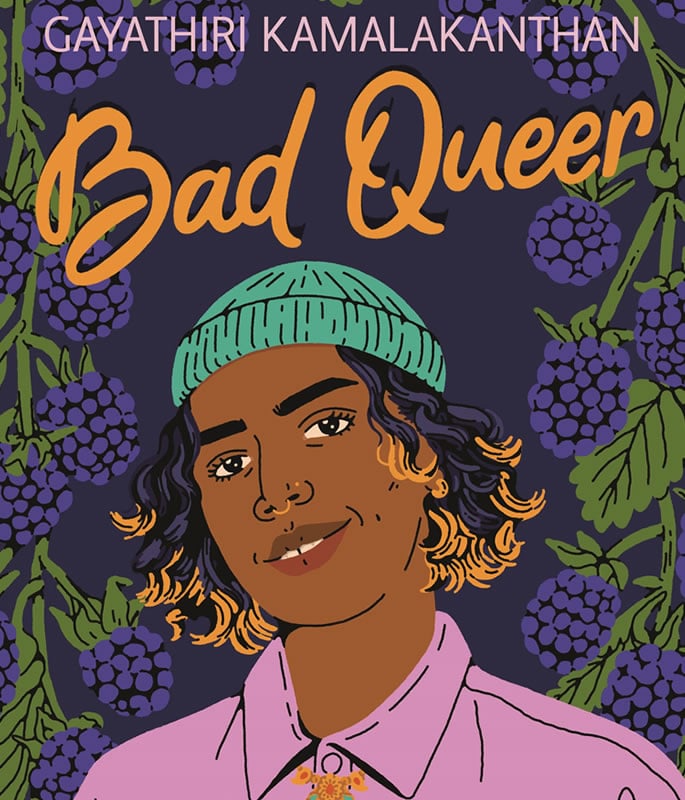
At the centre of Bad Queer is Surya, a non-binary teenager navigating identity, relationships and first love.
To ensure the character felt authentic, Gayathiri drew on various sources:
“As I was writing, I read through old diaries, I spoke to friends and I also had a head full of questions and conversations from the students I was teaching at the time.
“Surya’s 17 years old for most of the book, and at that age, I remember making sense of the world through books and friendships and also through the theatre group I belonged to.”
Those memories helped inform Surya’s emotional journey.
Gayathiri says: “Surya is shaped by similar experiences.
“Journaling and performance become tools for them to build confidence and imagine a future for themselves that they actually want.”
Surya’s relationship with Blessing forms a key part of that journey.
Gayathiri elaborates: “Also, when you fancy someone, like properly fancy them, it’s such an all-encompassing force.
“I wanted Blessing to be the only person Surya sees, the moment they meet him.”
The depiction of first love draws on Gayathiri’s own memories, as they reveal:
“That feeling of a first crush is really imprinted in my memory so I drew from that.
“Surya is a non-binary teenager and the story centres on them falling in love for the first time. It felt important to explore Blessing and Surya’s relationship with lightness as well as vulnerability.”
Moments of humour sit alongside more intimate and reflective scenes.
The novel also explores Surya’s experiences of intimacy.
Gayathiri explains: “Surya navigates sex and touch for the first time, learning what feels good, what doesn’t, and how their gender dysphoria can affect those experiences.”
Communication becomes central to those moments and Gayathiri’s experiences as a sex and relationships teacher shaped that focus.
They say: “When I was teaching Sex and Relationships Education (in schools and universities), I noticed that students often had vocabulary to describe sexual harm but were less confident talking about what they were consenting to.”
Through Surya’s story, the book shows those conversations unfolding in real time. These moments are intentionally imperfect.
Gayathiri explained: “About what they did and did not want to happen in a sexual context – awkwardly, clumsily, giggling through the words – before touch even happens.”
The response to boundaries also matters.
They say: “I also wanted to show someone responding to their partner saying ‘no’ in a caring and respectful way.”
For Gayathiri, portraying these moments honestly felt important.
“Writing these scenes felt empowering, honest and healthy.
“Ultimately, I want queer teens (and adults!) to have beautiful romances and comedy moments because we deserve these stories too.”
Identity, Family and Cultural Roots
While Surya’s coming-of-age story drives the narrative, Bad Queer also reflects Gayathiri’s wider reflections on identity and family.
“I sometimes think about writing as rehearsing for the future. You can plot out different ways of living and being.”
That idea shaped the family dynamic in Bad Queer.
“For Bad Queer, I imagined a queer Tamil family – a child, parents and grandparents, as well as their chosen family.
“And I thought about questions like: What would our child learn from us? How would I talk to my child about consent, gender and bodily autonomy?
“How would I speak about Sri Lanka and the genocide that drove us out?”
These questions influenced how family relationships develop within the story.
“So Bad Queer is a mix of personal as well as imagined stories.”
On the title’s inspiration, Gayathiri reveals:
“The title stems from that feeling of not being ‘queer enough’, or feeling bad about not being ‘loud and proud’ all the time about your queerness.”
For many people, language alone cannot fully capture identity.
“I think when you’re still figuring yourself out (maybe that never ends), it’s hard to be sure about the words to describe yourself.
“I think language only goes so far in representing who we are.
“Of course it’s useful, but I feel like we’re more than the words we use for ourselves.”
The phrase “bad queer” therefore recognises those moments of uncertainty.
“So ‘bad queer’ is for anyone who’s felt uncertain in their queerness, who’s felt on the outside of queer spaces, who feels like they don’t perform ‘queer’ in ways they might be expected to.”
Writing the book also pushed Gayathiri beyond the short-form poetry she had previously focused on:
“Before finishing the book, I felt more comfortable writing short-form poetry. So holding multiple character arcs and a full plot was a completely new exercise for me.”
The process also deepened her understanding of generational attitudes.
Gayathiri explained: “I was also surprised by how much empathy I had for Surya’s grandparents and their discomfort with queerness.
“The more I researched and spoke to people, the more I understood where this comes from.
“The grandparents’ transphobia is a colonial import, it’s not actually theirs.
“They were raised in Sri Lanka, at a time when the British had criminalised queerness, so they’ve grown up with this hate.”
Unlearning those ideas takes time, as Gayathiri admits:
“It takes time to undo it, and I was glad that Surya could give them space to unlearn.”
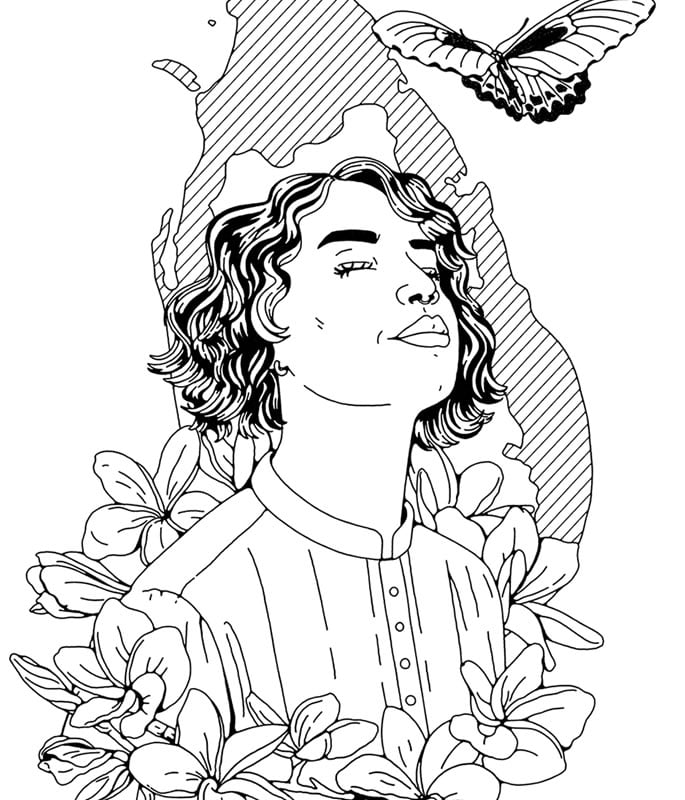
The visual elements of the book also contribute to its emotional atmosphere, with Chi Nwosu’s illustrations helping to bring Surya’s experiences to life.
Gayathiri says: “I’ve been a fan of Chi Nwosu’s work for years, so working with them genuinely felt like a dream come true.
“The illustrations bring so much feeling to the page.”
Language and cultural identity also appear throughout the novel.
Gayathiri explained: “Also, there’s a little bit of Tamil in the book.”
Tamil script was particularly meaningful to include as it was Gayathiri’s “first time trying to write a poem using the Tamil script itself, rather than transliterating a word”.
The inclusion reflects Gayathiri’s own relationship with the language.
They elaborate: “It might seem like a small thing, but I’m learning to read and write Tamil and it’s really special for me to have this in the book.”
Gayathiri hopes this search for belonging resonates with readers.
Bad Queer also encourages readers to think about their own identities and boundaries.
Gayathiri adds: “I hope readers finish the book feeling empowered to take the time they need to figure out who they are and what they want.
“I want readers to feel confident and good about naming their emotional and physical boundaries – whether that’s at school, home or work.”
Bad Queer is a celebration of self-discovery, empathy, and the courage to define identity on your own terms.
Through Surya’s experiences, Gayathiri Kamalakanthan explores first love, friendships, family expectations, and cultural belonging with tenderness and authenticity.
The verse novel demonstrates how storytelling can give queer teens and adults a space to feel seen, understood, and empowered.
With its blend of emotional honesty, humour, and insight, it is a book that lingers long after the final page.
As it prepares to release on March 26, 2026, Bad Queer is a moving, hopeful, and essential read for anyone navigating identity, love, and belonging.