













































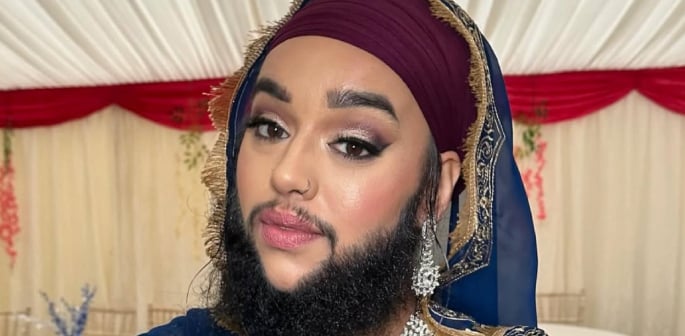
"PCOS didn’t take my femininity away..."
British activist and speaker Harnaam Kaur has reignited conversations about health, femininity and body acceptance after sharing candid reflections about living with Polycystic Ovary Syndrome.
Born on November 29, 1990, in Slough to a traditional Punjabi family, Kaur is globally recognised as the “bearded lady” activist.
Her facial hair developed due to PCOS-related hirsutism, a symptom caused by elevated androgen levels that can trigger excessive body and facial hair in women.
Kaur was diagnosed with PCOS at around age 12, when hormonal changes during adolescence began affecting both her health and physical appearance.
PCOS is a common hormonal condition that can cause irregular periods, acne, excess hair growth and increased risk of metabolic conditions such as diabetes.
The disorder is often linked to hormonal imbalance and insulin resistance and is considered a leading cause of ovulatory infertility.
During her early teenage years, Kaur attempted to remove her facial hair through shaving and other methods in an effort to meet conventional beauty standards.
However, her appearance soon made her a target for bullying and harassment at school and in public spaces.
The relentless abuse deeply affected her mental health, contributing to struggles with self-worth and suicidal thoughts during adolescence.
At the age of 16, Kaur made the life-altering decision to stop removing her beard and embrace it as part of her identity.
That turning point sparked a journey into activism, body positivity and advocacy for those living with visible differences and hormonal conditions.
Her story gained international recognition when Guinness World Records confirmed her as the youngest woman with a full beard in 2015.
She later became the first bearded woman to walk the runway at London Fashion Week, challenging long-standing beauty norms on a global stage.
Today, Kaur is an award-winning speaker who addresses audiences worldwide on mental health, diversity, bullying and PCOS awareness.
In a recent Instagram video, she reflected on how the condition can make the body feel unpredictable and constantly changing.
Kaur wrote: “Women with PCOS know your body can feel like it’s constantly changing. For me… it meant growing a beard.”
“And for a long time, society told me that meant I couldn’t be feminine. But femininity isn’t fragile.”
She explained that femininity can take many forms, from wearing bold lipstick to dressing in bright Indian suits at family functions.
View this post on Instagram
Kaur added, “Sometimes femininity looks like bright Indian suits at family functions. Sometimes it looks like bold lipstick.”
“Sometimes it looks like a beard.”
Reflecting on her journey, she wrote: “PCOS didn’t take my femininity away; it forced me to delve into it deeper.”
“And honestly… I think that version is far more powerful.”
In another recent video, Harnaam Kaur described makeup as a grounding ritual that helps her navigate the physical and emotional shifts caused by PCOS.
She explained that hormonal changes can affect her skin, energy and overall well-being.
Kaur said sitting down with makeup brushes and colours helps her slow down and reconnect with herself.
“It reminds me that femininity isn’t something fixed, it’s something I get to enjoy and express in my own way.”
She added that sparkly eyeshadow, glossy lips and colourful outfits bring joy, especially during family gatherings.
“PCOS might bring its ups and downs, but it’s also taught me to slow down and appreciate these small rituals.”
Through social media, public speaking and advocacy, Kaur continues to use her platform to challenge stigma around hormonal conditions and visible differences.
Her message resonates particularly within South Asian communities, where body hair on women is often heavily scrutinised.
By sharing her story openly, Harnaam Kaur is encouraging others with PCOS to seek support, prioritise mental wellbeing and embrace their identities without shame.