

















































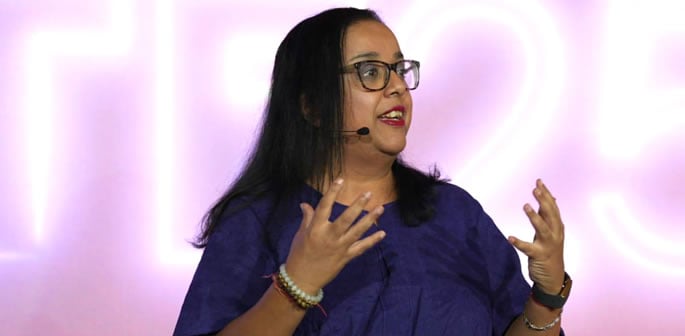
"if I want to succeed, I had to work on my own self-value"
Few professionals talk about confidence as directly and practically as Advita Patel.
From navigating a childhood where she and her family constantly faced racism, to building multiple businesses and leading at the highest levels of her industry, she has made understanding self-belief both a career and a calling.
Today, her work focuses on helping leaders and organisations create cultures where authenticity and clarity thrive, even under pressure.
As a communications and confidence strategist, coach, and author, Patel decodes the mechanics of confidence in ways that are actionable, relatable, and grounded in real experience.
Her approach goes beyond theory, exploring how daily choices, habits, and mindset intersect to create lasting professional impact.
Advita Patel talks to DESIblitz about her journey, the lessons she’s learned, and why authentic confidence is an essential leadership skill.
Learning to Stop Playing Small
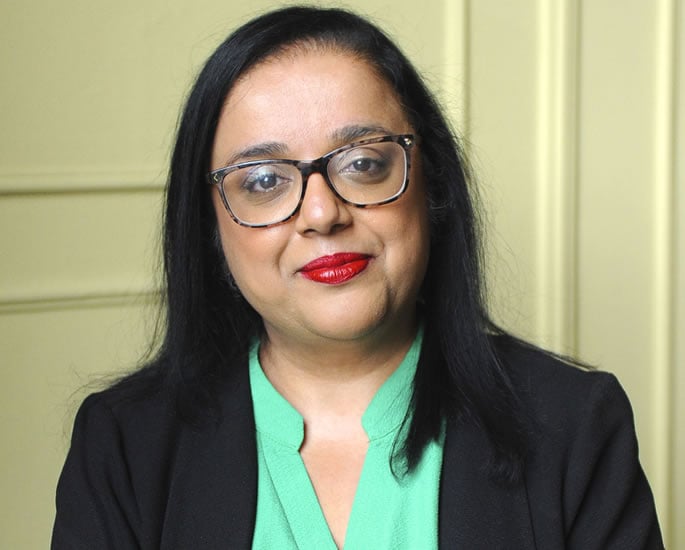
In 2018, Advita Patel was at a career crossroads. A mid-level manager, she had spent years following advice, completing programmes, and doing everything her leaders recommended.
She was diligent, committed, supportive but she was still waiting.
Patel says: “When I wasn’t given an opportunity that I genuinely thought I was ready for.
“I spent my entire corporate life following advice, investing in programmes to enhance my skills, and doing whatever my leaders recommended.
“I was diligent, committed and supportive, but one thing I didn’t have was belief in myself.
“I waited for others to believe in me before I applied for any opportunities.
“And when I was given permission and validation, it still didn’t work out, and that’s when I realised that if I want to succeed, I had to work on my own self-value and worth first.”
That moment marked a turning point.
Patel realised that her growth wouldn’t come from external approval; it had to start from within.
Her experience resonates with countless professionals who wait for someone else to give them the green light, not realising that self-belief is the first step toward opportunity.
Growing Up on the Edge of Belonging

Advita Patel’s resilience didn’t emerge in a corporate boardroom; it was forged on the streets of Manchester, where her family was the only Asian household in the area.
Racism was constant, palpable, and sometimes frightening.
She recalls: “I was told every single day, for almost 12 years, that people like me don’t belong in this country.
“The area we grew up in was extremely racist, so much so that we had a panic alarm fitted by the police.
“My sister and I grew up independently as my parents worked long hours to provide for us.
“We used to sneak out the back door if we wanted to go anywhere and never turn on the front room lights in case we attracted attention.”
Experiences like that built a tough, no-nonsense attitude but they also came with a cost:
“When you grow up in an environment like that, it builds a certain amount of resilience and a no-nonsense attitude.”
“But it also meant that as I got older and entered the workforce, I didn’t want to stand out, so I conformed.
“It took 15 years before I began to uncover my identity, and when I did, I realised that everything I’d been hiding was actually my greatest leadership asset.”
Her story highlights how childhood adversity can shape both character and leadership style. But it also shows the journey of reclaiming one’s identity after years of hiding to survive.
Courage as a Practice

Fear has never stopped Patel. Despite hating public speaking, she signed up for 15 engagements, deliberately putting herself in situations she would have once avoided.
She says: “You can read, watch and listen to various people sharing their advice, but the only way you’re going to build confidence is by taking action.
“I knew that I had to take the steps before I could say, ‘I can’t do it or I don’t want to do it’.
“Signing up to those 15 gigs taught me that courage isn’t the absence of fear; it’s deciding that what you have to say matters more than the fear of saying it.”
Her approach to confidence extends beyond the stage.
As a four-time business owner and former CIPR President, Advita Patel’s understanding of influence has evolved:
“Influence is about building trust. And to build trust, you have to invest in relationship building. People need to believe you and relate to you if you want to influence effectively.
“I used to believe it was about your experience and credibility, but I realised that to influence, it’s not only about credibility, but it’s also about how you connect with others.”
She also recognises why so many professionals, especially from underrepresented backgrounds, resort to people-pleasing:
“Mainly because we’ve been conditioned always to go above and beyond to prove ourselves and to fit in.
“We are told to work hard, to not make a fuss, to be helpful and supportive.
“And when you’ve spent the majority of your childhood looking in, desperate to belong, you unintentionally end up becoming a people pleaser as you believe people will like you better if you did whatever they wanted you to do.”
Redefining Confidence
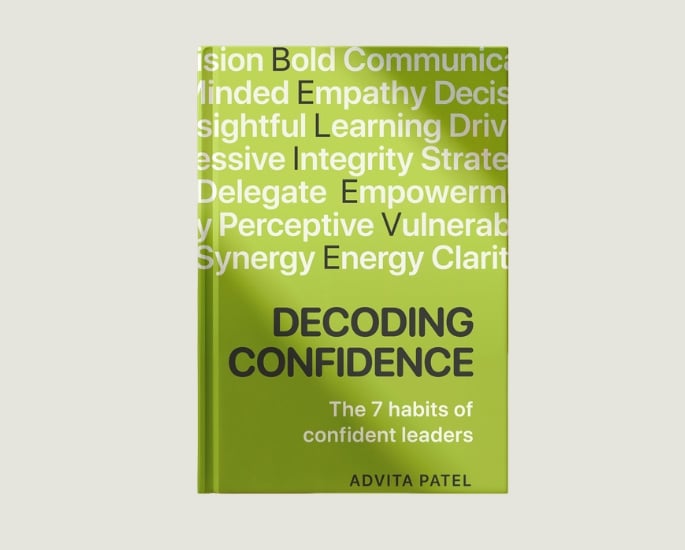
Advita Patel’s work is a direct challenge to myths about confidence, as she says:
“The myth that frustrates me most is that confidence belongs to the loud ones, the people who love being the centre of attention. It doesn’t.
“People are often surprised when I share that the most extroverted people I’ve encountered struggle far more with their self-esteem because they’re masking their insecurities behind their personality.
“Being confident is about trusting your abilities to manage whatever is thrown your way, and that looks different on everyone.”
Her upcoming book, Decoding Confidence, rejects the idea of “fitting the mould”.
Patel adds: “Being able to confidently show up as your best self, without having to change your entire personality.
“It’s about adjusting and adapting, not breaking, as a brilliant friend of mine often says.”
Stating daily practice is key, Patel elaborates:
“Action leads to belief. You can chant mantras, have motivational quotes and listen to lots of advice, but to truly build genuine confidence, you have to build micro-habits.
“These habits will train your brain into thinking that ‘this is now the way we do things’ and with every consistent habit you implement, the more confident you will feel.”
And ultimately, Patel wants her readers to reclaim agency over their self-belief:
“That they understand that, even though many things are outside our control, how we choose to build our confidence and self-belief is entirely within our remit.
“I grew up being told I didn’t belong. I spent years shrinking myself to fit spaces that were never built for me.”
“If this book does one thing, I want it to remind people, especially those who’ve ever felt like outsiders, that the version of you that you’ve been downplaying is the very version the world needs to see.”
Advita Patel’s journey shows that confidence is not inherited or granted; it is deliberately cultivated.
Her work demonstrates that professional success and authentic leadership come from a combination of self-awareness, courage, and consistent action.
By challenging conventional myths and helping individuals reclaim their voice, Patel creates space for leaders who might otherwise shrink to fit into expectations that were never meant for them.
Her insights offer a roadmap for anyone looking to show up fully, lead inclusively, and trust in their own abilities.
Through her podcast, consultancy, and upcoming book, she continues to redefine what it means to lead with clarity and conviction.