


















































“There is a crap mentality in our industry.”
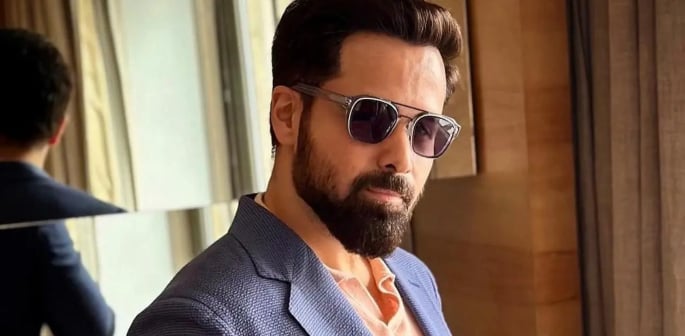
Emraan Hashmi has returned to the headlines for his comments on the criticism the Bollywood film Dhurandhar has received.
Fresh from the success of The Ba**ds of Bollywood, the actor is preparing for another major OTT outing in the upcoming Netflix series Taskaree: The Smuggler’s Web.
During recent interviews promoting the series, Hashmi was asked about reactions surrounding the blockbuster film Dhurandhar.
His response sparked discussion, particularly because he acknowledged he had not personally watched the film.
Hashmi addressed what he described as an industry tendency to criticise commercial successes.
He said: “There is a crap mentality in our industry.”
He pointed out that big box office performers help sustain the film ecosystem by attracting audiences and investment.
Hashmi also highlighted the scale of Dhurandhar, noting its extensive runtime and packed midnight and early morning screenings.
Despite not having seen it, he referred to the film as “a great film”, emphasising its overwhelming commercial performance.
For many in the industry, ticket sales are often seen as the most decisive indicator of a film’s worth.
This perspective reflects a long-standing belief in Bollywood that audience turnout ultimately settles creative debates.
However, Dhurandhar has become one of the most debated Hindi releases in recent years, beyond its financial achievements.
The film has broken domestic box office records and emerged as the highest-grossing Hindi film in India.
Its success also delivered a career-defining commercial milestone for Akshaye Khanna and reinforced Ranveer Singh’s box office pull.
Yet alongside praise, the film has attracted criticism focused on its political themes and narrative choices.
Viewers and commentators across India and Pakistan have described it as ideologically charged espionage cinema.
Concerns have centred on its portrayal of nationalism, regional politics and historical interpretations.
In Pakistan, particularly, discussions around the film have been shaped by perceptions of its messaging.
Internationally, reports suggested the film faced restrictions in parts of the Middle East.
The controversy reportedly stemmed from what critics called anti-Pakistan sentiment within the narrative.
Additionally, the filmmakers muted references to the word Baloch following objections raised by the Baloch community in Junagadh.
These developments further amplified online debates, with social media platforms hosting sharply divided reactions.
Some viewers praised the film’s scale, ambition and unapologetic tone as effective commercial entertainment.
Others questioned whether commercial cinema should simplify complex political realities into spectacle-driven storytelling.
Actor Hrithik Roshan also entered the conversation, publicly acknowledging discomfort with the film’s political messaging.
While expressing respect for the craft, he stated he did not necessarily agree with the film’s ideological stance.
His remarks drew attention for breaking from the industry’s usual reluctance to question blockbuster narratives.
Against this backdrop, Emraan Hashmi’s comments were widely discussed as part of a broader industry conversation.
Observers noted that his defence aligned with a common view that success itself validates creative choices.









 Loading ...