


















































Soho and Jewellery Quarter followed with 2,677 reports
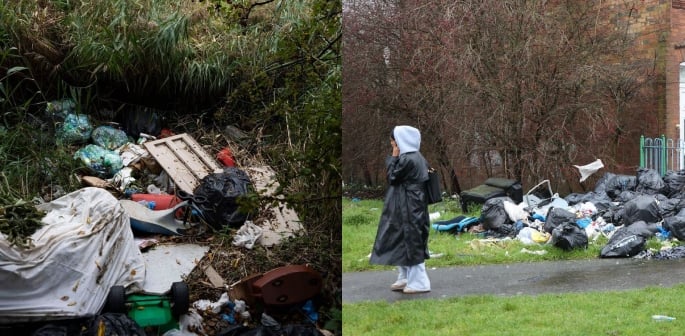
Birmingham continues to face concerns over fly-tipping, with rubbish being left on streets, pavements and residential roads across the city.
From abandoned furniture and household waste to overflowing skips, illegal dumping has become a growing problem for local communities.
Residents have raised concerns about the impact on neighbourhoods, including potential health and safety risks.
Recent incidents in Moseley and other parts of Birmingham have renewed calls for stronger action against those responsible.
As the council increases its enforcement efforts, questions remain over how the city can tackle the problem and prevent further dumping.
Birmingham’s Fly-Tipping Problem
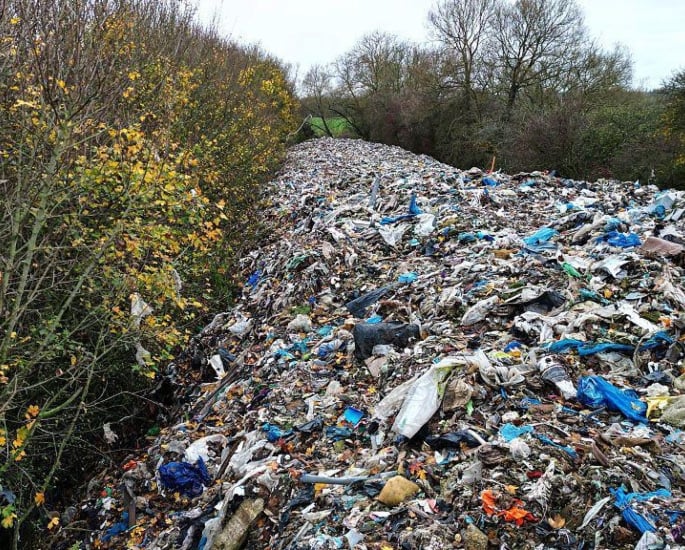
The situation on Park Road involves four skips, red sofas, old mattresses and bin bags left outside the properties.
Residents have raised concerns about fire hazards, rodents and anti-social behaviour, with community activist Ben Hallam describing the rubbish as a potential fire risk.
He warned that something as small as a discarded cigarette could cause the flammable materials to catch fire.
Although Birmingham City Council said it had previously removed rubbish from the pavement, residents remained concerned about the skips left on private land.
The landowner explained that the properties represented an investment by a small family-owned company and that contractors had been engaged to complete work within 12 months.
However, the problem extends beyond Moseley.
Between January 2024 and November 2025, Sparkbrook and Balsall Heath East recorded 4,297 fly-tipping reports, the highest number across Birmingham’s wards.
Soho and Jewellery Quarter followed with 2,677 reports, while Alum Rock recorded 2,552 and Bordesley Green recorded 2,444.
North Edgbaston also experienced significant problems, with 1,773 reports.
The figures represent reports rather than confirmed individual incidents, as several residents may have reported the same pile of rubbish.
Nevertheless, they demonstrate how fly-tipping continues to affect communities across Birmingham.
Residents Face Growing Health and Safety Concerns
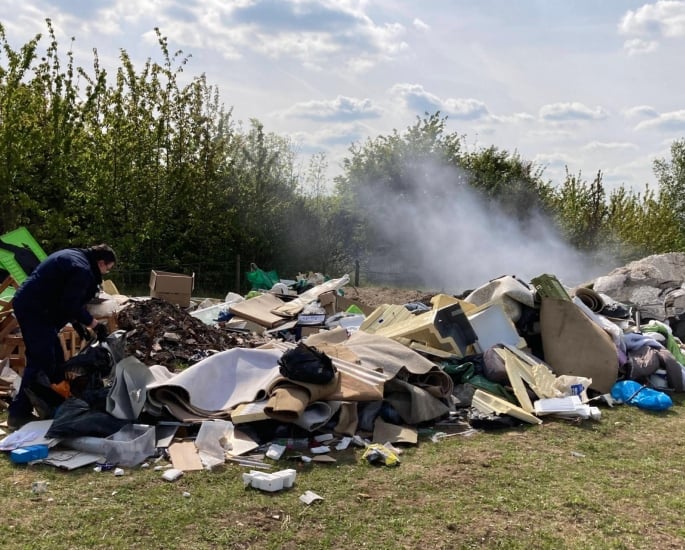
Beyond the appearance of streets, fly-tipping can create environmental and public health concerns.
Discarded food and household rubbish can attract rats and other pests, while broken furniture and sharp objects can create hazards for pedestrians.
Children and older residents can be particularly affected when rubbish obstructs pavements and public spaces.
In Moseley, resident Alison Kirkpatrick described the situation as a blight on the road, raising concerns about hygiene and increased rodent activity.
Another example emerged in Ward End, where Ward End Park Road became a dumping hotspot during Birmingham’s bin strikes in 2025.
Confusion surrounding alternative collection arrangements contributed to rubbish accumulating at the location.
Several people subsequently appeared before Birmingham Magistrates’ Court over waste deposited there.
In September 2026, Keron Chambers admitted leaving a black bin bag on the road in April 2025.
He told the court that he believed the location was an authorised collection point after searching online for alternative arrangements.
Chambers received a community order requiring 40 hours of unpaid work.
Another case involved Shazia Khaliq, who admitted dumping three sacks of rubbish and an office chair at the same location in May 2025.
She reportedly believed neighbours had directed her towards an authorised collection point.
Jawad Kanwal also admitted leaving two black bags on West End Park Road after seeing a TikTok post advertising the location as a collection point.
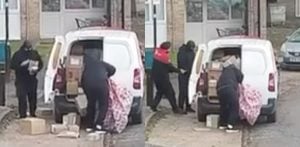
CCTV footage captured a passenger leaving a vehicle to deposit the rubbish.
Kanwal received a £250 fine, alongside a £100 victim surcharge and £650 towards prosecution costs.
These incidents highlight the importance of checking official waste collection arrangements rather than relying on information shared through social media.
Can Stronger Enforcement Tackle Birmingham’s Rubbish Problem?
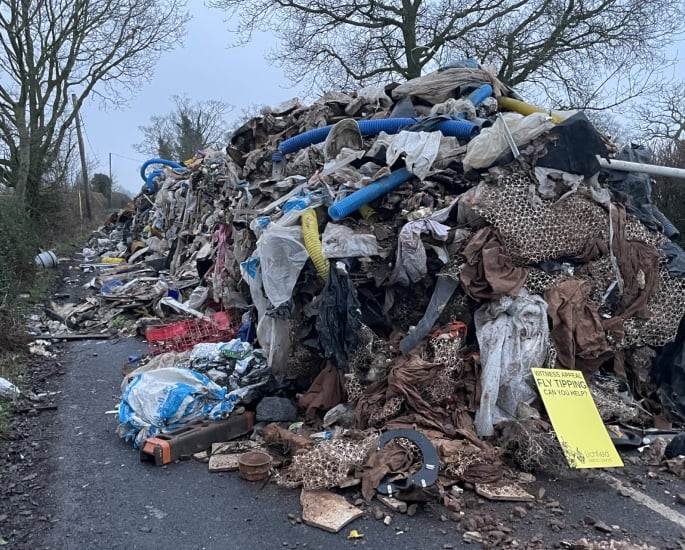
Fly-tipping is not exclusively a Birmingham problem, with national figures highlighting the scale of illegal waste disposal across England.
Government statistics published in February 2026 recorded approximately 1.26 million incidents dealt with by local authorities during 2024–25.
This represented a 9% increase compared with the previous year.
Household waste accounted for 62% of incidents, while roads and pavements were the most common locations, representing 37%.
Birmingham City Council has been increasing its efforts to identify and penalise people responsible for waste offences.
Its Waste Enforcement Strategy for 2026–31 outlines plans to strengthen investigations and tackle repeat offenders.
The council has committed an additional £1.1m to its Waste Enforcement Unit from the 2026–27 financial year onwards.
Between April 2025 and January 2026, the authority recorded 3,617 complaints received by its Waste Enforcement Unit.
During the same period, 565 incidents were identified through CCTV and 463 were reported by members of the public.
The council also issued 494 fixed penalty notices specifically for fly-tipping offences.
A further 88 prosecution cases covering waste-related offences were submitted to legal services, with 35 finalised at court by January 2026.
The authority has also highlighted the importance of tackling unregistered waste carriers, who may collect household rubbish before illegally disposing of it elsewhere.
Residents are encouraged to check that anyone removing unwanted furniture or household items is an authorised waste carrier.
People who discover fly-tipping can report it to Birmingham City Council through its online reporting service.
Providing photographs, vehicle registration numbers and details about when the incident happened can help investigations.
Residents should avoid approaching suspected fly-tippers or handling potentially dangerous waste themselves.
Tackling the problem requires cooperation between residents, property owners, businesses and local authorities.
While stronger enforcement can discourage illegal dumping, preventing rubbish from accumulating remains essential to improving neighbourhoods.
For Birmingham residents, the issue is about more than keeping streets clean. It is about protecting local environments and ensuring communities remain safe and welcoming places to live.