



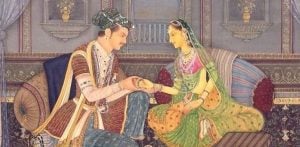















































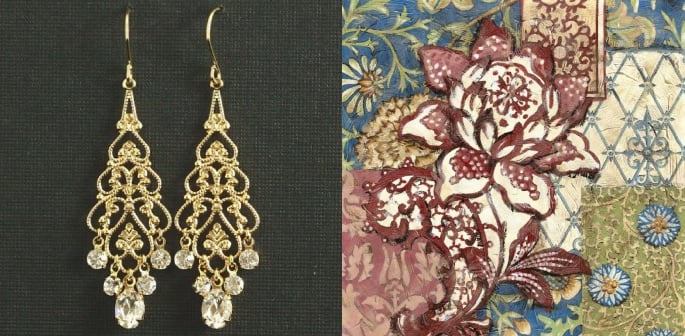
One particularly influential example was chintz
From centuries-old Indian textiles to contemporary Desi styling, South Asian culture has influenced the way the world understands art, design and self-expression.
Yet, as Western luxury brands continue to draw inspiration from traditional South Asian craftsmanship, questions around cultural appropriation and artistic recognition are resurfacing.
When Saint Laurent unveiled its Spring/Summer 2027 womenswear collection, its designs sparked conversations across social media.
Some felt that the collection’s silhouettes, embellishments and styling closely resembled traditional Indian clothing, with certain looks drawing comparisons to Desi bridal wear.
For many South Asians, the discussion went beyond whether a designer had taken inspiration from another culture.
Content creators have been particularly vocal about this. Mohuya Khan, who shares commentary on South Asian culture and identity, questioned why traditional styles that were once dismissed by Western society are now being celebrated as luxury.
In her video, she highlights how South Asian clothing and craftsmanship have historically been labelled unfashionable or inappropriate, only to be reintroduced through Western designers as sophisticated and desirable.
Her criticism speaks to a wider frustration: South Asian culture should not have to be repackaged by an international fashion house before its artistic value is recognised.
The Colonial History behind South Asian Craftsmanship
To understand why these conversations carry so much significance, it is important to look beyond contemporary fashion and explore the history of South Asian textiles.
For centuries, the Indian subcontinent was renowned for its textile production. Indian cottons, silks, embroidery and hand-painted fabrics were traded across international markets, attracting admiration for their intricate designs, vibrant colours and exceptional craftsmanship.
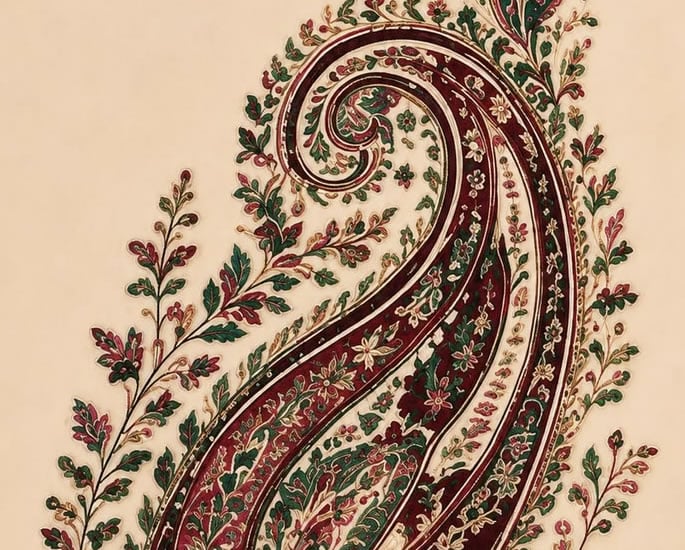
One particularly influential example was chintz, a colourful cotton textile traditionally produced in India using hand-painted or printed floral designs.
During the 17th and 18th centuries, chintz became hugely popular in Europe. Its distinctive patterns and quality made it highly desirable among European consumers, particularly in Britain and France.
However, this popularity created a problem for European textile manufacturers, who struggled to compete with the quality and affordability of imported Indian fabrics.
Rather than simply competing with Indian producers, Britain introduced restrictions on imported cotton textiles. The Calico Acts, particularly the legislation of 1721, restricted the use of certain imported printed cottons in Britain to protect domestic manufacturers.
British textile producers subsequently developed their own printing industries, adopting techniques and patterns associated with Indian textiles.
This history demonstrates how South Asian craftsmanship helped shape European design and textile production, even as the colonial economy increasingly undermined the communities responsible for that expertise.
Content creator Antaria Brand explores this history in one of her videos, drawing a direct connection between the treatment of Indian textiles during British colonial rule and contemporary controversies involving Western fashion houses.
She explains: “One of the biggest fashion copycats in history wasn’t even a brand. It was Great Britain.”
Antaria goes on to describe how British manufacturers responded to the popularity of Indian cottons:
“British manufacturers, on the other hand, had a problem. They couldn’t compete. So then Britain banned the imports of various Indian cotton textiles, including chintz.”
Her video highlights how manufacturers eventually began producing their own versions of Indian cottons, while colonial rule made it increasingly difficult for local artisans to sustain their industries.
Drawing a comparison with contemporary fashion, she argues that the same pattern continues whenever traditional South Asian designs are presented as new discoveries without acknowledging their origins.
As she puts it: “The issue isn’t inspiration. Fashion has always been borrowed and shared between cultures.
“The issue is who gets recognised, who gets credited, and who gets paid.”
Her comments raise an important question about the relationship between cultural exchange and cultural appropriation.
Artistic traditions have always travelled across borders, influencing different societies and creative movements. However, there is a difference between appreciating another culture’s artistic heritage and benefiting from it without recognising the people who developed it.
More Than a Design
South Asian craftsmanship cannot be reduced to a collection of patterns, fabrics or decorative techniques.
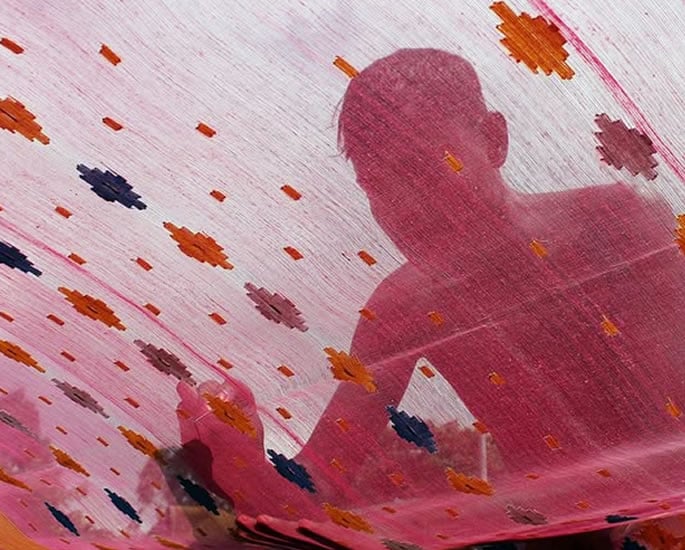
Traditional textiles and handmade objects often carry generations of knowledge, regional identities and cultural significance. Techniques such as Jamdani weaving, for example, represent an important part of Bengal’s textile heritage.
Jamdani is a fine muslin weaving tradition known for its intricate motifs, which are woven directly into the fabric. Its history is closely associated with the Bengal region, where skilled artisans developed highly specialised techniques over generations.
Similarly, traditional embroidery, block printing, handwoven fabrics and jewellery-making reflect the diversity of artistic practices across the subcontinent.
These crafts are connected to the livelihoods of artisans, family traditions and the preservation of cultural knowledge.
When traditional designs are reproduced without acknowledging their origins, the wider history behind the artwork can disappear from the conversation.
This is particularly significant when established luxury brands have the resources to market these designs internationally, while independent artisans and smaller creative communities may struggle to receive comparable recognition.
The discussion around cultural appropriation therefore also becomes a discussion about artistic ownership, economic opportunity and whose contributions are valued within the global creative industries.
Gen Z is Reconnecting with its Cultural Identity
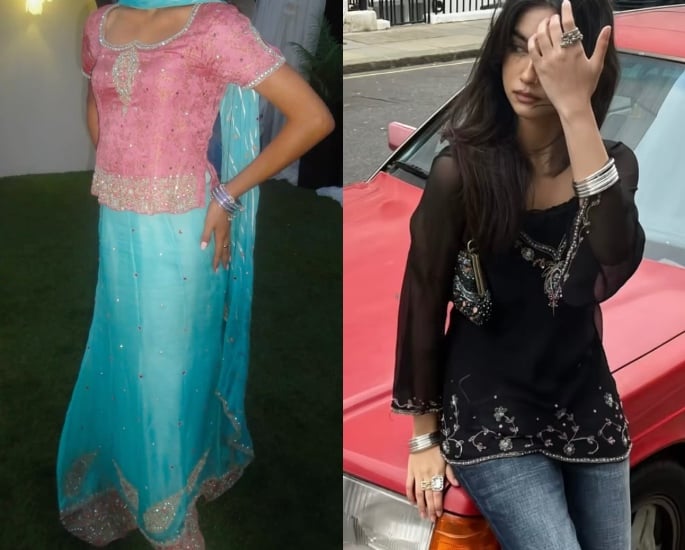
While the debate surrounding cultural appropriation often focuses on Western brands, another important development is happening within South Asian communities themselves.
Gen Z is finding new ways to reconnect with its cultural heritage, particularly through social media, music, art and personal style.
Across TikTok, Instagram and Pinterest, young South Asians are embracing traditional accessories and clothing in ways that reflect their own identities.
Jhumkas are being paired with contemporary outfits, chunni and dupatta are being styled in new ways, and kurti tops are becoming part of everyday wardrobes.
There is also a growing interest in Y2K-inspired Desi aesthetics, drawing on early 2000s Bollywood, Pakistani pop culture and the colourful styling associated with South Asian childhood memories.
For many young people, this is about more than following a fashion trend. It is an opportunity to revisit cultural traditions that may previously have felt outdated or disconnected from their everyday lives.
The growing conversation around cultural appropriation has also encouraged younger audiences to question where their clothes, accessories and artistic influences come from.
Terms such as cultural appreciation, appropriation and representation have become increasingly familiar within online discussions, with Gen Z often examining how different cultures are portrayed and commercialised.
However, reclaiming cultural identity does not necessarily mean returning to tradition exactly as it was.
Instead, young South Asians are finding ways to reinterpret their heritage, combining traditional influences with contemporary creativity. It allows cultural expression to evolve while maintaining a connection to its origins.
Supporting the People behind the Culture

For content creator Hershey Karthikeyan, calling out cultural appropriation should also involve directing attention towards the South Asian designers and independent brands creating their own work.
In response to the repeated controversies, she introduced a series called Knockout the Knockoff, highlighting emerging South Asian brands as alternatives to Western interpretations of Desi fashion.
Explaining the motivation behind the series, Hershey says:
“I’m tired of this cycle repeating. They pirate South Asian fashion, then use the uproar to drive attention to their brand while rebranding the origins and underpaying their artisans.”
In one of her videos, she introduces Oward Studios, describing its aesthetic as “Desi grunge”, with clothing and jewellery inspired by South Asian culture and vintage influences.
Her approach offers a different perspective on the conversation.
Rather than focusing exclusively on what international brands are doing, she encourages audiences to discover the designers and creatives already working within their own cultural traditions.
It also highlights the importance of supporting independent South Asian businesses and the artisans who continue to preserve traditional techniques.
Meaningful cultural collaboration can create opportunities for these crafts to reach wider audiences. However, it should involve recognising the people behind the work, providing fair compensation and ensuring that South Asian creatives are part of the conversation.
The debate around cultural appropriation is ultimately about more than what appears on a runway or becomes popular on social media.
It is about recognising the history behind cultural traditions and understanding how colonialism, global trade and commercial interests have shaped the way different societies value artistic expression.
South Asian culture is not a seasonal aesthetic that can be adopted when convenient and discarded when another trend emerges.
Behind every textile, embroidered garment, traditional accessory and handmade design is a history of creativity, knowledge and cultural identity.
As Gen Z continues to rediscover and reinterpret its heritage, there is an opportunity to make these traditions more visible and ensure that their histories are not forgotten.
International designers can take inspiration from South Asian artistic traditions, but recognition and collaboration should be part of that process.
After all, celebrating the beauty of South Asian culture should also mean celebrating the people, communities and generations who have kept it alive.