



















































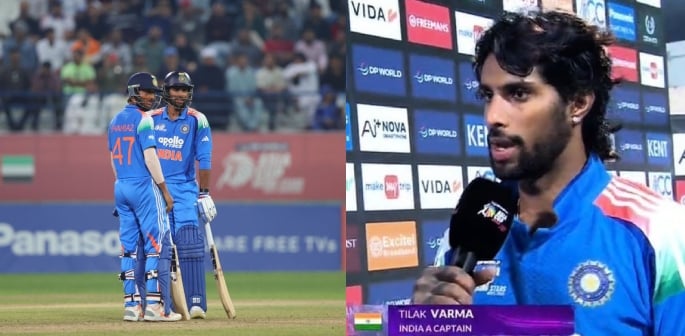
"If any other batsman could have given me support"
India A captain Tilak Varma has criticised the lack of batting partnerships following his side’s 48-run defeat to Pakistan A in Doha on November 22, 2026.
Tilak scored 100 from 149 balls, but India A were dismissed for 265 while chasing Pakistan’s total of 313.
The 24-year-old believed India could have won if another batter had stayed with him during the closing stages.
Speaking after the match, he said: “If any other batsman could have given me support, then I could have finished the game.”
His comments came despite an important partnership with Shahbaz Ahmed, who struck 56 as India attempted to recover from a middle-order collapse.
Tilak’s innings also attracted scrutiny over his scoring rate, with India struggling to keep pace with the required runs.
Pakistan’s victory secured their place in the tournament’s semi-finals.
Tilak Varma Questions India’s Batting Performance
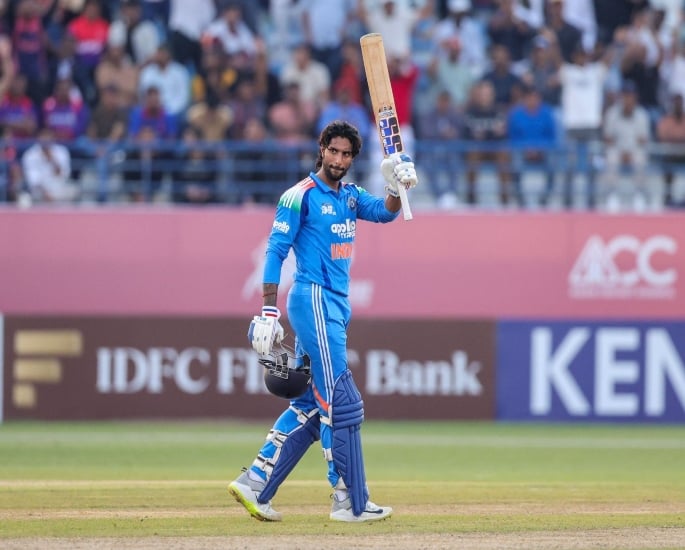
Tilak believed India missed an opportunity to complete the chase after losing wickets at crucial stages.
He praised Abhishek Sharma’s attacking start and Shahbaz Ahmed’s contribution but felt the partnerships ended too soon.
The captain explained: “The way Abhishek started and the way Shahbaz gave me a partnership in between was crucial.”
Shahbaz was dismissed in the 44th over, leaving India needing 73 runs from 39 deliveries with only three wickets remaining.
Tilak said:
“Unfortunately, when we wanted to accelerate, Shahbaz got out.”
He suggested that another two overs alongside Shahbaz could have changed the outcome.
Despite scoring his second consecutive century of the tournament, Tilak refused to celebrate the individual achievement.
He said: “For me, the best is winning the game. If I won’t win the game, then it’s not best for me.”
The captain also acknowledged that leadership required him to take responsibility for difficult situations.
His comments highlighted India’s dependence on a handful of batters during the chase, with several established players failing to make meaningful contributions.
Pakistan A Post 313 in Doha
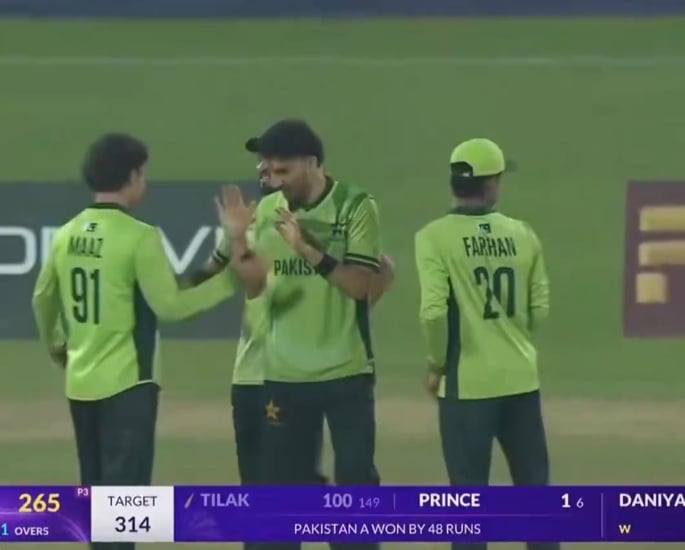
Pakistan A chose to bat first at the West End Park International Cricket Stadium.
Hasan Nawaz led the innings with 79 from 82 balls, including five fours and four sixes.
Maaz Sadaqat contributed 59, while Farhan Yousaf scored 56. Their performances helped Pakistan maintain a competitive scoring rate despite losing wickets.
India’s bowlers eventually dismissed Pakistan for 313 in 49.2 overs.
The target of 314 required India to score at more than six runs per over.
Pakistan’s total also placed pressure on India’s opening batters to establish a strong foundation.
However, the chase immediately ran into trouble.
Vaibhav Sooryavanshi was dismissed for 11, while Ayush Badoni departed without scoring.
India were reduced to 26 for two, forcing Tilak to enter earlier than anticipated.
Abhishek Sharma responded with an aggressive innings, hitting 70 from 42 deliveries.
He struck six fours and six sixes, putting pressure on Pakistan’s bowlers.
His dismissal, however, exposed India’s middle order.
Kumar Kushagra managed just two runs, while Rinku Singh scored six.
Suryansh Shedge was also dismissed cheaply, leaving India struggling at 129 for six.
Pakistan had removed much of India’s recognised batting line-up before the chase reached its final stages.
Tilak’s Century Raises Questions

Tilak’s innings prevented an even heavier defeat, but his cautious batting approach became a significant talking point.
The left-hander struggled to score during the opening stages of his innings.
He had managed just six runs from 30 deliveries as Pakistan’s bowlers restricted his scoring opportunities.
While Abhishek attacked, Tilak concentrated on preserving his wicket.
The strategy became increasingly difficult to maintain as India continued losing batters.
At 129 for six, Tilak was left relying on Shahbaz Ahmed to rebuild the innings.
The pair added 112 runs for the seventh wicket.
Shahbaz played aggressively, contributing 56 from 49 balls, including four sixes.
Tilak continued accumulating runs but could not bring the required scoring rate under control.
By the time Shahbaz was dismissed, India faced a difficult equation.
Ali Raza then removed Vipraj Nigam, further reducing India’s chances.
Tilak reached his century in the closing stages, but the result was effectively decided.
He was eventually dismissed by Ahmed Daniyal for exactly 100.
India finished on 265, losing by 48 runs with five deliveries remaining.
His strike rate of 67.11 raised questions about whether a more aggressive approach could have kept India in contention.
However, the regular loss of wickets also restricted his options.
With few established batters remaining, attacking Pakistan’s bowlers carried the risk of ending the chase much earlier.
Tilak’s century therefore presented two contrasting assessments: a determined innings under pressure or a knock that failed to match the demands of the target.
Hasan Nawaz Leads Pakistan’s Victory
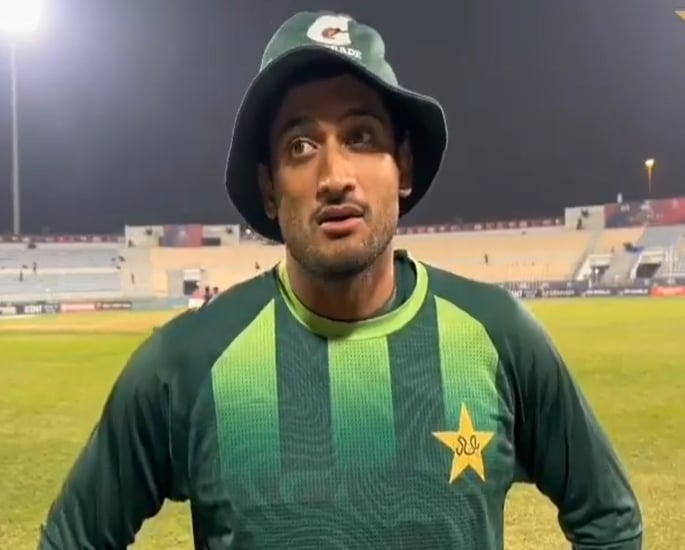
Hasan Nawaz played a decisive role in Pakistan’s victory, contributing with both bat and ball.
After scoring 79, he claimed three wickets for 45 runs.
His dismissals included Abhishek Sharma, Rinku Singh and Suryansh Shedge.
Removing Abhishek was particularly important because the opener had scored rapidly and threatened to take control of the chase.
Hasan’s subsequent wickets prevented India from rebuilding through their middle order.
Ali Raza also claimed three wickets, conceding 56 runs.
His dismissal of Shahbaz in the 44th over effectively ended India’s hopes of completing the chase.
Pakistan maintained pressure through disciplined bowling rather than relying on a single outstanding spell.
Hasan was named Player of the Match for his all-round contribution.
His performance demonstrated why Pakistan’s victory could not simply be attributed to India’s batting failures.
Pakistan scored runs through several players, took wickets at important moments and prevented India from establishing sustained partnerships.
Those contributions ultimately outweighed Tilak’s individual century.
Pakistan A’s victory secured their place in the Asia Cup Rising Stars semi-finals.
India A will face the United Arab Emirates in their next Group B fixture on November 24.
Tilak’s side must address its middle-order batting failures after losing several wickets cheaply against Pakistan.
The captain’s ability to build partnerships will also remain under scrutiny, particularly when chasing substantial totals.
His century demonstrated his capacity to occupy the crease, but India needed a faster scoring rate and contributions from more batters.
Pakistan, meanwhile, will look to maintain their performances with both bat and ball.
Their victory showed the advantage of several players contributing rather than depending on one major innings.
Tilak may have felt another partnership could have secured victory, but Pakistan’s bowlers ensured that India never fully recovered from their collapse.
For India A, the immediate challenge is converting individual performances into winning totals.
Against Pakistan, a century from their captain was not enough.