







































"I was screaming and being violent was super out of character"
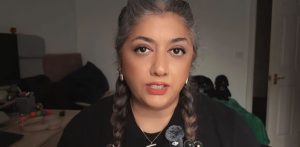
Content creator Sabrina Bahsoon, who is known as Tube Girl, revealed how a rare autoimmune disease left her hospitalised.
Earlier in 2026, she experienced what appeared to be a psychotic episode, resulting in her being sectioned under the Mental Health Act and admitted to a psychiatric hospital.
Bahsoon’s behaviour became increasingly erratic and, at times, violent towards herself.
Doctors initially treated her with antipsychotic medication, but further investigations eventually revealed that she was suffering from anti-NMDA receptor encephalitis, a rare but treatable autoimmune disease that can cause psychiatric symptoms alongside seizures, confusion and memory loss.
Sabrina wants hospitals to introduce a series of tests as standard practice for patients presenting with similar symptoms:
“In a way, I do feel let down by the care I received. I feel like the urgency to discover what was actually wrong with me wasn’t there.
“And I also feel as a woman being written off completely as a psychotic patient without further investigation was a mistake.”
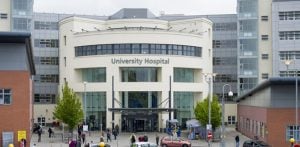
A spokesperson for the hospital where she received treatment has apologised for her experience and confirmed that an investigation into her care has been launched.
Sabrina first developed what she described as “psychotic symptoms” in March 2026, after filming a video with girl group Flo. That evening, she began screaming and crying, while her conversations became “very erratic”.
The next day, she unexpectedly broke up with her boyfriend, prompting her sisters to check on her because the decision was so out of character.
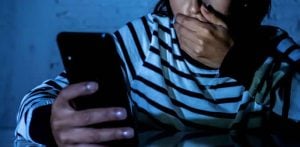
Her condition worsened, with Sabrina becoming violent towards herself and posting videos that did not make sense. Concerned by her behaviour, her sisters eventually called 999 for an ambulance.
She said: “I’m normally a very relaxed person, maybe anxious at times, but the way I was speaking about harming myself and the way I was screaming and being violent was super out of character for me.”
Doctors at A&E initially suspected her symptoms could have been triggered by stress and a lack of sleep. She was discharged with sleeping tablets, but her behaviour subsequently became more worrying.
After she began destroying things at home and speaking about experiencing hallucinations, police brought her to hospital in handcuffs.
Sabrina was then sectioned and transferred to a psychiatric ward, where she was given antipsychotic medication. However, she said the treatment left her feeling “docile”.
The content creator explained: “I went from being a total firecracker to being completely catatonic.
“I stopped eating, drinking. I could not speak properly.”
She has “very faint memories” of this period, although her family has since shown her footage of her experiencing breakdowns, which she describes as “heartbreaking”.
Two months after being on the psychiatric ward, doctors identified the underlying cause of her symptoms: anti-NMDA receptor encephalitis.
The autoimmune disease was caused by tumours in her ovaries, known as teratomas, which produced antibodies that attacked her body.
Sabrina had surgery in June 2026 to remove the tumours and has since returned to her home country of Malaysia to continue recovering and is undergoing therapy to “deal with all the trauma”.
Despite the difficult experience, Sabrina feels “very lucky”, as doctors have told her she is among a small percentage of patients expected to make a full recovery.
As well as raising awareness of the disease, she wants to “push people to advocate for themselves” if they believe they are not receiving the “treatment they deserve”.
She added: “I do want reform in the way that hospitals deal with psychotic patients or patients that present with psychotic symptoms.
“I hope I’m sharing my story so that nobody else has to go through this.”
Sabrina Bahsoon plans to return to content creation in the new year.
A spokesperson for Imperial College Healthcare NHS Trust, which was the first hospital to treat Bahsoon, said they were “very sorry” for what she experienced.
An internal review found that some aspects of her initial assessment “were not followed up as they should have been”.
They added: “We have started an investigation to understand why this happened and identify improvements we need to make.”