
















































“The seed of Kathak watered with contemporary sensibilities.”
Kathak is one of India’s most recognised classical dance forms, combining intricate footwork, rhythmic patterns and expressive storytelling.
For dancer and choreographer Aditi Mangaldas, however, the tradition also provides opportunities to explore new ideas and challenge artistic boundaries.
Having trained under two influential gurus, she has developed an approach that brings together classical foundations and contemporary movement.
Her performances explore subjects including female desire, violence, grief, and humanity.
Exclusively speaking to DESIblitz, Mangaldas told us how Kathak can remain connected to its heritage while speaking to contemporary audiences.
Finding Her Own Identity Through Kathak
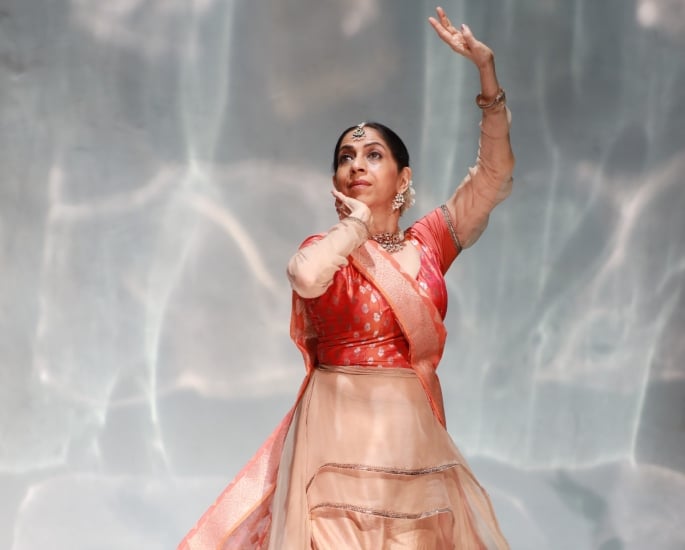
Mangaldas grew up in a family that encouraged curiosity and unconventional interests.
Her parents supported her involvement in dance, music, and visual arts, and took her to a community science centre.
Dance gradually became an essential part of her identity.
She began dancing at around five years old and performed publicly for the first time at six, playing a peacock in an amphitheatre in front of approximately 3,000 people.
Reflecting on her relationship with the art form, she describes dancing as being “like breathing”, highlighting how naturally it became part of her life.
Two influential teachers shaped her development: Kumudini Lakhia and Pandit Birju Maharaj, who belonged to the Lucknow gharana of Kathak.
Lakhia encouraged a more horizontal exploration of movement, using expanding circles to connect the dancer with music, light, fellow performers, and the surrounding space.
Maharaj encouraged a deeper, more vertical understanding, exploring breath, emotion, and the finer details of movement.
Mangaldas absorbed both approaches but did not want to become a copy of either teacher.
Instead, she worked towards developing her own relationship with the dance form.
For her, creating contemporary work from Kathak does not mean abandoning its foundations.
She describes the process through the image of “the seed of Kathak watered with contemporary sensibilities”.
These contemporary influences can include movement, literature, thought processes and different visions.
The work remains rooted in Kathak while allowing it to reach new artistic spaces, or, as she puts it, “touches different sky”.
She also recognises that developing an individual artistic voice can attract criticism.
Although she listens to different perspectives, she believes artists must decide what they take from them and remain confident in the stories they want to communicate.
The Meaning Behind Movement, Music and Ghungroos
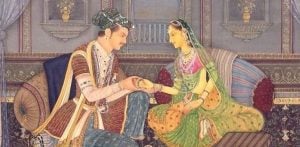
Kathak has evolved through several historical periods, from its storytelling traditions and temple associations to the refinement of Mughal courts.
During British rule, the dance form also experienced changes in how it was presented and perceived.
Today, it brings together distinct elements, including nritta, which focuses on pure movement, and abhinaya, which communicates emotion through facial expressions, eyes, and gestures.
For Mangaldas, even the smallest movements can carry meaning.
A gesture might represent a bird, a flower, or a bud opening, while a dancer’s eyes can communicate anticipation or disappointment.
The ghungroos, or bells worn around the ankles, are equally important.
She considers them intrinsic to the dancer, connecting their sound with the rhythm and movement of life.
Through changes in footwork, a dancer can create sounds resembling raindrops, rainfall on a roof, or thunder.
The technique also allows control over the volume, from the sound of hundreds of bells to a single delicate movement.
However, their meaning can change depending on the performance.
In Forbidden, which explores female sexual desire, the ghungroos become symbols of the restrictions placed on women by society.
They represent expectations, boundaries, and the pressures surrounding female expression.
The bells take on different meanings throughout the performance, reflecting how something traditionally associated with beauty and ornamentation can also become a symbol of control.
The work eventually explores a woman’s ability to claim her own desire and express it with courage.
In Echoes, choreographed for British dancer Akash Odedra, the ghungroos represent ancestry and the resonance of previous generations.
Their strings become part of the movement, suggesting the connections between the dancer and those who came before him.
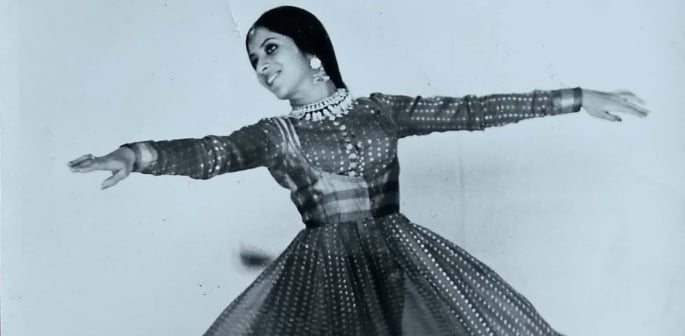
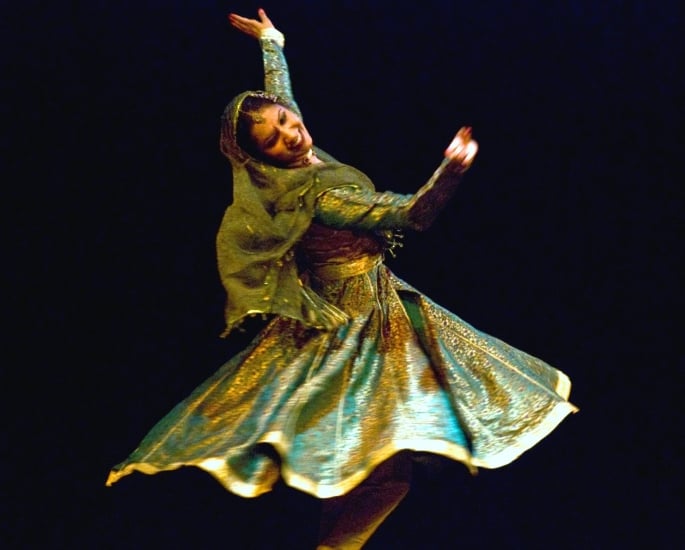
Mangaldas also discusses the importance of spins in Kathak.
Although dancers often practise turning in both directions, she explains that technical ability alone does not make a movement meaningful.
A technically impressive spin must still communicate something to an audience.
For her, the movement should create an emotional response, whether that is the feeling of a cycle of life or the force of a tornado.
Exploring Humanity Through Contemporary Dance
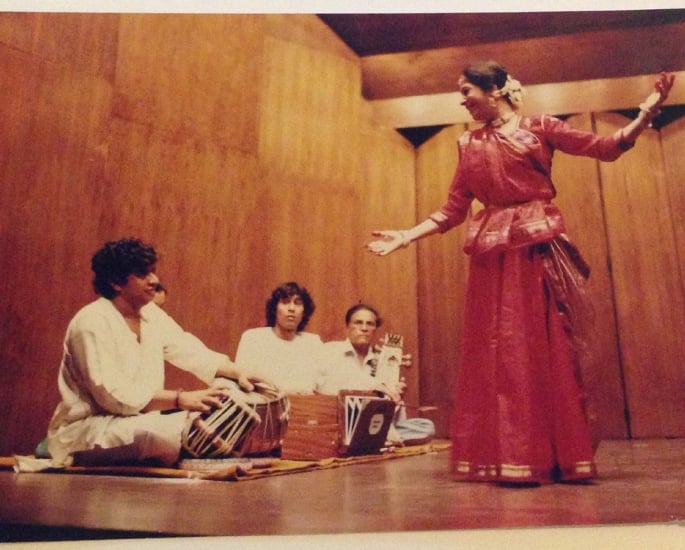
Mangaldas uses choreography to explore subjects that can be difficult to communicate through words alone.
Her work Within was created in response to a horrific gang rape, although its themes extend beyond one incident to examine brutality and the capacity for violence within humanity.
She explains that Kathak traditionally draws heavily on shringara, an emotion associated with love and beauty.
Communicating rage and trauma therefore required her to explore different physical possibilities.
Rather than relying on conventional expressions, she experimented with contorted spines, intense facial movements, fingers, and breath.
Lighting and stage design also helped establish the atmosphere, including a backdrop resembling rock marked by scratches and lava.
The second part of the work, Unwrapped, explores a different perspective.
Inspired by philosopher J. Krishnamurti’s thoughts about the mirror reflecting who we truly are, it gradually moves from a feeling of confinement towards openness.
The dancers begin enclosed within a square of light, with their faces covered. As the performance progresses, they gradually uncover themselves.
Drawing on the poetry of Kabir, the work suggests that the beauty found in gardens, flowers, oceans, stars and the moon also exists within people.
It encourages audiences to look within themselves and recognise their capacity for humanity and love.
Mangaldas also discusses how she approaches creative blocks.
Rather than forcing inspiration, she allows herself to step away, relax and experience things outside dance.
Reading an unexpected book, spending time with friends and family or returning to the fundamentals of practice can help her reconnect with her creativity.
Her advice to aspiring dancers is to pursue the art form because they enjoy the journey, rather than allowing society’s expectations to dictate their choices.
She encourages artists not to fear unconventional paths, recognising that they have “one life” to explore their creative ambitions.
However, she also stresses the importance of discipline.
Artistic freedom does not remove the need for regular practice, dedication and a strong technical foundation.
Dance can also offer a form of emotional release.
Mangaldas reflects on the experience of dancer Lata Pada, who lost family members in a plane crash and found that dance helped her carry her grief.
She suggests that healing does not necessarily mean overcoming loss completely.
Instead, creative expression can help people understand their experiences and learn to live with them.
Through her work, Mangaldas continues to demonstrate how Kathak can preserve its classical foundations while engaging with contemporary experiences.
Her approach places equal importance on technical discipline, personal expression, and the stories movement can communicate.
Watch The Full Interview Here: