




















































Miss Universe has relaxed several eligibility rules in recent years.
Miss Universe 2026 was supposed to celebrate 75 years of glamour, but the competition has become embroiled in scandals that threaten to overshadow the women competing.
From feuding owners and accusations of rigging to visa problems and missing contestants, the pageant has faced controversy before a winner has even been crowned.
Yet amid the turmoil, India’s Kaziah Liz Mejo has already made history.
The 19-year-old from Kerala is the first Malayali woman to compete at Miss Universe, adding a significant milestone to India’s pageant history.
Her achievement comes as the organisation faces mounting questions about its leadership, judging transparency and treatment of contestants.
The grand finale takes place in San Juan, Puerto Rico, on November 24, 2026, with the organisation’s credibility under scrutiny.
For Kaziah and her fellow contestants, the challenge extends beyond competing for the crown.
They are representing their countries while the organisation behind the event fights to restore public confidence.
Miss Universe 2026 Rocked by Ownership Battles

The most serious problems facing Miss Universe have emerged behind the scenes.
The organisation is divided between two ownership interests, commonly referred to as MU East and MU West, which have disagreed over control of the competition.
MU East is associated with Thailand’s JKN Global Group, founded by businesswoman Anne Jakrajutatip, while MU West is linked to Mexican businessman Raúl Rocha Cantú.
The disagreement has escalated into a public dispute over authority, financial accountability and franchise arrangements.
In September 2026, MU East issued a statement confirming that it had raised governance, compliance and financial concerns with the Puerto Rico Tourism Company.
It said it wanted clarification about contractual obligations and the management of the international competition.
The statement did not establish wrongdoing, but it exposed divisions within an organisation preparing to celebrate its 75th anniversary.
The situation has become increasingly complicated because both sides claim authority over important decisions involving the Miss Universe brand.
According to reporting by The New York Times, rival factions have even operated competing websites and disputed arrangements for future competitions.
Neither of the organisation’s principal owners has been publicly visible during this year’s pageant.
Jakrajutatip has faced legal difficulties in Thailand, while Rocha Cantú has been the subject of serious allegations in Mexico.
These are separate legal matters and do not establish wrongdoing by contestants or prove that the 2026 competition has been manipulated.
Nevertheless, the ownership dispute raises an obvious question: who is ultimately responsible for the world’s most recognisable beauty pageant?
Six Asian Countries Missing from Miss Universe

The corporate disagreement has directly affected contestants.
Thailand, Indonesia, Vietnam, Malaysia, Singapore and Laos are absent from Miss Universe 2026 following a dispute over franchise rights.
The six countries were associated with businessman Nawat Itsaragrisil, who operates national pageants across Southeast Asia.
The disagreement began after JKN Universe challenged the validity of franchise agreements covering those countries.
Organisers connected to the affected franchises disputed the decision and maintained that their agreements had been lawfully obtained.
In October, Miss Grand International, headed by Itsaragrisil, announced that it would not send the six representatives to Puerto Rico.
It argued that it could no longer guarantee their standing, dignity, safety or equal treatment.
The decision left several national winners without an international competition to attend despite months of preparation.
Miss Singapore Vion Tan publicly expressed her disappointment after losing the opportunity to represent her country.
Her experience illustrates how a contestant’s career can be affected by decisions made far beyond the runway.
Thailand’s absence is particularly significant because the country has been one of Miss Universe’s most enthusiastic markets.
It also hosted the controversial 2025 competition, where disagreements involving Itsaragrisil attracted international attention.
For Kaziah, the opportunity to represent India remains intact, but other contestants have lost their chance because of a corporate dispute they did not create.
Visa Problems Deny Contestants Their Miss Universe Dream
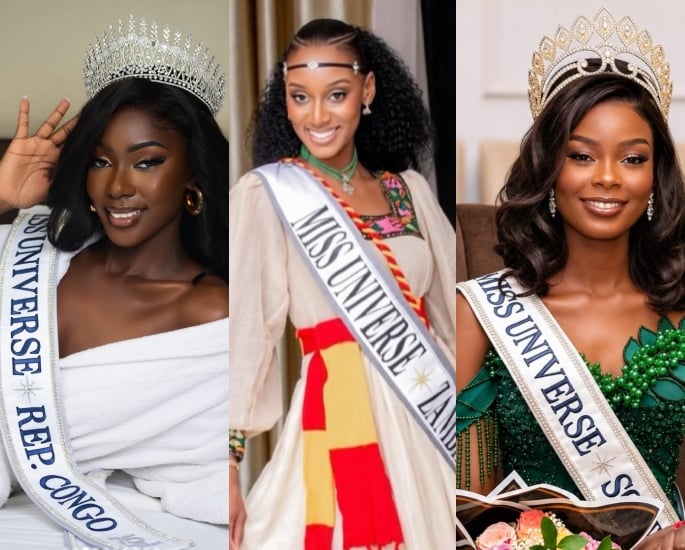
Franchise disputes are not the only reason countries are missing from the competition.
Several African contestants have been unable to travel to Puerto Rico because of US visa restrictions.
Zambia’s Mubanga Pamela Hatyoka and the Republic of Congo’s Georgina Kambongo were among those who could not participate after encountering immigration barriers.
The Associated Press reported that representatives from Zimbabwe and South Sudan were also facing uncertainty over their travel arrangements.
Puerto Rico is a US territory, meaning international contestants must satisfy American entry requirements.
The restrictions have prevented some national representatives from attending despite being selected to compete.
For those affected, the consequences extend beyond missing a televised event.
Preparing for Miss Universe involves national selection processes, training, travel arrangements and significant personal commitments.
Being denied entry before reaching the stage means those efforts cannot be showcased internationally.
It also exposes a contradiction within a competition that celebrates global representation but cannot guarantee equal access for qualifying contestants.
The visa problems are not evidence of misconduct by Miss Universe organisers, but they have contributed to the difficulties surrounding this year’s event.
Miss Universe Faces Fresh Rigging Allegations
View this post on Instagram
Perhaps the biggest threat to Miss Universe’s reputation concerns confidence in its judging system.
The 2025 competition in Thailand was overshadowed by allegations that the eventual winner had been selected in advance.
Former judge Omar Harfouch claimed that an unofficial panel had predetermined finalists before the televised competition.
Mexico’s Fátima Bosch eventually won the crown, although the Miss Universe Organization has consistently denied allegations that the result was rigged.
The claims have not been established as fact.
However, the controversy has continued to affect perceptions of the competition.
According to CNN’s November 23 reporting, organisers had not publicly identified the judges for the 2026 finale at the time of publication.
The outlet also raised questions about how scores are calculated and verified.
Miss Universe previously used independent auditors, including Ernst & Young, to oversee voting procedures and present results.
Such arrangements have not been publicly demonstrated for the current competition in the same way.
That uncertainty has prompted calls for greater transparency.
Itsaragrisil told CNN that contestants should know who is judging them, how those judges are chosen and how conflicts of interest are handled.
The questions are particularly relevant following last year’s allegations.
There is no established evidence that the 2026 results have been manipulated, but the lack of publicly available information has left organisers struggling to dispel suspicions.
For competitors such as Kaziah, an unclear judging process could undermine confidence in an achievement earned through years of preparation.
Miss Israel Booed During National Costume Competition
Israel siendo abucheada #MissUniverse
#MissUniverse2026 https://t.co/FBaMSl4DGl— fer (@fernpobb) November 21, 2026
The controversies have also reached the stage itself.
Miss Israel Danielle Yablonka was audibly booed by some audience members during the national costume competition.
Her gold-toned outfit depicted Jerusalem and featured the word “peace” in English, Arabic and Hebrew.
The costume attracted attention amid the continuing Israel-Palestine conflict.
Some viewers criticised the presentation, while others questioned the hostile reaction towards a contestant taking part in a cultural showcase.
National costume rounds are intended to celebrate heritage, but the incident showed how international political tensions can become part of the spectacle.
It also placed another contestant at the centre of controversy unrelated to her performance in the judging rounds.
The reaction was widely discussed online, adding to the criticism surrounding an already troubled competition.
For an event that promotes cultural exchange, the episode demonstrated the difficulty of separating international pageantry from wider political disagreements.
The Human Cost Behind Miss Universe’s Scandals

The controversy surrounding Miss Universe is not limited to ownership battles and allegations of unfair judging.
Former Miss Jamaica Gabrielle Henry has filed a lawsuit against the organisation following an accident during the 2025 competition.
Henry alleges negligence after suffering a head injury when she fell from the stage during a preliminary event.
The litigation remains ongoing, and her allegations have not been determined by a court.
Her case has added another dimension to questions about contestant welfare.
Meanwhile, the organisation continues to attract criticism over beauty standards and the demands placed on participants.
Miss Universe has relaxed several eligibility rules in recent years.
Married women and mothers have been allowed to compete since 2023, while the upper age limit was removed in 2024.
Those changes have made the competition more accessible to women who were previously excluded.
However, critics argue that the pageant continues to place considerable emphasis on physical appearance, including through its swimsuit competition.
Sociologist Hilary Levey Friedman, who has researched beauty pageants, told CNN that expanded participation has not necessarily translated into greater diversity in the body types rewarded by judges.
The criticism raises questions about whether changes to eligibility rules are enough to modernise an institution that began in 1952.
For contestants, the pressure remains substantial.
They must prepare for interviews, public appearances, national costume presentations and fashion rounds while maintaining a carefully managed public image.
The uncertainty surrounding this year’s competition adds another burden to those expectations.
Kaziah Liz Mejo Makes History Amid the Turmoil
View this post on Instagram
While Miss Universe faces questions about its future, India’s representative has already achieved something unprecedented.
Kaziah Liz Mejo became the first woman from Kerala to win Miss Universe India in August 2026.
Her participation in Puerto Rico also makes her the first Malayali to compete at the international competition.
The 19-year-old law student is representing India in a year when several other national winners have been unable to participate.
Her historic achievement provides a contrasting story to the disputes dominating headlines.
For Kerala, it represents a breakthrough in a competition where India has previously enjoyed considerable success.
Sushmita Sen became India’s first Miss Universe winner in 1994, followed by Lara Dutta in 2000 and Harnaaz Sandhu in 2021.
Kaziah is now competing for the country’s fourth crown.
Her Kerala heritage has already attracted attention, particularly through her fashion choices during the international competition.
But her participation now carries significance beyond what she wears or how far she progresses.
She has reached the international stage at a time when the pageant’s leadership, fairness and credibility are being publicly challenged.
Unlike the controversies surrounding the organisation, her historic achievement is not in dispute.