











































The biggest setback happened in Uttar Pradesh.
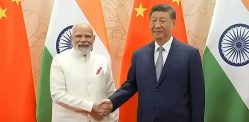
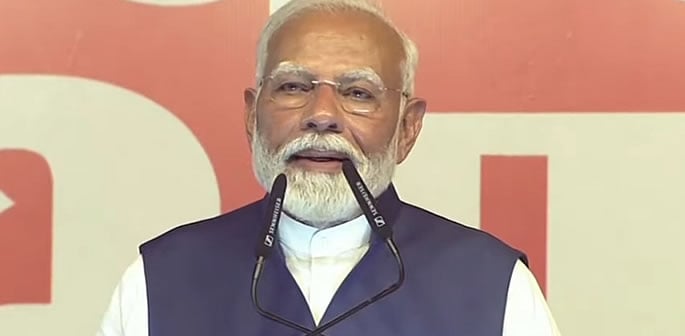
Narendra Modi won a third consecutive term as Indian Prime Minister in a much tighter general election than anticipated.
His BJP won 240 seats, way below the required 272 seats. However, the party’s allies gained additional seats.
The results are a blow to Mr Modi, who has always secured majorities in elections.
Over 640 million people voted during the seven-week election, hailed as a “world record” by election authorities.
Many world leaders have struggled across the finishing line in their third term elections and Mr Modi is no exception.
The BJP remains India’s single-largest party by seats.
But the loss of 63 seats dims the allure of a third term, especially given Mr Modi’s campaign targeting 400 coalition seats, making anything less seem like an under-achievement.
This has led to jubilation in the Congress Party and some despair among BJP members.
Despite the BJP emerging as the single largest party, the burden of hype and expectations has left many of their supporters disheartened.
Narendra Modi’s supporters believe securing a third term can be attributed to several factors – a record of stable governance, the appeal of continuity, efficient welfare programmes, and the perception that he has enhanced India’s global image.
To his Hindu nationalist base, Mr Modi delivered on key manifesto promises – revoking the autonomy of Indian-administered Kashmir, building the Ram temple in Ayodhya and implementing the citizenship law. Many BJP-ruled states have implemented laws tightening regulations on interfaith marriages.
The BJP’s drop in seats may be linked to unemployment, rising prices as well as growing inequality and a controversial army recruitment reform.
Mr Modi’s divisive campaign could have also alienated voters in some regions.
The biggest setback happened in Uttar Pradesh.
With 80 parliamentary seats, the state holds significant sway in national politics – many consider it the gateway to Delhi. Both Mr Modi and Rahul Gandhi hold seats there.
So what are the main takeaways of the election?
A Dent to Brand Modi
Narendra Modi’s popularity has been attributed to his mastery of branding, transforming routine events into huge spectacles.
Weak opposition and a mostly friendly media also helped him build his brand.
The elections show that Brand Modi has lost some of its allure, suggesting that even Mr Modi is not as invincible as many of his supporters believed.
Returning to Coalition Politics
India has had a history of chaotic coalition governments, although some in the early 1990s and 2000s played a big role in implementing economic reforms.
If the BJP forms the government, it will have to depend on allies and will need to adopt a more consultative and deliberative approach.
This dependency makes it vulnerable to collapse if allies feel neglected.
The BJP, once perceived as all-powerful, is now reliant on allies, unlike in 2014 and 2019.
A No-Longer Dominant BJP
Mr Modi’s uninterrupted reign at the top has underscored India’s embrace of what some political scientists term the one-party dominant system.
This has five key traits:
- A charismatic leader.
- Unrivalled control over resources and communication.
- Unmatched organisational machinery.
- An opposition in disarray.
- Shrinking freedoms also characterise a one-party dominant system.
Mr Modi’s BJP is not the first party to dominate Indian politics.
For many years after independence, the Congress ruled without interruption.
The election result has restored India to what many consider “normal politics”, with a range of parties sharing and competing for power.
Opposition Resurgence
On the flip side, the election results will energise the Congress-led opposition.
In February 2024, the coalition known as INDIA (Indian National Developmental Inclusive Alliance) faced disorder when key leader Nitish Kumar exited only to later join the BJP.
But led by Rahul Gandhi, the opposition ran a lively campaign and closed the gap.
This is still more hope for them.
The BJP holds approximately a third of India’s 4,000+ state assembly seats and has lost to regional parties before.
Over the next 14 months, five states are set for elections – all could be keenly contested.
With contests in Maharashtra, Jharkhand and Haryana later in 2024, the BJP could face substantial competition.
Delhi’s upcoming election may pose challenges, while Bihar in October presents a regional hurdle.
So what could a potential third term for Mr Modi mean?
India requires a lot more work and some healing.
While the economy is on the rise so is inequality.
Private investment and consumption must increase and the poor and the middle class will need more money in their pockets to spend more.
This will not happen if there are not enough jobs.
With ambition and frustration being prominent in India, younger voters are likely to vote for parties other than the BJP.
Narendra Modi has faced criticism for marginalising Muslims, who have faced violence.
His government has been accused of stifling dissent, with leading opposition figures jailed on what they say are trumped-up charges.
But third terms have often proved to be turbulent for many leaders, with unforeseen and unpredictable events blowing governments and their plans off course.