















































India’s satellite broadband market offers significant potential.
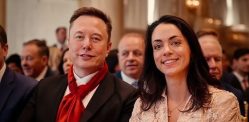
Narendra Modi met SpaceX CEO Elon Musk during his visit to the United States.
Modi held talks with Musk before the Indian Prime Minister met with President Donald Trump, where they discussed trade, technology, defence, and Indo-Pacific strategy.
The purpose of Modi’s meeting with Musk remains unclear, though Narendra Modi wrote on X that the two “discussed various issues, including those he is passionate about such as space, mobility, technology and innovation”.
Elon Musk, who was recently appointed by Trump to head the newly formed US Department of Government Efficiency (DOGE), met Modi on February 13, 2025.
Musk was joined by his three young children, while Modi was accompanied by key aides, including External Affairs Minister S Jaishankar and National Security Adviser Ajit Doval.
Had a very good meeting with @elonmusk in Washington DC. We discussed various issues, including those he is passionate about such as space, mobility, technology and innovation. I talked about India’s efforts towards reform and furthering ‘Minimum Government, Maximum Governance.’ pic.twitter.com/7xNEqnxERZ
— Narendra Modi (@narendramodi) February 13, 2025
During a press briefing at the White House, Trump said he wasn’t sure why Musk met Modi but speculated it might involve business plans.
Trump said: “I would imagine he met, possibly, because you know he’s running a company.”
India’s Ministry of External Affairs later clarified that the two discussed strengthening collaboration between Indian and US entities in innovation, space exploration, artificial intelligence, sustainable development and entrepreneurship.
But what does Musk want from India?
Elon Musk has long expressed interest in expanding his Starlink satellite internet service to India.
Regulatory challenges and concerns from Indian telecom giants like Reliance Jio have delayed its entry into the market.
India’s telecoms minister, Jyotiraditya Scindia, previously said Starlink must comply with security norms before being granted a license.
India initially planned to auction satellite spectrum, a policy Musk criticised. The government later revised this stance, opting to allocate spectrum directly.
Despite the roadblocks, India’s satellite broadband market offers significant potential.
At least 40% of the country’s 1.4 billion people lack internet access. Satellite broadband could help connect remote and mountainous regions where traditional infrastructure is costly and impractical.
However, pricing could be an obstacle for Starlink. Mobile data in India is among the cheapest in the world, thanks to companies like Mukesh Ambani’s Reliance Jio, which once offered free data.
Competing in this price-sensitive market will be a challenge for Musk.
Musk’s ambitions aren’t limited to satellite broadband.
His electric car company, Tesla, has also been eyeing the Indian market. But high import duties and India’s still-nascent electric vehicle (EV) industry have delayed its entry.
India recently introduced a new policy offering concessional tariffs on imported EVs for foreign carmakers that commit to local manufacturing.
The government hopes to boost EV adoption, aiming for electric vehicles to make up 30% of total car sales by 2030.
Musk remains optimistic about entering India. When the two met in New York in 2023, he said:
“I’m confident that Tesla will be in India… as soon as humanly possible.”
Musk’s growing interest in India signals a broader push for stronger business ties, especially in sectors like technology, space, and sustainable development.
Whether Starlink and Tesla succeed in India will depend largely on how they navigate the country’s regulatory landscape.