











































India is a vital economic and geopolitical partner.
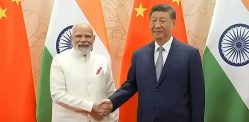
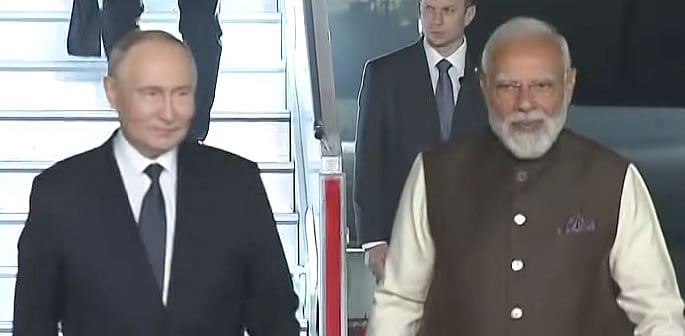
Vladimir Putin begins a two-day visit to India today for talks with Narendra Modi and an annual bilateral summit, as both sides prepare to sign multiple cooperation deals.
The visit comes months after the US increased pressure on India to curb Russian oil imports and as President Donald Trump’s administration holds talks with Russia and Ukraine to try to end the war.
It also lands at a sensitive moment for India’s ties with Washington, which have deteriorated amid an unresolved tariff dispute.
India and Russia have been close partners since the Soviet era. Putin and Modi share a long-standing personal rapport, and both leaders now face strong incentives to deepen cooperation.
For the Kremlin, India is a vital economic and geopolitical partner.
With a population of nearly 1.5 billion and economic growth exceeding 8%, India is the world’s fastest-growing major economy and a critical market for Russian energy and exports.
India is the world’s third-largest consumer of crude oil and has sharply increased purchases from Russia since the invasion of Ukraine.
Before the war, only 2.5% of India’s oil imports came from Russia. That figure rose to 35% as Delhi took advantage of discounted Russian supply following Western sanctions.
Earlier in 2025, the Trump administration imposed an additional 25% tariff on Indian goods, arguing that India’s oil purchases were helping to fund Russia’s war effort.
Since then, Indian orders for Russian crude have declined. Securing continued energy sales will be a top priority for Putin in Delhi.
Weapons exports remain another pillar of the relationship.
India is reportedly considering purchases of advanced Russian fighter jets and upgraded air defence systems. Russia, which is facing a domestic labour shortage, also views India as a valuable source of skilled workers.
The visit carries clear geopolitical symbolism. The Kremlin has used high-profile meetings with Asian leaders to demonstrate that Western efforts to isolate Russia have failed.
Despite this broader context, officials on both sides expect public messaging during the visit to focus on friendship, trade and expanded economic cooperation.
For Modi, the stakes are unusually high. India-Russia ties have remained resilient across decades of geopolitical change, and Modi has invested heavily in maintaining the relationship.
He resisted Western pressure to directly criticise Moscow over Ukraine, arguing that dialogue was the only path to peace.
This stance reflected India’s doctrine of “strategic autonomy”, maintaining close ties with Russia while deepening partnerships with the US and Europe.
That balance is now under strain after Trump’s return to the White House and the sharp downturn in India-US relations.
In recent weeks, pressure has also mounted from Europe.
The German, French and UK ambassadors in India published a rare joint newspaper article, criticising Russia’s position on Ukraine.
Modi must now prevent closer Russia ties from undermining trade talks with Washington or partnerships in Europe.
The Global Trade Research Initiative (GTRI), a Delhi-based think tank, said:
“For India, the challenge is strategic balance – protecting autonomy while navigating pressure from Washington and dependence on Moscow.”
Modi is also seeking to correct the growing trade imbalance between the two countries.
Bilateral trade reached $68.72bn by the end of March 2025, up from $8.1bn in 2020, driven almost entirely by India’s surge in Russian oil imports. The skewed balance heavily favours Russia.
As Indian refiners cut back to avoid US sanctions, both sides are exploring other ways to expand trade. Defence remains the most straightforward area.
Russia still accounted for 36% of India’s defence imports between 2020 and 2024, down from 72% in 2010-2015 and 55% in 2015-2019, according to the Stockholm International Peace Research Institute.
India has diversified suppliers and boosted domestic manufacturing, but many core platforms still depend on Russian systems.
Most of the Indian Air Force’s 29 squadrons operate Sukhoi-30 fighter jets.
During India’s limited armed conflict with Pakistan in May, Russian-made S-400 air defence systems played a critical role, while also exposing vulnerabilities that Delhi now wants to address.
India is reportedly assessing the purchase of upgraded S-500 systems and the Su-57 fifth-generation fighter. Pakistan’s acquisition of China’s J-35 stealth fighter has added urgency to Delhi’s plans.
However, Russia is facing shortages of key components under sanctions, and deliveries of some S-400 units are reportedly delayed until 2026. Modi is expected to press Putin for firm delivery timelines.
Modi also wants greater access for Indian consumer goods in Russia to reduce dependence on oil and defence.
GTRI said: “Consumer-oriented and high-visibility categories remain marginal: smartphones ($75.9m), shrimp ($75.7m), meat ($63m) and garments at just $20.94m underscore India’s limited penetration in Russia’s retail markets and electronics value chains despite geopolitical churn.”
India hopes to position its products more firmly in the Russian market, particularly in anticipation of Moscow’s eventual reintegration into the global economy after the war.
He would seek to lessen trade dependence on oil and defence, aiming for a deal that strengthens ties with Russia while leaving room to deepen relations with the West.