













































“I think there’s a way in which Modi helps the Bishnoi gang"
Recent instances of Canadian Sikh separatists being targeted are believed to be part of a wider plot by the Indian government to silence them.
In September 2023, Canadian Prime Minister Justin Trudeau suggested there were “credible allegations potentially linking” Indian officials with the murder of Hardeep Singh Nijjar.
The scope of the allegations was unclear but Canadian police claimed Indian diplomats worked with a criminal network to target Sikh activists in the country.
India called the claims “strange” and “ludicrous”.
Canadian officials noted a string of cases over the past few years.
Just two days after Trudeau suggested links to the Indian government, gangster Sukhdool Gill was shot dead in Winnipeg.

Gill was wanted in India on charges of extortion, attempted murder and murder. Indian officials also said he was linked to the separatist Khalistan movement.
A year later, police were called to AP Dhillon‘s Vancouver home after gunshots were fired at the building.
Both attacks were allegedly by Lawrence Bishnoi’s gang.
According to Canadian police, the Indian government has been using the Bishnoi gang and other crime groups to pursue opponents and rivals.
Harjeet Singh Grewal, an assistant professor of Sikh studies at the University of Calgary, said:
“There can be overlapping motivations to target certain people or groups.
“And I think that’s what we’re seeing right now: overlapping interests for both the gangs – who might want to settle scores and gain an ‘economic benefit’ – and [the Indian government, which is] targeting activists.”
In AP Dhillon’s case, his decision to feature Salman Khan in a music video allegedly angered Bishnoi.
A 2022 report from Canada’s intelligence agency flagged a growing concern over organised crime, warning gangs with entrenched operations represented a “significant” public safety and societal threat.
The report said: “Their structure and membership are increasingly fluid, often creating opportunistic criminal relationships with national and international networks and associates.”
But for those living near the violence, links between the Indian government and organised crime is not a surprise.
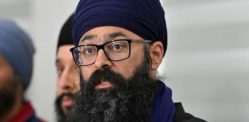
Inderjeet Brar said: “I think there’s a way in which Modi helps the Bishnoi gang and the Bishnoi gang helps Modi.
“If Bishnoi is giving interviews and overseeing his gang from a jail cell, it means the government is likely involved in some way. Otherwise, how could he do this?”

India has often accused the Canadian government of being lenient towards supporters of the Khalistan movement.
New Delhi claims that Canada has failed to confront Sikh militants and has not extradited gang members for prosecution in India.
Experts suggest that India’s rise from a developing country to a global power has led to a sense that it can act with relative freedom, both within and outside its borders.
Earlier in 2024, Narendra Modi boldly stated: “Today, even India’s enemies know: this is Modi, this is the New India. This New India comes into your home to kill you.”
In a covert operation in Canada, Indian agents based in their Ottawa high commission and consulates in Vancouver and Toronto allegedly used diplomatic pressure and coercion to force Indians living in Canada to spy on the Sikh community.
Canadian officials have long been aware of India’s attempts to intimidate and threaten the diaspora.
With India growing more frustrated over Canada’s inaction against pro-Khalistan groups, officials suspected that outspoken figures like Nijjar were targets for intimidation.
Grewal said: “People in the Sikh community, who have lived experiences of violence and intimidation in the Punjab, are aware of these patterns and can read and understand them quickly.
“More quickly, perhaps, than our law enforcement and intelligence officers.”
Trudeau said his government took action “to disrupt the chain of operations that go from Indian diplomats here in Canada to criminal organisations, to direct violent impacts on Canadians right across this country.”
At least eight people have been arrested in murder cases, including three suspected of killing Nijjar, and nearly two dozen in extortion investigations.
On October 18, 2024, foreign minister Mélanie Joly warned that the country would “not sit quietly as agents of any country are linked to efforts to threaten, harass or even to kill Canadians”.
RCMP commissioner Mike Duheme said police had uncovered “well over a dozen credible and imminent threats to life,” prompting them to issue “duty to warn” notices, including to the brother-in-law of New Democratic Party leader Jagmeet Singh.