








































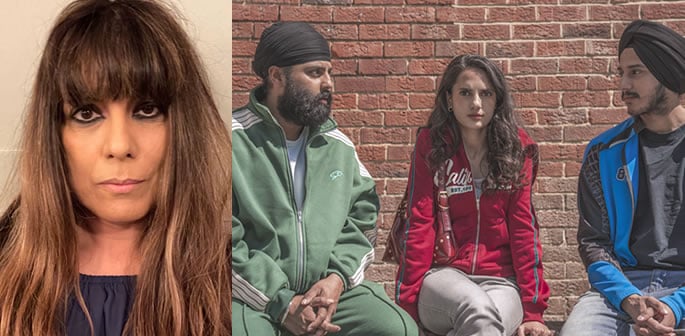
“We also need to be able to tell stories that come from our own lives.”
Channel 4’s upcoming factual drama Vengeance: Murder On The Heath revisits one of the most disturbing and complex real-life cases to emerge from London in 2011.
The series examines the murder of 21-year-old Gagandip Singh, whose unconscious body was placed in the boot of a car and later set alight in Blackheath, south-east London.
At the centre of the story is a chain of events involving a close friendship, a serious allegation of sexual assault, and a decision to take matters into one’s own hands.
Singh’s case ultimately led to multiple convictions, including life imprisonment for one of those involved, and remains a stark example of how quickly situations can escalate with irreversible consequences.
Premiering on May 24, 2026, the drama draws on police interrogations, text messages, court records and new interviews to reconstruct the case with forensic detail, while exploring the human decisions behind it.
Directed by BAFTA-winning filmmaker Aysha Rafaele, the series continues her body of work in powerful factual drama that interrogates real events with precision and sensitivity.
In an interview with DESIblitz, Rafaele reflects on the creative process behind the show, the ethical demands of retelling true crime, and why she felt compelled to bring this story to the screen.
The Creative Drive Behind Vengeance: Murder On The Heath
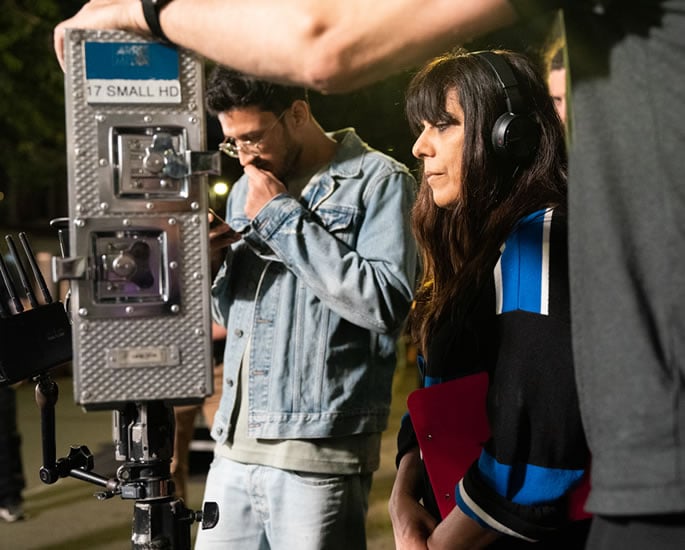
Aysha Rafaele’s reason for creating Vengeance: Murder On The Heath stems from a frustration with how British Asian communities are represented on screen, or more accurately, how they are often reduced to surface-level diversity without deeper narrative authenticity.
She frames the issue not as a lack of visibility, but a lack of ownership over storytelling itself, where casting has diversified but lived experience has not been meaningfully reflected in the writing.
Rafaele explains: “I just don’t see enough real stories about the community that I come from on British TV.
“Although these days casting has become more diverse, the stories themselves aren’t; simply casting diversely doesn’t capture who we are. Where we come from.
“We also need to be able to tell stories that come from our own lives.”
That concern became the foundation for a drama rooted in real events, but shaped by the emotional and moral complexities that first drew her to the material.
Rafaele explains that the Gagandip Singh case stayed with her for years, particularly because of how quickly a situation escalated when young people attempted to take justice into their own hands rather than involving the authorities.
The story’s tragic consequences, she says, are what made it impossible to ignore.
The director explains: “I read about the killing of Gagandip Singh a few years ago and I couldn’t stop thinking about it.
“A young woman accuses a young man of attempting to rape her and instead of seeking justice by going to the police, a group of young people then decide to take the law into their own hands.
“They say they are going to talk to him, remind him about respect, teach him a ‘lesson’.
“But instead it all goes horribly wrong. Nothing good comes of it for anyone. One boy tragically ends up dead, and three people end up in prison. It wrecks all their lives.
“It’s a very haunting tale of vigilante justice gone wrong. And very poignant as everyone involved was so young.”
Blurring Fact and Dramatisation without Distorting Truth
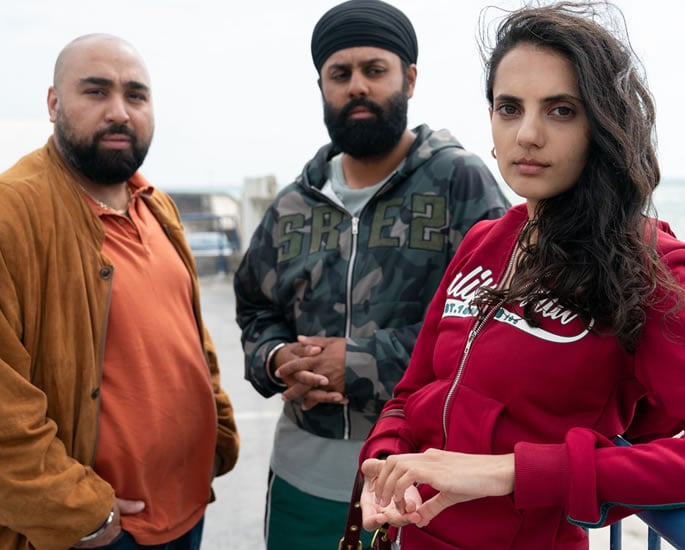
The production of Vengeance: Murder On The Heath required careful navigation between factual accuracy and the necessities of dramatisation, particularly in a story that is rooted in court proceedings and real testimony.
Rafaele is clear that while the drama stays based on real events, certain private interactions had to be constructed where no records exist, a standard challenge in factual drama.
She says: “My drama is based on the real events that took place but as with all factual drama, some elements have been created for the purposes of dramatisation and a few names have been changed.
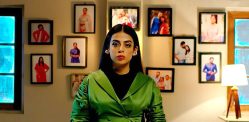
“The text messages and the court testimony and the words that are spoken by actors Sasha Desouza-Willock (playing Mundill Mahil) and Laila Rouass (playing Tajinder Singh) in their to-camera faux interviews are all verbatim, taken from real interviews/court transcripts/published accounts, etc.
“Everything that the female medical students testifying in court say is all verbatim testimony.”
Where gaps exist in the official record, Rafaele stresses that invention was strictly limited to moments that could never have been documented.
This ensures that emotional authenticity is preserved without altering the factual spine of the case.
“The elements that by necessity are dramatised are the words that individuals say to each other in private, which would never have been recorded.
“For example, what Harvinder ‘Ravi’ Shoker (played by Ikky Kabir) and Gagandip Singh (played by Dee Ahluwalia) might have said to each other when alone.
“Similarly, what exactly Gagandip and Mundill said to each other when they first met.
“These things would always need to be dramatised as there isn’t a court or police or video recording of it.
“However, what is most important is that you don’t do anything that changes the essential truth of the scene.”
Research, Responsibility and the Absence of Villains
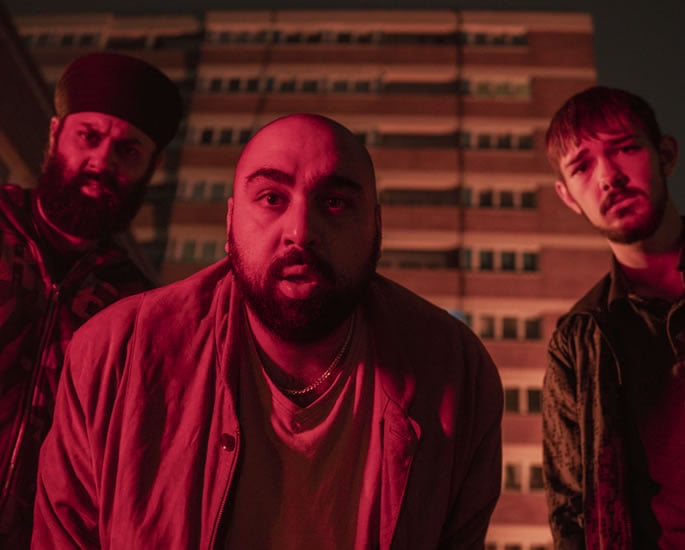
Aysha Rafaele’s approach to research for the drama was extensive and self-directed, grounded in original legal and police material alongside direct conversations with those connected to the case.
This immersive process shaped her understanding of the people involved, shifting the narrative away from binary ideas of guilt and innocence.
She says: “When I direct and write something, I tend to do all my own research.
“I got access to police transcripts, court documents. I read everything and anything there was on the subject. I also spoke to various key parties involved in the case.”
What emerged from that process was not a story of clear antagonists, but of young people navigating pressure, emotion and consequence without the tools to manage them.
Rafaele repeatedly returns to the youth of those involved, seeing it as central to understanding how events unfolded rather than simplifying responsibility.
She elaborates:
“What I came to understand as I went deeper into it all is that there are no villains here.”
“Just a group of young people making terrible and heartbreaking decisions that end in a young man’s horribly brutal death.
“I don’t believe that anyone involved intended things to end as they did. What was particularly striking was how young everyone was.
“We all do stupid things when we are young – young people feel things so intensely – and often that is the very thing that makes them act rashly.
“But in this case, they all have to live the rest of their lives with those mistakes. And of course, the price of that hot-headedness meant that Gagandip Singh lost his life.”
Justice and the Weight of Unspoken Fear
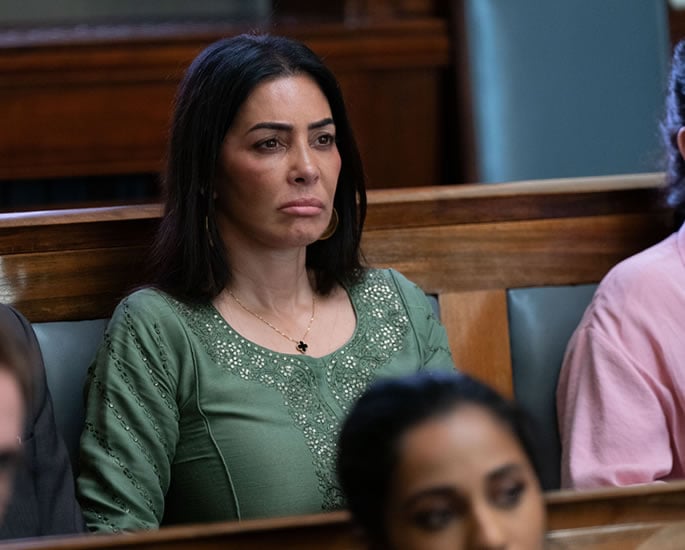
While Vengeance: Murder On The Heath is set within a Punjabi student community, Rafaele is careful to position its themes as universal rather than culturally isolated.
At the same time, she identifies specific cultural pressures that can intensify silence around issues such as sexual assault, particularly where reputation and family honour intersect with fear of judgment.
She says: “The themes explored in Vengeance – young love, obsession, the breakdown of traditional certainties about how men and women relate to each other, sexual assault, the limitations of vigilante justice – are universal and resonate way beyond just the Punjabi community.
“However, a reluctance to talk about these issues is something that is arguably particular to our community.”
She highlights how shame, stigma and mistrust in formal systems can shape decisions in moments of crisis, sometimes with irreversible consequences.
In the case that inspired the drama, the choice not to involve the police becomes a pivotal turning point.
“I am from a Punjabi background myself and I feel some of the issues that the story raises are ones that we tend to brush under the carpet.
“I would like us to have the courage to talk about the uncomfortable things.”
The narrative also interrogates what happens when justice is sought informally, and how quickly moral certainty can collapse when individuals attempt to control outcomes themselves.
Aysha Rafaele links this to broader patterns of behaviour that extend beyond any single community, while acknowledging its resonance within her own cultural context.
“Ultimately, the drama shows the limitations of vigilante justice. A wrong cannot be made right by playing God by taking the law into your own hands.
“Again, it is not just the Punjabi community who might resort to this.
“There are countless examples of others doing exactly the same thing. But it definitely is also something I do personally recognise from my own culture.
“Punjabi men often feel the need to protect their ‘women’s honour’.
“In an age of rage and anger, it’s easy to see the attraction of this eye-for-an-eye, tooth-for-a-tooth proposition. But it never works out well.
“Exercising forgiveness and mercy would have been the better path for everyone. However much more difficult that might have seemed in the moment.”
She adds that the emotional stakes of the original case underline the cost of missed opportunities for intervention and support, particularly when young people are left to navigate complex situations alone.
“If everyone in this story had been able to forgive, Gagandip Singh might still be here with us today.”
The Reality of Factual Drama
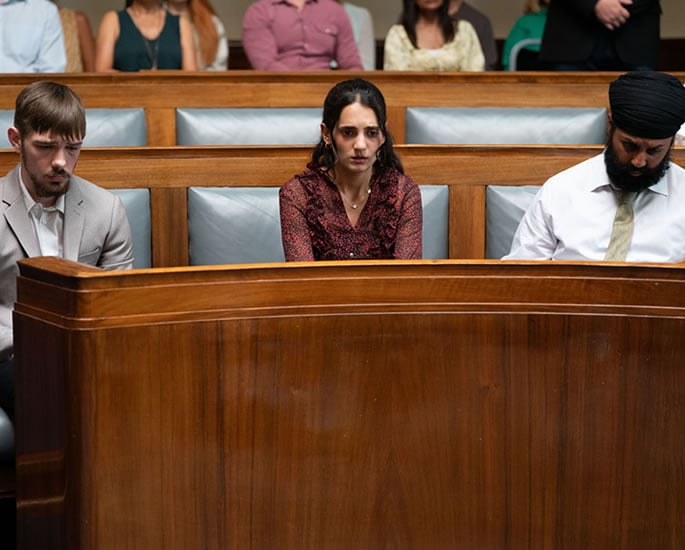
Bringing Vengeance: Murder On The Heath to screen presented structural and creative challenges, particularly in maintaining balance across multiple perspectives.
Rafaele describes this complexity as central to the directing process, rather than something to be simplified.
She continues: “It’s a very complex and delicate story with no baddies.
“In some ways, everyone involved is arguably both victim and perpetrator.
“My own ambition was to try to be fair and tell the story from all points of view. I have tried to do that. I have empathy for everyone.
“Human beings are contradictory creatures. We say one thing and do another. I tried to be truthful to that by sticking to the rigour of testimony that had been tested in court.”
That commitment to fidelity extends beyond writing into performance, casting and post-production, where Rafaele’s dual role as writer and director allows for continuous reshaping of the material.
Her background in factual storytelling informs a fluid approach to editing, where structure remains open to revision until the final cut.
She also situates her career within a wider personal trajectory shaped by access, opportunity and constraint.
Raised in a traditional working-class Punjabi Muslim family, she describes early exposure to television as formative, particularly in the absence of broader cultural engagement with film or theatre.
Rafaele recalls: “I grew up in a traditional Pakistani working-class Punjabi Muslim family.
“Coming from this background, we didn’t do things like go to the theatre, ballet, opera. Not even the cinema, really. It wasn’t for the likes of us.
“The one thing we did do was all gather around the television endlessly, whether that was to watch old Bollywood movies that we rented or to watch British drama by brilliant writers like Dennis Potter.
“So it doesn’t surprise me that, despite not having any connections in TV, I ended up finding a way to make a career in it.
“I have always felt a strong affinity with Dennis Potter’s lovely description of the television – ‘that flickering box of magical delights’.”
The realities of sustaining a directing career, particularly alongside motherhood, also shaped her professional path.
For periods, she stepped away from directing due to its instability, before returning when circumstances allowed for greater flexibility and support.
She continues: “I always knew I wanted to direct, both documentary and drama. However, it proved impossible to combine freelance directing with motherhood.
“I was a single parent and directing work is unstable, unpredictable, takes up all of your brain and sometimes takes you away from home, so for many years I gave up directing and took other jobs in TV that were easier to work around being a parent, e.g., being an Executive Producer.
“However, my son is now grown up and he is my biggest supporter when it comes to my return to directing.
“Freelance directing continues to be unpredictable and unstable; it’s not a career path for the faint-hearted. But now I can give everything to it again, so it’s also incredibly exciting.”
She is equally candid about the commissioning landscape, particularly for British Asian stories that sit outside commercial expectations or international co-production models, admitting:
“It is really, really hard. I can’t pretend it’s ever easy.
“Most dramas that are made through the traditional TV drama route have a number of sources of funding and some of those might be international.
“For that reason, it is tough to get smaller, domestic British stories made.
“A lot of the time, the stories that I am personally interested in and passionate about are specific and take place within a British Asian context.
“They may well be stories, such as this one, which resonate way beyond our community but there are very few drama commissioners funding such content.
“This factual drama, as with others that I have been involved with, was commissioned by the factual department at Channel 4.”
Across her process, Aysha Rafaele describes a layered pipeline from concept to screen, where ideas evolve through research, writing, collaboration and editing.
She details: “Everything always starts with an idea. I love research and I am always looking for complex, difficult stories.
“You can’t do anything without a clear, powerful idea.
“Then the really hard work begins. You write up a detailed proposal. You describe the story but also your vision for it and why a broadcaster might want it.
“Then hopefully you get interest from a commissioner. Then, once you get that green light, you will spend several months researching and writing the story.
“There will always be lots of drafts. Writing is really rewriting. I share these with my Executive Producer, Joseph Bullman and also the Commissioning Editor, who in this case was Shaminder Nahal at Channel 4.
“Once the script has been broadly approved, I start talking to actors – sharing the script.”
Casting becomes a key creative decision point, as Rafaele continues:
“Sometimes you have a very strong sense of someone playing a role.
“In this case, I was very keen for Asim Chaudhry to play Sonny. We have worked together before and I love what he brings to each part.
“Even though he is more famous for his comedic roles, he is a fantastic character actor.
“I was also obsessed with Laila Rouass playing Gagandip’s mother Tajinder. Laila is an exceptionally talented actor, a real tour de force who we don’t see enough of on our screens. I was thrilled when both said yes.
“For the three younger leads, I did lots of auditions.
“Having young characters in a project means you can really help give a break to up-and-coming talent, in this case, Sasha DeSouza-Willock, Dee Ahluwalia and Ikky Kabir.
“I loved working with them – they were so receptive to ideas and notes and all really threw themselves into what are, at times, very difficult roles to play.”
Once production moves into post, Rafaele describes the edit as a final stage of reinvention:
“Once filming is over, I spend a few months in the edit: shaping the film, selecting the music, re-imagining the film all over again.
“I love the freedom that, coming from a factual background, has given me. Anything can happen in the edit.”
“Joseph Bullman and I work together a lot and we both find the edit to be a magical space. The structure can change. Whole scenes can be relooked at. Re-evaluated.
“It’s also very liberating to be both the writer and director as it gives you a lot of editorial and creative freedom.”
For those entering the industry, she frames clarity of purpose as essential, particularly in a field that demands persistence and resilience without guaranteed outcomes.
“I guess my main advice is to have something to say. I have met a lot of people in this business who seem to be in it without any idea why they are.
“It’s such a tough business; it seems a strange route to take if you don’t have something you really want to say.
“Mine your own obsessions, strengths and passions. Factual drama is definitely mine.”
Vengeance: Murder On The Heath arrives as a carefully constructed factual drama that sits firmly within Aysha Rafaele’s wider body of work, which has consistently explored real-life cases shaped by moral complexity, youth, and consequence.
By returning to the police evidence, court testimony and personal accounts surrounding the death of Gagandip Singh, the series reframes a case often defined by headlines into something more detailed and human, while remaining anchored in verified material.
It reflects Rafaele’s established approach: using rigorous research and verbatim sources where possible, while acknowledging the limits of reconstruction in moments where the truth exists only between individuals.
The result is a retelling that prioritises accuracy, context and emotional weight over simplification, without losing sight of the real-life outcomes that continue to define the case.