



































His live career reached a landmark in 2017
British Asian stand-up comedy is having a moment, but the comedians driving it are far from interchangeable.
From award-winning political comedy to deadpan observations about race, family and identity, Britain’s South Asian comics are taking very different routes to the stage.
Some have built huge live audiences, while others are emerging through Edinburgh, comedy clubs and the wider British comedy circuit.
Their backgrounds may shape their material, but none is confined to being an ‘Asian comedian’.
Here are seven British Asian stand-up comedians whose work is worth knowing.
Ahir Shah
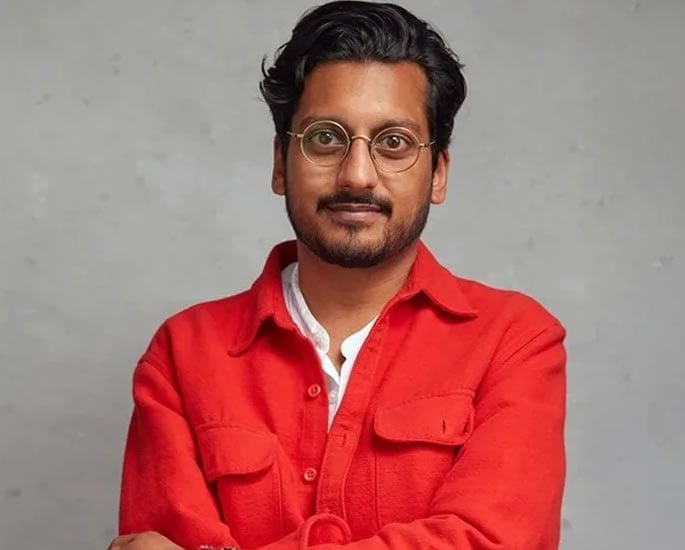
Ahir Shah has become one of the most acclaimed British Indian stand-up comedians of his generation.
Born and raised in London, Shah’s parents are originally from India, giving him a personal connection to Britain’s wider immigration story.
Shah’s comedy combines political observations, philosophy and deeply personal storytelling.
He has also appeared on shows including Live at the Apollo, Have I Got News For You, Mock the Week and The Mash Report.
His career reached a major milestone with Ends, which won the 2023 Edinburgh Comedy Award. The show explored his grandfather’s life, family history and Britain’s changing multicultural identity.
Ends subsequently became a Netflix special, giving Shah’s work a much wider international audience. His ability to combine political ideas with family stories has become central to his reputation.
In 2026, Shah returned to the Edinburgh Fringe with Golden.
The show explores love, money, family, responsibility and adulthood, while drawing inspiration from Gerard Manley Hopkins and Friedrich Nietzsche.
Paul Chowdhry
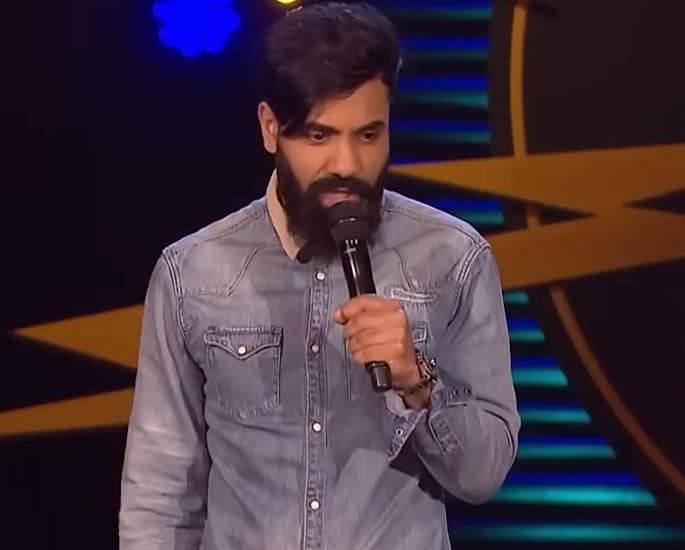
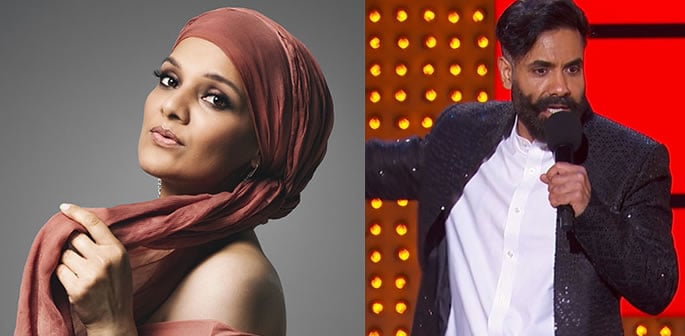
Paul Chowdhry is one of the UK’s most established British Asian stand-up comedians, with a live career stretching back to the late 1990s.
He is of Indian Punjabi heritage and began performing professionally in 1998.
Chowdhry has built his reputation primarily through stand-up, even while becoming a familiar face on British television. His credits include Live at the Apollo, Stand Up for the Week and Taskmaster.
His live career reached a landmark in 2017, when he became the first comedian of Asian heritage to sell out Wembley Arena.
He has since continued to perform to large audiences across Britain and internationally.
His tours have included What’s Happening White People?, PC’s World, Live Innit?, Family-Friendly Comedian and Englandia. The latter became one of his most significant recent tours, running across the UK in 2025.
Chowdhry continued touring in 2026 with AI: Artificial Indian.
His comedy frequently plays with race, British identity and cultural misunderstandings.
Yet his appeal extends well beyond British Asian audiences, helping make him one of the country’s most commercially successful South Asian stand-ups.
Eshaan Akbar
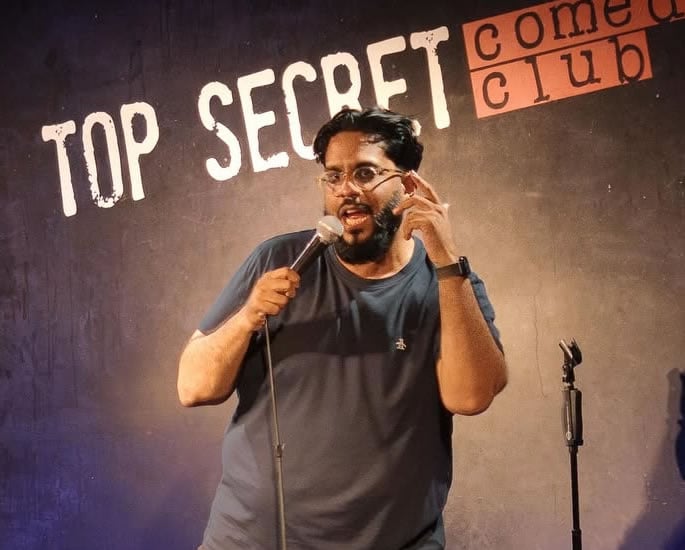
Eshaan Akbar is a British comedian of Pakistani and Bangladeshi heritage who has established himself across stand-up, television and radio.
Born in Whitechapel, London, he began performing stand-up in 2014 after working in finance.
Akbar quickly moved beyond open-mic nights, appearing on programmes including Live at the Apollo, Mock the Week and QI. He also became the first person of Bangladeshi heritage to appear on QI.
His comedy often draws on relationships, family, race and cultural identity.
However, Akbar does not treat his heritage as the entirety of his comic persona, allowing his material to move between personal observations and broader subjects.
That versatility has helped him build a career beyond traditional stand-up. Akbar has also acted, written and worked in broadcasting, including presenting on BBC Asian Network and Radio 4 Extra.
For British Asian audiences, Eshaan Akbar offers a particularly recognisable perspective because his Pakistani and Bangladeshi background reflects the complexity of Britain’s South Asian communities.
Sadia Azmat
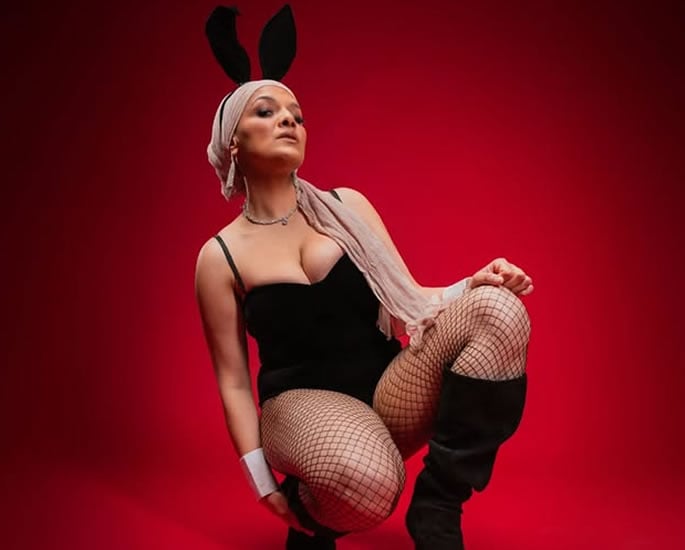
Sadia Azmat is a British Indian stand-up comedian, writer and broadcaster whose comedy has long challenged assumptions about British Asian women.
Born in Leyton, East London, she began performing stand-up in 2010.
Azmat’s comedy has explored race, religion, culture, relationships and sexuality.
Her experiences as a British Asian Muslim woman have informed much of her work, although her material reaches well beyond cultural observations.
She also has a strong record outside the comedy club. Azmat hosted the BBC podcast No Country For Young Women, while her debut book, Sex Bomb, examined culture, identity and sexuality through her own experiences.
Stand-up remains an important part of her career.
In 2026, Azmat took Rapism to the Edinburgh Fringe, presenting an intentionally provocative show about sexual violence and the way society discusses it.
The subject matter is deliberately uncomfortable, but that discomfort is part of Azmat’s comic approach. She uses humour to question assumptions rather than simply providing observations about British Asian life.
Priya Hall

Priya Hall is a Welsh-Indian stand-up comedian and comedy writer who has become an increasingly familiar name on Britain’s live comedy circuit.
Her background gives her a perspective shaped by both Welsh and Indian influences.
Hall first attracted wider attention through the Edinburgh Fringe, where her work combined personal storytelling with observations about family, relationships and identity.
Her show Grandmother’s Daughter explored her heritage and relationship with her Welsh grandmother.
Her television credits include Comedy Central Live and BBC Presents: Stand Up for Live Comedy. She has also developed work as a comedy writer, demonstrating a career that extends beyond performing on stage.
Hall’s comedy tends to be personal without being narrowly autobiographical.
Family relationships provide recurring material, while her delivery allows difficult or awkward experiences to become the basis for observational humour.
Her career is also notable because she represents a newer generation of British Asian comedians.
Rather than fitting neatly into an established template for South Asian comedy, Hall’s work reflects the increasingly varied experiences of Britain’s younger multicultural audiences.
Farhan Solo
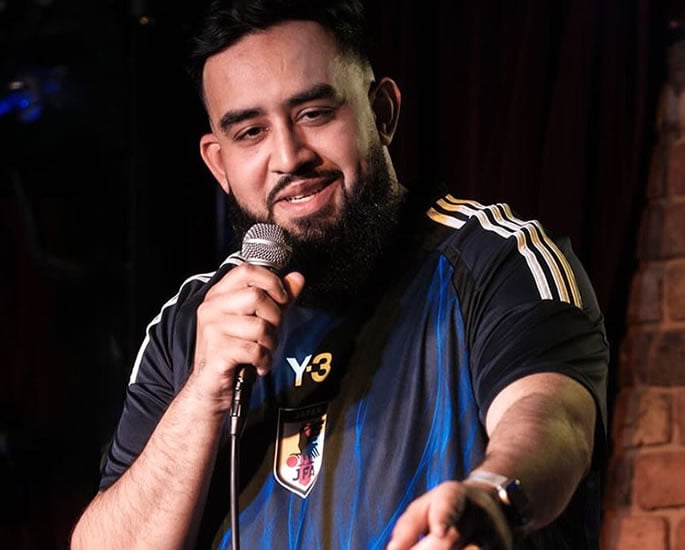
Farhan Solo is a London-based British-Pakistani stand-up comedian who has been building his reputation on the UK comedy circuit since starting comedy in late 2019.
His style combines dry delivery with dark and deadpan storytelling.
Solo became a So You Think You’re Funny? finalist in 2021, a significant achievement for a relatively new comedian. He was also a regional finalist in the BBC New Comedy Awards.
His material covers race, religion, family, politics, dating and identity. Those subjects are filtered through his experiences as a British Pakistani and give his comedy a distinctly personal perspective.
Solo has performed at major UK comedy clubs and supported established comedians.
He was also selected for Leicester Comedy Festival’s Circuit Breakers programme, which showcases comedians progressing through the live circuit.
His inclusion alongside established performers on major comedy bills reflects his progress, but Solo remains an emerging name rather than a veteran headliner.
That makes him one to watch within the next generation of British Asian stand-up.
Mani Liaqat
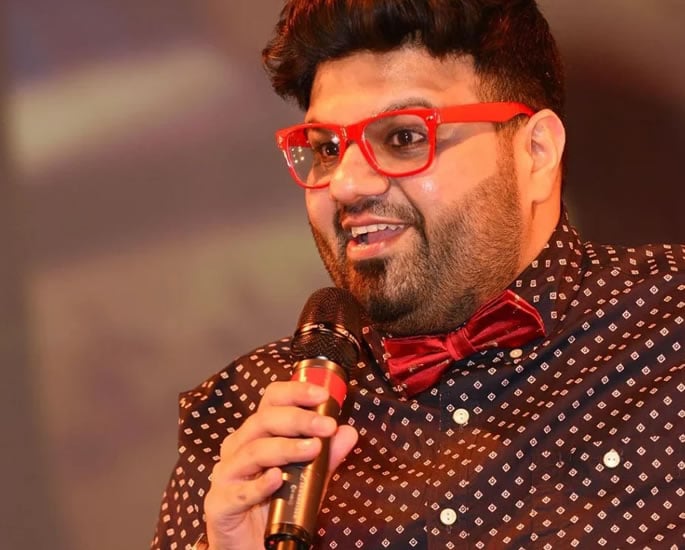
Mani Liaqat is a Manchester-based British Asian comedian, actor and presenter whose career has connected British and South Asian entertainment for more than two decades. He has been active in comedy since the early 2000s.
Liaqat became widely known after winning the UK edition of The Great Indian Laughter Challenge. The competition provided a significant platform for his comedy and helped establish his reputation among British Asian audiences.
His performance style combines British everyday humour with Punjabi, Urdu and Hindi. Liaqat is fluent in all three South Asian languages, alongside English, giving his comedy a distinctly multilingual character.
His career has also included acting and presenting. He appeared in the BBC Two programme Muslim Like Us, as well as the film Pusher and the Pakistani television drama Sard Agg.
His career predates the current generation of British Asian stand-ups and reflects an era when South Asian comedy developed strongly through specialist television and community entertainment.
British Asian stand-up comedy is no longer defined by a handful of familiar names or predictable cultural jokes.
Comedians across the UK are bringing different perspectives to the stage, from personal stories and relationships to politics, identity and everyday British life.
With established performers continuing to evolve alongside a new generation coming through the circuit, there is more British Asian comedy to discover than ever.
These seven comedians offer a snapshot of a scene that is becoming increasingly diverse, ambitious and impossible to define with a single voice.