

















































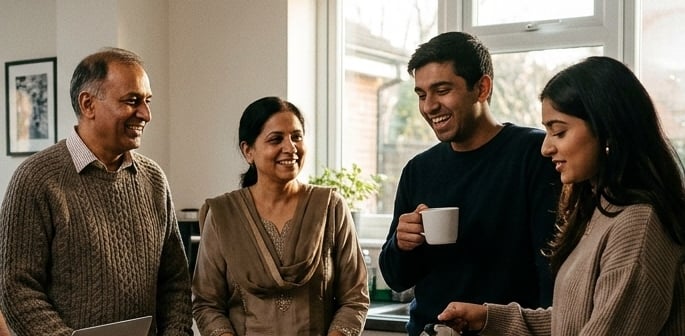
“do a man’s job and earn a living.”
In South Asian families, sons and daughters may be treated differently because of traditional expectations around behaviour, relationships, household responsibilities and independence.
While these expectations are not universal, research shows that gender roles can still shape family life across some British Asian communities.
For young South Asians, the differing treatment is not always obvious.
It can appear in everyday rules, family responsibilities and concerns around reputation.
As younger generations question these expectations, many are asking whether sons and daughters should really be held to different standards.
Why are Sons and Daughters Treated Differently?
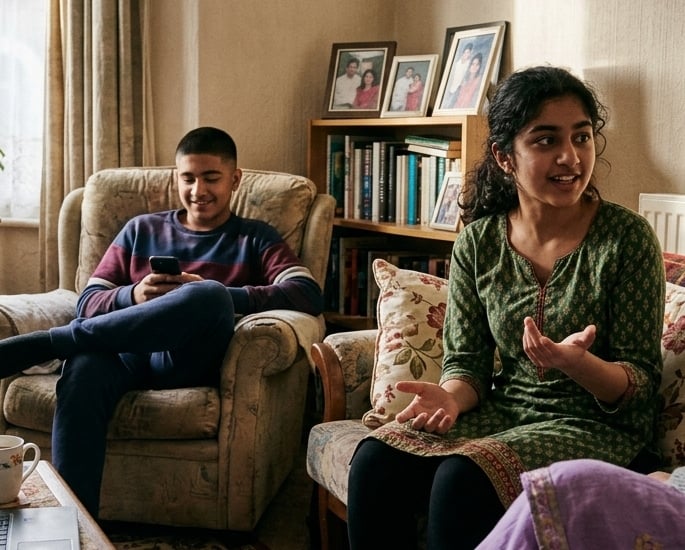
Gender expectations are often passed between generations, shaping how South Asian sons and daughters understand their roles within the family.
A “good daughter” may be expected to be respectful, responsible and mindful of family reputation.
She may also face stricter expectations around friendships, relationships, household responsibilities and independence.
On the other hand, sons can sometimes have greater freedom, particularly around socialising and making personal decisions.
This can create a double standard between sons and daughters.
The issue has also been questioned within South Asian communities.
Speaking about Desi parenting, Pooja Makhijani said: “I have a problem with parents who have one set of rules for sons and another for daughters.”
Her comments highlight how the same behaviour can sometimes be judged differently depending on whether a child is a son or daughter.
This does not mean every South Asian family favours sons or that daughters are less loved.
Instead, it highlights how children can experience different expectations because of their gender.
These differences can become more noticeable during adolescence and adulthood, particularly around dating, marriage, careers, clothing and independence.
As younger South Asians challenge traditional gender roles, many families are increasingly questioning whether sons and daughters should be held to the same standards.
Daughters can Carry the Weight of Family Reputation
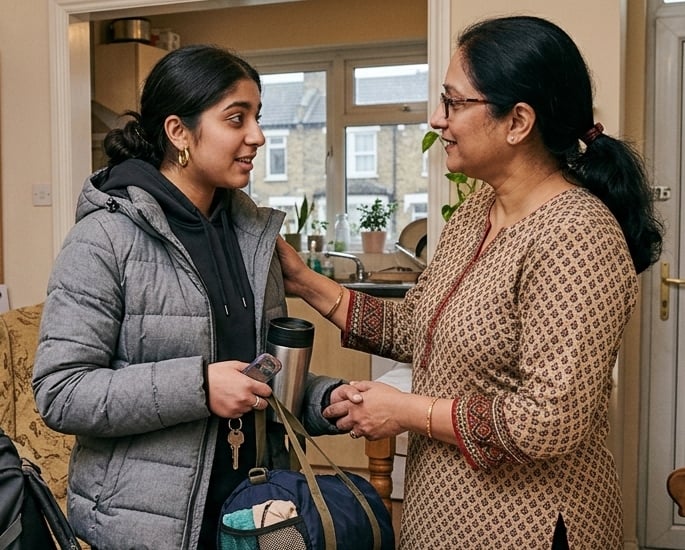
Family reputation can play an important role in shaping expectations around South Asian sons and daughters.
For some British Asian families, concepts linked to honour and respect, associated with shame, can influence how young people are expected to behave.
For daughters, this can sometimes involve expectations around clothing, friendships, relationships, socialising and personal choices.
A daughter’s behaviour may be viewed as reflecting on her wider family, creating pressure to maintain a certain image of respectability.
Research into young British South Asian Muslim women found similar differences in family expectations. One participant, Sabina, said:
“They won’t accept anything from their daughters, but will expect their son to do everything for them.”
These expectations are not always applied to sons in the same way.
A son may be allowed to stay out later or socialise more freely, while his sister may face more questions about where she is going and who she is with.
This difference can leave young women questioning why independence is acceptable for their brothers but viewed differently for them.
The Housework Double Standard
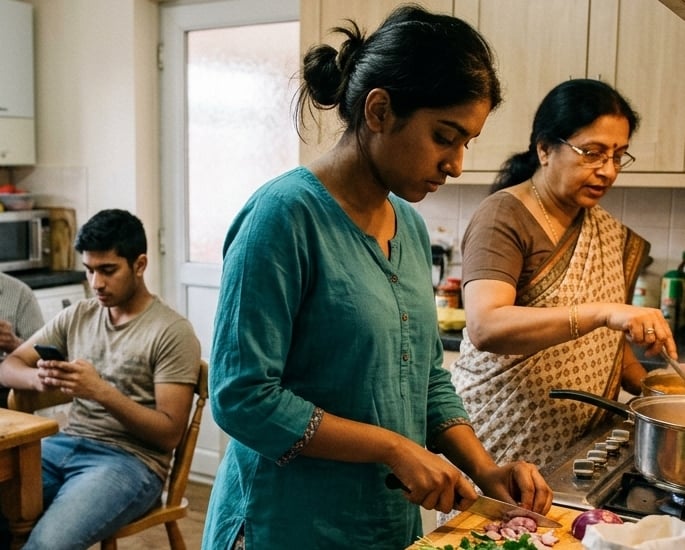
Housework is another area where gender expectations can become visible.
Girls may be introduced to cooking, cleaning and caring responsibilities from a young age.
Their brothers may not receive the same expectations.
Research using data from the Understanding Society survey found that Indian, Pakistani and Bangladeshi women spent significantly more time on housework than White British women.
The researchers found that Pakistani and Bangladeshi women spent almost 24 hours a week on housework, compared with 14.1 hours among White British women.
The research also found that education and employment can reduce women’s housework hours.
However, ethnic differences in domestic labour remained even after accounting for several factors.
This matters because household responsibilities can become normalised.
A daughter helping her mother in the kitchen may be treated as preparation for adulthood.
A son avoiding those responsibilities may simply be seen as being a boy.
One participant in research into British South Asian Muslim Women described a similar experience within her in-laws’ household, saying: “The men do nothing.”
That distinction can quietly reinforce gender roles.
It can also create a second shift for women who work outside the home. They may contribute financially while remaining responsible for much of the domestic work.
Research on British-born South Asian mothers has similarly explored how women can feel responsible for both earning money and maintaining the household.
Sons Can Have Freedom While Daughters Face Restrictions
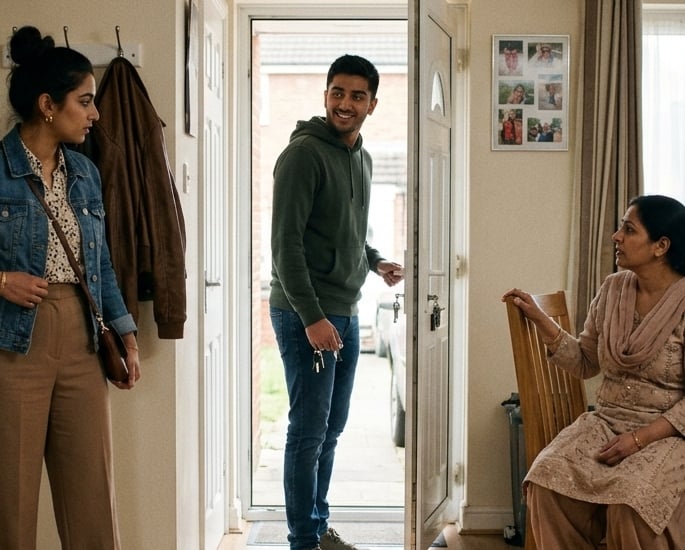
Independence is another area where the double standard can become particularly noticeable.
Some daughters may be questioned about who they are meeting, where they are going, and when they will return.
Their brothers may have greater freedom to make similar plans.
The reasons given can vary.
Parents may describe restrictions as protection rather than control. They may worry about safety, reputation or community judgement.
Research into young South Asian women in Britain found that family loyalties, cultural traditions, religious obligations and community expectations influenced how participants approached relationships.
However, the impact can still feel unequal.
For young women, constantly being reminded that their behaviour reflects on the family can make ordinary decisions feel complicated.
This can become especially difficult when daughters grow up in Britain while their parents were raised elsewhere.
Different generations may have very different ideas about independence.
Parents may prioritise family expectations and community values. Their children may place greater emphasis on individual choice.
Neither perspective is automatically identical across every household.
However, the tension between them can expose how differently sons and daughters are sometimes raised.
Marriage Can Reveal the Biggest Double Standard
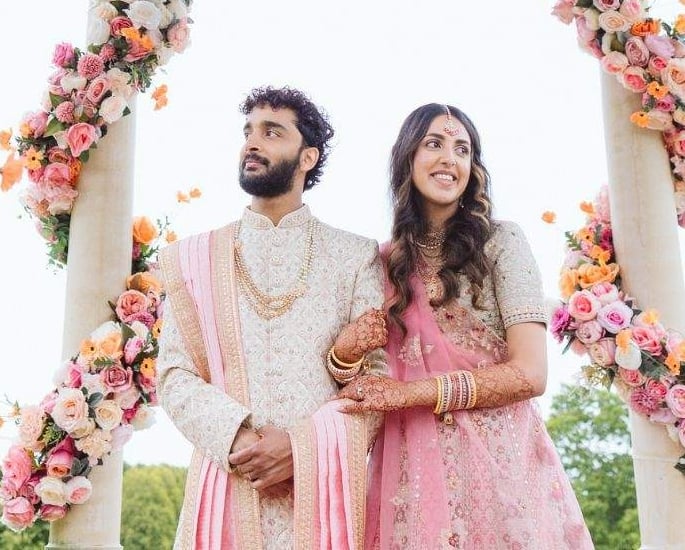
Marriage remains another area where gender expectations can diverge.
Daughters may face questions about when they will marry, who they are dating, and whether their partner fits family expectations.
Sons can experience similar pressures, but the consequences may not always be identical.
For daughters, relationships can sometimes be connected more directly to ideas about family reputation.
Research into British-born South Asian mothers also highlights how women can be expected to balance domestic and financial responsibilities.
One participant described the pressure as having to fulfil the role of a wife while also being expected to “do a man’s job and earn a living.”
Marriage expectations can also affect ideas about responsibility.
A daughter may be expected to learn domestic skills because she will eventually run her own household.
A son may not receive equivalent preparation.
That assumption is increasingly being questioned by younger generations.
Many young South Asians now expect relationships and marriages to involve shared responsibilities rather than fixed gender roles.
Why are Young South Asians Challenging These Expectations?
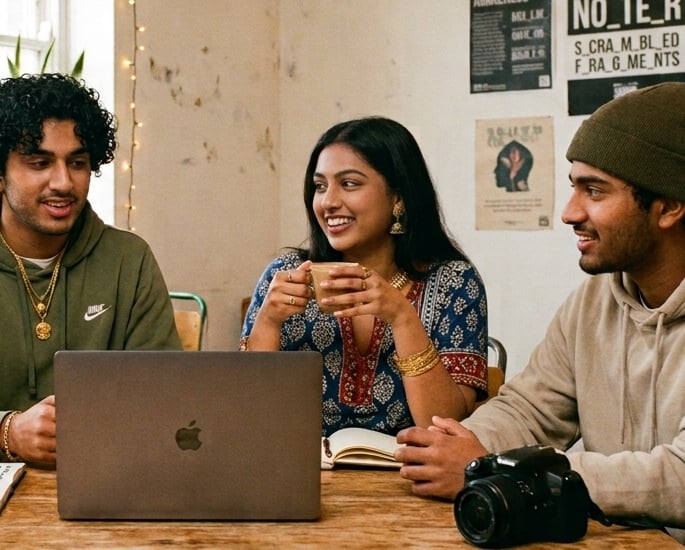
The biggest change may be that younger South Asians are increasingly questioning traditions rather than automatically accepting them.
Education, employment, social media and wider cultural experiences can expose young people to different approaches to relationships and family life.
This generational shift can also be seen in research involving British Indian women.
One second-generation participant said:
“We haven’t got that burden on us that much, so we can focus on us.”
The contrast suggests that expectations around domestic responsibility can change between generations.
South Asian women have also challenged traditional expectations through their participation in education, employment and activism.
Respect does not have to mean obedience.
Family responsibility does not have to fall primarily on daughters. Cultural identity does not have to depend on restricting women.
The same principle applies to sons.
Young men can also benefit from being encouraged to cook, clean, communicate openly and contribute equally to family life.
Are South Asian Families becoming More Equal?
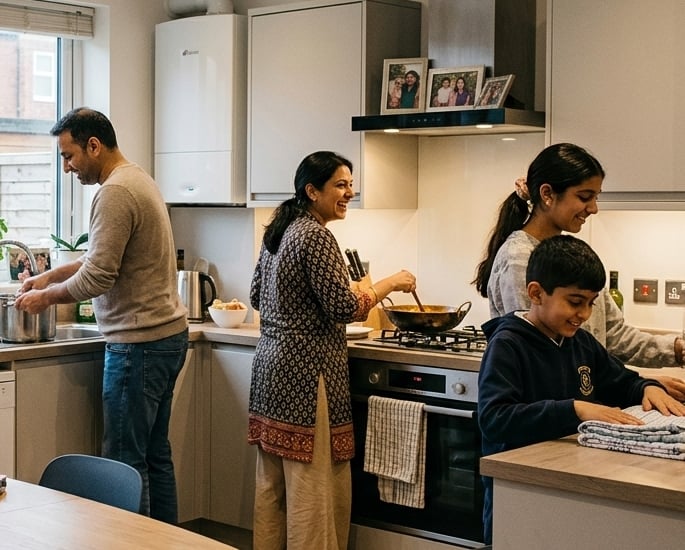
There is no single answer.
South Asian families are diverse, and attitudes towards gender roles can differ between households, communities and generations.
Some families are moving away from traditional expectations, while others continue to follow them closely.
Many are finding a balance between cultural traditions and changing attitudes.
For many young South Asians, challenging these double standards does not mean rejecting their culture.
It means questioning why sons and daughters can be given different levels of freedom, trust and responsibility.
As family roles continue to evolve, the conversation is becoming less about rejecting tradition and more about deciding which traditions still have a place in modern South Asian families.