



































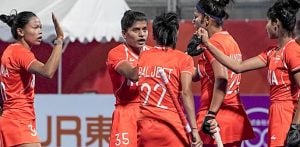













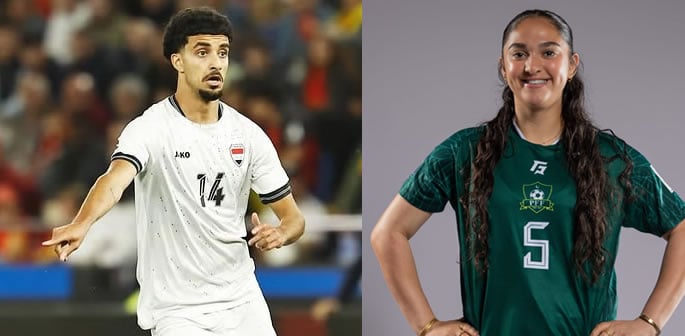
The same development is increasingly visible in women’s football.
When it comes to international football, more British-born players are choosing Asian national sides.
From Zidane Iqbal representing Iraq to Hamza Choudhury playing for Bangladesh, a growing number of footballers developed in Britain are choosing to wear the shirt of an Asian nation.
For the players, the decision can mean reconnecting with their family history while competing internationally, sometimes after progressing through the very academies that have produced England internationals.
For the national teams, it provides access to players who have benefited from some of the strongest coaching and development structures in the world.
The trend is also creating greater visibility for British Asian footballers, showing younger players that representing their heritage can be a genuine route to the international stage.
Leading the Way
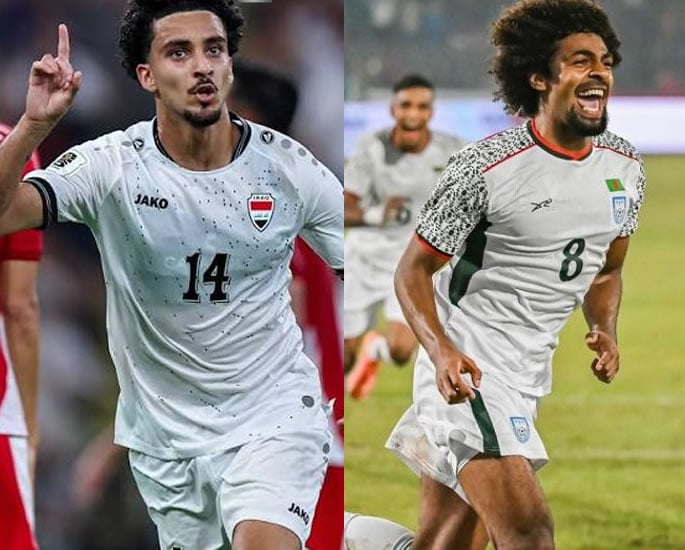
Zidane Iqbal is one of the clearest examples of how international football can bring different parts of a player’s identity together.
Born in Manchester, Iqbal was raised in England and joined Manchester United’s academy at the age of nine. His father is Pakistani and his mother is Iraqi, meaning he had links to several national teams.
He ultimately chose Iraq and made his senior debut in January 2022.
Iqbal had already made history at club level by becoming the first British South Asian footballer to make a senior appearance for Manchester United.
But choosing Iraq did not mean turning his back on his other identities, as he explained:
“Me choosing to play for Iraq doesn’t mean I am not a proud Mancunian or a proud Pakistani.”
By 2026, Iqbal’s decision had taken him far beyond the symbolism of an international debut.
He played in all three of Iraq’s group matches at the 2026 World Cup. He also featured in 12 World Cup qualifying matches as Iraq secured its place at the tournament.
Iraq ultimately went out in the group stage, but Iqbal had reached a level that once seemed a distant possibility.
His club career has also continued to develop and currently, he plays for Dundee United.
Meanwhile, Hamza Choudhury took a different route.
Born in Loughborough, Choudhury came through Leicester City’s academy and represented England seven times at Under-21 level.
His international future changed in December 2024, when FIFA approved his switch to Bangladesh through his ancestry.
He became the first Premier League player to represent Bangladesh and quickly established himself as an important figure for the national team.
Choudhury has become a key Bangladesh player, scoring four goals in 10 appearances.
He was included in the Bangladesh squad for the inaugural FIFA ASEAN Cup in September 2026, giving the midfielder another opportunity to combine his English football career with his international role.
Pakistan and the Growing British-Born Pool
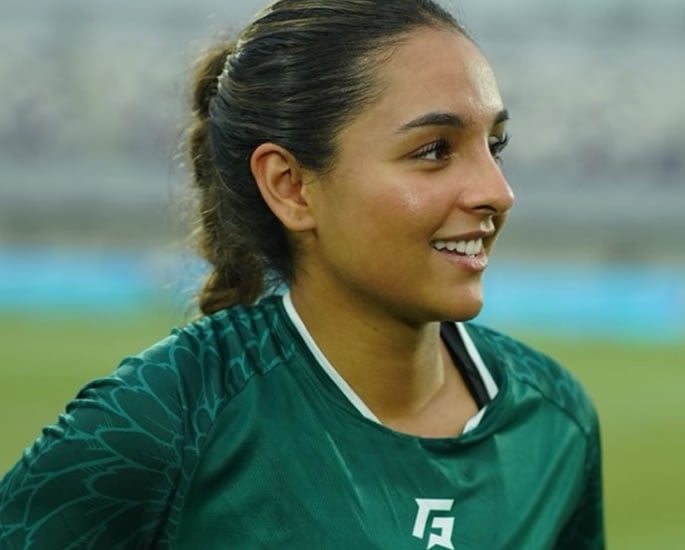
Pakistan has become one of the clearest examples of a national team looking towards Britain’s diaspora communities for players.
Manchester-born Otis Khan received his first Pakistan call-up in 2023. He made his international debut at the SAFF Championship and has since become one of the national team’s better-known players.
However, his international route was not entirely straightforward.
FIFA initially prevented Khan from playing in a World Cup qualifier because of questions surrounding his eligibility and the birthplace of his grandfather.
Khan was born in England, while his grandfather was born in Delhi before Partition and later moved to Pakistan. The Pakistan Football Federation described the situation as a unique case.
The episode highlighted an important part of heritage football that can sometimes be overlooked. A family connection may open the door to international representation, but players still have to satisfy the relevant eligibility and documentation requirements.
Easah Suliman is another example.
Born in Birmingham, Suliman developed through Aston Villa’s academy and represented England at Under-16, Under-17 and Under-19 level.
He also captained England’s Under-19 side to victory at the 2017 European Championship.
In 2023, FIFA approved his switch to Pakistan.
Suliman had therefore moved from an England pathway that had once appeared to offer a potential senior international future to representing the country connected to his family heritage.
The same development is increasingly visible in women’s football.
Layla Banaras was born in Birmingham to a Pakistani father and English mother. She came through Birmingham City and later joined Lewes, while also becoming part of Pakistan’s senior national team.
Her involvement came during a period when Pakistan’s women were attempting to rebuild after years of disruption.
Meanwhile, Wrexham forward Mariam Mahmood was born in England and attracted attention from Pakistan after scouts became aware of her availability.
Mahmood initially had approaches from Pakistan but did not immediately commit.
She eventually chose to represent the country in 2025 and made her senior debut during the AFC Women’s Asian Cup qualifiers in Indonesia.
She quickly made an impact, scoring both goals in the 2-1 victory over Kyrgyzstan.
At Wrexham, she helped the club win the Welsh Adran Premier title, becoming the first Pakistani female footballer to win a European top-flight league title.
She then made further history by becoming the first Pakistani player to appear in the UEFA Women’s Champions League when Wrexham entered the competition in 2026.
For young British Asians watching these players play for Pakistan, that visibility matters.
Why Asian Federations are Looking Towards Britain
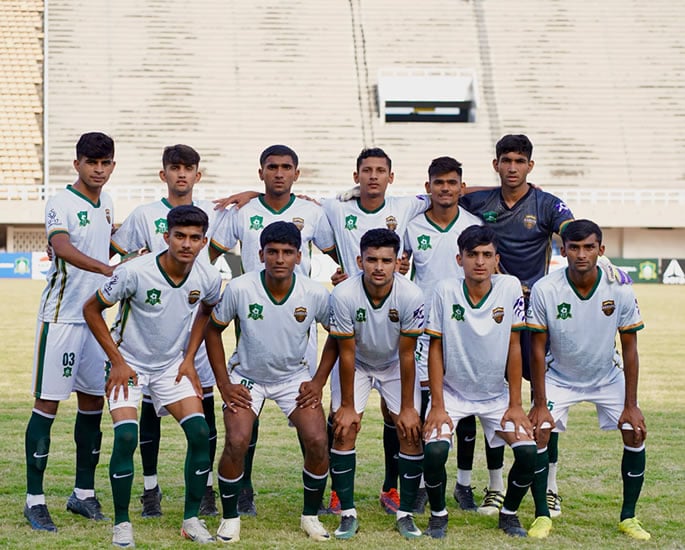
There are clear practical reasons behind the growing interest in players from British diaspora communities.
Britain has a large South Asian population and one of the most established football systems in the world.
Players can access professional academies, high-level coaching, talent identification systems and competitive football from a young age.
Yet there remains a significant gap between participation and representation.
Football Association research found that South Asians accounted for around 7% of the population of England and Wales but just 0.5% of professional male footballers.
That imbalance creates an unusual situation. Britain has a large South Asian population with a strong interest in football, but relatively few South Asian players reach the highest levels of the English professional game.
Asian national teams can therefore identify players who have benefited from advanced football development while also having a genuine connection to their countries through birth, ancestry or nationality.
The Football Association has acknowledged the issue.
Its three-year Build, Connect, Support plan, running from 2025 to 2028, aims to improve South Asian representation across English football.
The FA reported that male South Asian participation had reached a record 8% in affiliated football.
Meanwhile, FIFA has established clearer rules around players changing their sporting nationality.
Its updated 2026 guidance states that nationality alone may not always be sufficient where a genuine link is required. That connection can be established through factors including birth, descent or residence.
FIFA also operates a Change of Association platform recording players who have successfully changed their international affiliation.
The process can still be complicated.
India provides an important contrast because its citizenship framework has historically restricted overseas Indian citizens from representing the national football team.
That differs from countries that can select players based on ancestry alongside their other nationality.
As a result, Bangladesh, Pakistan and Iraq have been able to benefit from sections of the British football diaspora in ways that India has found more difficult.
Bangladesh’s recent developments show just how quickly this area is changing.
Alongside Choudhury, England-born winger Farhaan Ali Wahid committed his international future to Bangladesh in 2026, having progressed through Chelsea and Fulham academies.
A pathway through the English game does not necessarily have to end with England.
Increasingly, it can lead to a national shirt representing another part of a player’s family story.
As Asian football associations become more active in identifying and developing diaspora talent, the relationship between British football and Asian international football is likely to become even stronger.
For the next generation, that could mean more players growing up in Britain seeing a route to the international stage that reflects not only where they were raised, but also where their families came from.