















































"Siblings should be united in caring for parents"
Desi cultures across South Asia and the diaspora consider caring for parents a central family duty and moral obligation. Often, the ideological focus is on Desi men’s role.
People from Indian, Pakistani, Sri Lankan, and Bangladeshi backgrounds highly value caring for their elders within their families and homes.
However, the reality of what caring for parents can mean is much messier than a romanticised view can allow people to see.
Lifestyles that differ from the past, issues of loneliness, the realities of care work, and emotional labour raise questions and challenges.
Within South Asian households, traditional values place caring for parents as the duty of sons.
DESIblitz explores whether Desi men should still be positioned as the figure required to look after their parents.
Cultural Norms & Expectations

Family members take great pride in caring for elderly parents in the home. However, deeply culturally rooted expectations assume this will occur.
Indeed, this is reflected in the fact that placing elderly parents in care homes is still considered a taboo.
Mohammed, a 44-year-old British Pakistani, maintained:
“Never would we have sent our parents to a home, even thinking it is a sin. I know some Asian groups have started to, but no.
“In my family and community, we take pride in caring for our parents.”
“I’d never forgive my children if they one day said, ‘Aba and Amma, we think you should be in a care home’, so why would I do it to my parents?”
Moreover, entrenched cultural values and expectations can place judgment on Desi families where parents have moved to a care home.
A fundamental expectation is that the son will care for the parents within his marital home. Or that a son will remain with his parents in adulthood, even after marriage.
However, this is not always a reality.
Ruksana, a 47-year-old British Pakistani, stated: “People like to say, ‘The son will care for the parents in old age. The daughter leaves and takes care of her in-laws’. I hate that idea.
“It’s assumptions; doesn’t mean it actually happens. My brothers were rubbish. No chance they and their wives would have taken care of my parents.
“The few months it was tried was terrible.
“My sister, me and our husbands are the ones who care for them. We had money to build an extension, so they still have a sense of independence.
“It’s us, the daughters, happily caring for them.”
The positioning of sons taking care of elderly parents reinforces gender inequality. It can also force daughters into a corner as socio-culturally male siblings are positioned as having authority and power.
The Role of Siblings & Extended Family

The realities and experiences of caring for parents and what it involves can differ drastically from cultural ideals.
The role of multiple family members is often vital.
Abid, a 28-year-old British Bangladeshi, is the youngest of five siblings and lives with his mother:
“I’m the last one still at home and the main carer for our mum, but the whole family helps.
“The help isn’t just financial but emotional and social. We all chip in.”
“My three brothers live close by with their wives and my nieces and nephews.
“It’s easy for them to come over and mum to go to theirs. We all take Mum out and about.
“I work too, so if Mum were home solo all day, she’d get lonely. She hangs with friends, too.
“My sister lives in Liverpool but comes down regularly, and mum goes for long or short visits when she likes.
“We’re all involved in taking care of her and ensuring she’s happy, just like she and Dad made sure we were as kids.”
For Abid, he and his sibling are united in ensuring their mother is cared for and happy in her twilight years.
Care does not just involve ensuring food and home. It also involves caring for mental health and emotional well-being.
Addressing Issues of Loneliness for Elderly Parents

Desi families and communities cannot forget the emotional and mental health needs of elderly parents.
Loneliness and isolation is a key concern in the modern world.
Research has shown that older people, in particular, are vulnerable to loneliness, which can impact their health.
Thus, the role of family members’ engagement with elderly parents to ensure a sense of meaningful human connection is vital. This is reflected by Abid’s words.
There is also a need to encourage interactions and activities outside the home.
Encouraging elderly parents to do things outside the home is not embedded in Desi communities. Nevertheless, this is changing.
For example, community groups and day-care centres within British Asian communities create spaces and events specifically for older people.
Mo, a 36-year-old British Pakistani, stated:
“Everyone works except my parents. It was just them home all day. We didn’t want them feeling trapped and bored.
“We encouraged our mum to do things outside and make friends. She was more resistant than Dad.
“Both are in their 60s, but he’s always been more willing to try new things.
“My parents do things together and go to the local community centre.
“In the last few years, the community centre has done a lot for older South Asians.
“My parents are always in high spirits when they come back and have plenty to tell us.”
Modern lifestyles and work schedules can mean some Desi parents feel isolated and alone in family homes.
For such parents, care homes or day centres can be an invaluable means of tackling loneliness and protecting mental health and well-being.
Establishing a circle of friends outside the home is valuable, as it provides an additional sense of belonging in the lives of elderly parents.
The Pressure & Challenges that Can Be Faced

Being positioned as the one responsible for caring for elderly parents has its challenges and pressures, financial and emotional. Both of which can result in family conflict and tension.
Raj*, a 42-year-old Indian from Delhi, currently in the UK, stated:
“It was expected and accepted that I would be with my parents. There’s just my sister and me.
“My wife was happy with that, too, but when my mother was severely sick several years ago, I almost broke down.
“I left my job in the US to return and take care of her; my wife later took leave from work, too.
“Financially, paying for everything was more than a strain. And watching my mum suffer, without my wife, I don’t know what would have happened.
“We dipped heavily into savings.”
“My sister was in a financially better position than me. Earning three or four times more. She never considered helping.
“She barely visited. My sister and mother had always had a strained relationship, but we needed her, and she wasn’t there.”
The cost of medical care, utility bills and more can put considerable pressure on a person, impacting their health, as was the case with Raj.
Indeed, Raj maintained that his wife prevented him from “breaking down” due to the pressures and struggles he faced.
Therefore, the challenges of caring for elderly parents, particularly in moments of ill health, require more than one person to be responsible.
Raj welcomed his responsibility as a son to look after his mother, but he feels all children hold responsibility:
“After everything my parents did for me without expectations, I was always happy to be there. But that should be the case with every child.
“Siblings should be united in caring for parents, each doing what they can, regardless of gender.
“Each being aware of the strain and issues the other may have. I don’t think I’ll ever forget what my sister didn’t do, her lack of consideration.”
Day-to-Day Care of Parents
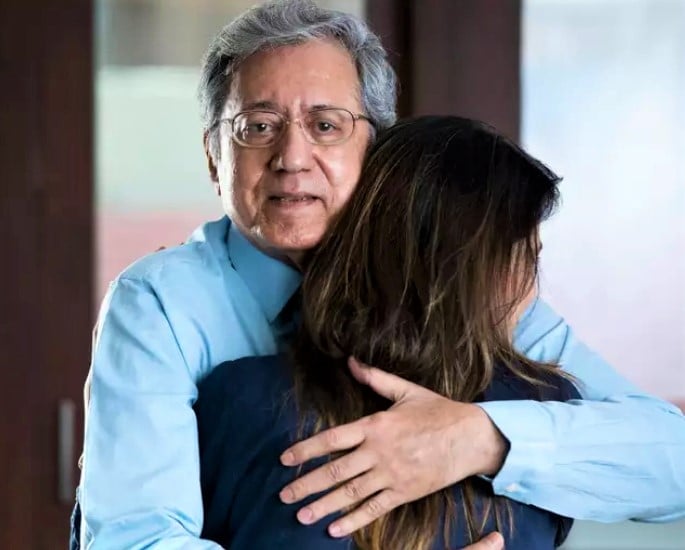
While the sociocultural focus may be on sons’ duty to care for parents, that does not mean sons do it alone. Nor does it mean sons wish to or can always take on the responsibility.
Raj highlighted that without his wife, he would not have been able to care for his mother as successfully as he did:
“My wife and I both helped with day-to-day chores in the house in India. When we were working abroad, we had a housekeeper.
“When my mother was severely sick, my wife was helping my mother with matters she would not want the nurses or son to do.
“Without my wife, I do not think I would have managed without getting sick myself.”
“My sister once said since she had her own house and I’d married, my wife was responsible for our parents. Angers me to this day; your parents remain your parents.”
For Raj, his sister’s inaction and words have led to long-term cracks and tension in their sibling relationship.
Longstanding values may consider caring the duty of sons, but care work, both formal and informal, remains highly gendered.
Moreover, when a son is married, his wife is often expected to take on the daily care of his parents in her role as a daughter-in-law. Such assumptions can cause stress and strain.
Mo stated: “When some learnt, I helped my wife with cooking and cleaning; they’d say, ‘It’s her job as the wife, just leave her to it’.
“We both work, and they’re my parents, and it’s my family, too, so why shouldn’t I do the same as her?
“I’ve seen it in other Asian homes, where the wife was doing it all and the husband just bringing money in. It should never be like that.”
Change is taking place within Desi homes to disrupt sociocultural ideals of who cares for parents.
The question of whether Desi men should still look after their parents is multifaceted. It involves cultural traditions, changing social norms, economic pressures, and personal values.
Moreover, successfully caring for elderly parents often requires more than one person to be involved.
The entrenched idealisation of a son caring for elderly parents must be unravelled and destabilised.
Indeed, such idealisation can conceal the vital role of Desi women and siblings and underplay the realities of such care work.
It is essential to recognise that when sons care for their parents, they are often not doing so alone. This highlights the richness of the relationships within Desi families, which go beyond household members.
It is also essential to recognise that it is not always possible or desirable for a son to undertake such responsibility. Each family is unique and navigates complex realities and relationships.