


















































“When they cast a brown girl… I feel like that’s a win.”
Palak Gupta’s journey from Delhi to the global fashion stage is one marked by defiance, resilience, and self-discovery.
In an exclusive interview with DESIblitz, the fashion model opens up about her unconventional entry into modelling, her experiences of colourism in India, and how moving abroad redefined her perception of beauty.
With campaigns for CoverGirl, MAC, Valentino and BMW under her belt, Palak has become a recognisable face in both commercial and high-fashion circles.
Yet, as she explains, the path to recognition was far from straightforward and often shadowed by prejudice.
Her candid reflections shine a light on the unspoken challenges many brown models face, both in South Asia and abroad.
From resisting stereotypes to being tokenised on set, Palak shares an honest and nuanced view of an industry in flux.
Her story isn’t just about fame or fashion. It’s about reclaiming worth in a world that too often equates beauty with fairness.
Falling Into Fashion
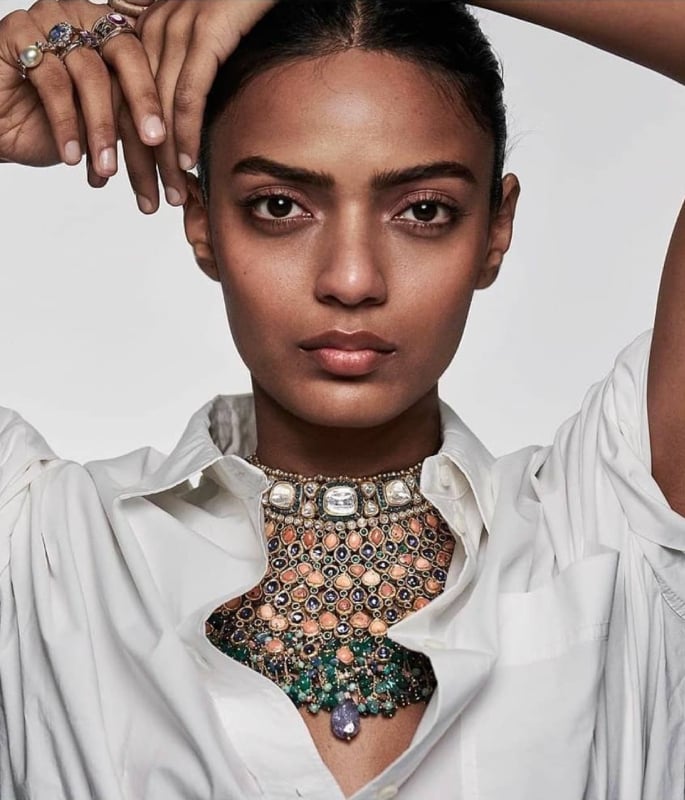 Palak’s entry into modelling was entirely unexpected.
While pursuing a marketing career, she applied for a PR role at a fashion agency.
“They were like ‘Have you ever considered modelling?’” she remembers.
“I was like ‘You sure I can be a model because I don’t think I’m pretty.’”
Despite her doubts, she gave it a go and quickly landed her first job for W, a prominent Indian womenswear brand.
“That’s my first big job… no looking back,” she says.
The three-day campaign paid more than her monthly salary, prompting her to rethink her professional goals.
Her father was initially hesitant about her career choice, worried about safety and the fashion industry’s reputation.
But after seeing her face on billboards across India, his views softened.
“He was like ‘You’re my little Bipasha… go achieve whatever you want.’” Palak credits her agents for helping to reassure him.
“They really helped my dad understand this is a career,” she explains.
Beauty, Bias & Breaking Through
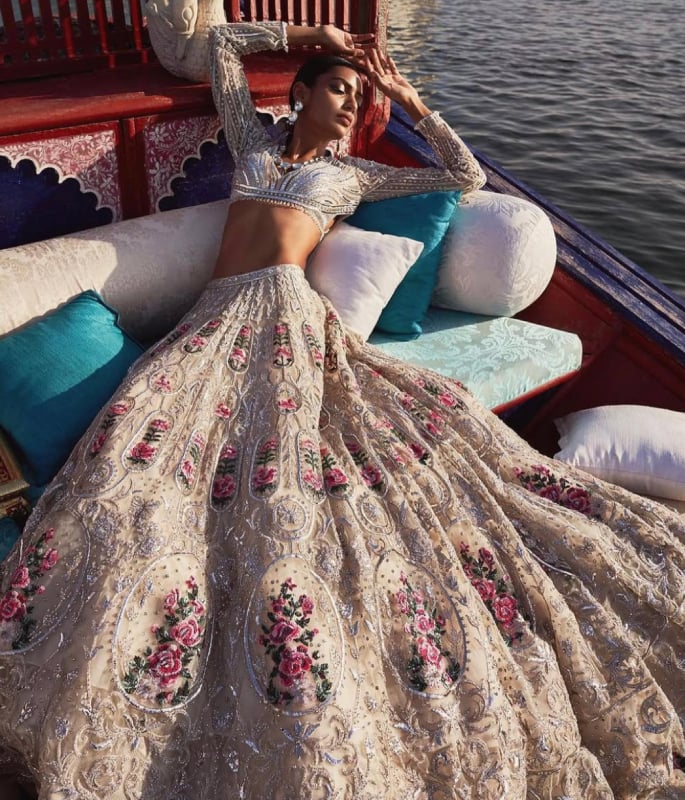 Palak Gupta grew up thinking she wasn’t beautiful.
“I was always the boy in like school plays… I was like the boy who plays outside,” she says.
In India’s beauty landscape, she felt invisible.
“I would never sell a soap… never be smiling,” she adds, highlighting the bias against darker skin tones.
Despite working with respected designers like Sabyasachi and Tarun Tahiliani, she was often excluded from mainstream campaigns.
“I didn’t fit the mould of like the pretty model… I was always a fashion model,” she says.
Even as her portfolio grew, the sense of being sidelined lingered.
“They make you work really really hard… bad working conditions, suck it up,” she says of the Indian industry.
Still, she sees India as the foundation of her career.
“It was my building block,” she acknowledges.
But she also believes the treatment of models there must change.
“A lot of people… are first-generation working in fashion,” she says. “They don’t know how to treat models, but that’s not an excuse.”
Finding Her Worth Abroad
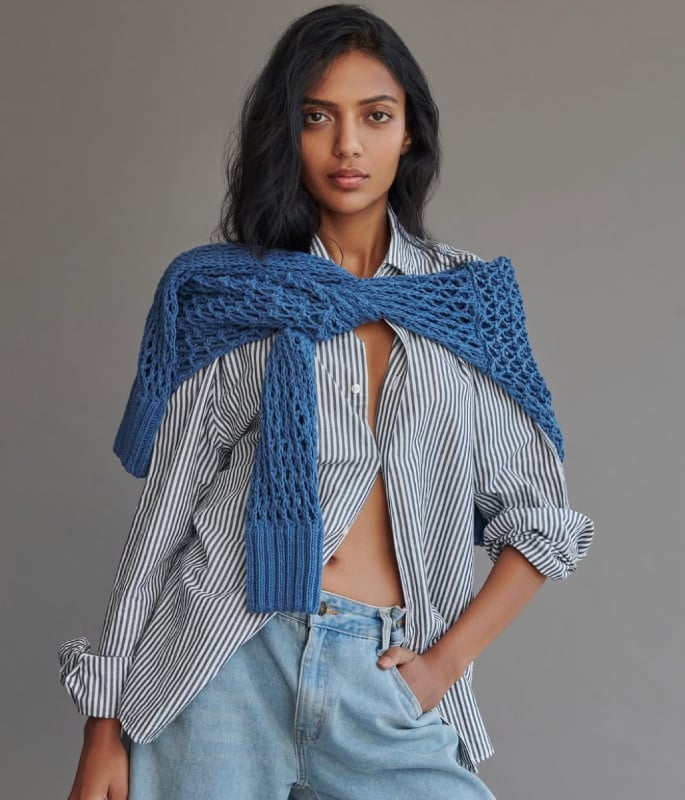 It wasn’t until Palak moved to the US that her confidence truly blossomed.
Within a month, she landed a major CoverGirl campaign. “They put me on their packaging,” she says with pride.
“My skin colour just… became so irrelevant.”
This shift in environment made her feel truly seen for the first time.
“I think I am pretty, it’s just that I was in the wrong country.”
She also noticed a dramatic improvement in how models were treated.
“They treat you like a human,” she says. Basic needs were met, from water breaks to being asked about dietary restrictions.
“It makes you feel like you matter.”
The difference in pay was also striking. “There’s a reason why I had to leave India,” she admits.
“What an actor would get paid in India is what I’ve gotten paid for a day.”
She recalls a photographer in India who once told her, “Honey, you’re a model, you can never make that much.”
Three years later, she was making exactly that.
Representation, Tokenism & Owning Her Space
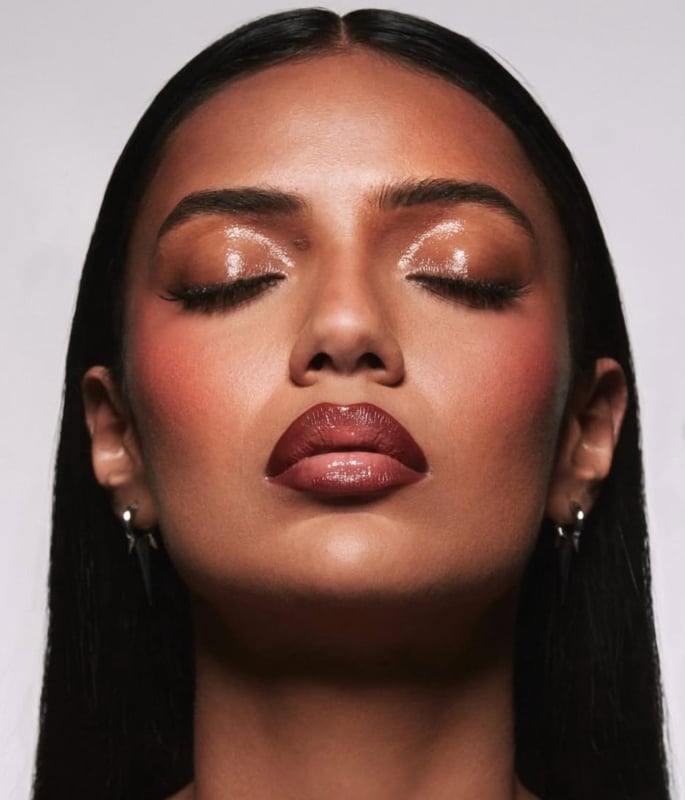 Palak Gupta acknowledges that representation abroad isn’t perfect.
“There is a lot of tokenism still,” she says, noting how diverse casting spiked during the Black Lives Matter movement but quickly faded.
“The BLM wave was great for models of colour,” she reflects, “but it didn’t last.”
Still, her international campaigns for MAC, Valentino, L’Oreal, Aritzia and BMW have given her a platform to challenge beauty norms.
She recalls walking down the street and seeing herself in ads: “I was like ‘That’s me.’”
For her, one of the biggest wins is being cast in beauty and lingerie shoots.
“When they cast a brown girl… I feel like that’s a win,” she says.
Growing up, she only saw white women in those spaces. Now, she’s that face for others.
Watch the full interview with Palak Gupta here: