
















































“All I’ve known is the struggle."
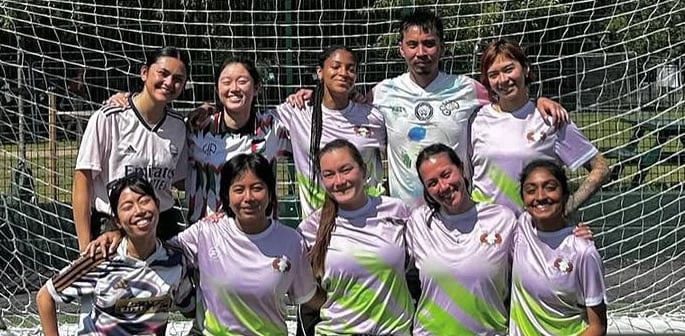
In the heart of East London, Baes FC is not just a football club; it is a safe haven for women, trans, and non-binary people of Asian heritage who have long been sidelined in Britain’s football landscape.
Co-founded in 2022 by Hong Kong-born artist Nicole Chui, Baes FC challenges the conventional narrative of Asian participation in football.
For too long, Asian players, especially women and those outside the binary, have faced exclusion and invisibility.
This club, with its growing waitlist of over 200 hopefuls, is changing that by fostering a community where players can simply exist and thrive on their own terms.
In a sport dominated by tradition and often unwelcoming environments, Baes FC shines as a beacon of inclusivity and cultural pride.
Origins Rooted in Exclusion and Determination
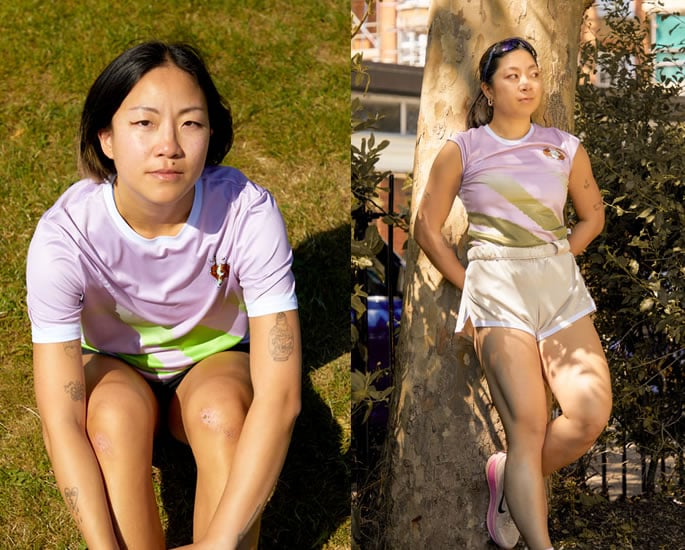
The seeds of Baes FC were planted in stories like that of Kiran Dhingra-Smith, a mixed-heritage coach who experienced firsthand the neglect faced by women’s football teams.
In 2013, while coaching an under-15 girls’ team, she repeatedly found the girls’ squads deprived of basic resources, overshadowed by boys’ teams with priority access.
She recalled: “Sometimes I would email and be like, ‘Can we at least make sure we have balls?’ And it would just get ignored.”
The turning point came when a male coach deliberately prioritised his boys’ team, leaving her team waiting in freezing conditions.
At just 17, Kiran faced intimidation after raising these issues but refused to be deterred.
Her experience reflects a systemic lack of support for women’s football, especially for players from minority backgrounds.
Kiran said: “All I’ve known is the struggle. The difficulty is part of my life. I’ve always had to set up the women’s teams.
“A lot of us will tell you that we’ve all trained with men, we’ve all trained with boys, because there wasn’t space for us. There just wasn’t.”
Such challenges inspired Nicole Chui and her sister Natalie to create a club explicitly for Asian women, trans, and non-binary footballers, a group historically overlooked both in sport and in society.
A Unique Space for Asian Heritage

Baes FC is a deliberate response to the invisibility of Asians in British football, particularly among women and gender minorities.
Nicole explained: “The reason we created Baes FC was because there’s not been a space for people of Asian heritage in British football to be able to explore that safely, and to be able to just exist.”
This sense of belonging is what makes the club stand out.
For many players, it’s not just about football, it’s about community.
Sou, a 28-year-old producer whose family is from Hong Kong, describes the significance of Baes FC:
“I grew up in very rural North England and there weren’t many people who looked like me.”
“The racism I experienced was sometimes explicit, sometimes implicit, but it’s only since I started coming to Baes that I’ve really found my people, people who just get it.
“There’s stuff you don’t have to over-explain.”
The club’s role extends beyond football; it offers resilience and refuge amid a society increasingly fraught with exclusionary discourse.
Challenging Stereotypes

The underrepresentation of British South Asians in football is often attributed to cultural stereotypes and misconceptions.
A common myth is that South Asians prefer cricket or are physically unsuited to football. Others blame parental pressure to prioritise academics.
Yet, research from Sporting Equals and Kick It Out consistently disproves these claims. Still, participation remains stubbornly low.
Kiran highlighted this reality: “What it shows is that there are so many Asian people who want to play football and the problem is there’s just nothing from the grassroots up.”
Baes FC fills that gap by providing not just a team, but a nurturing environment where players can build confidence and skills free from prejudice.
Representation within the club matters.
Aneesa Ahmed, a journalist who waited three years to join, added:
“I’ve never felt judged by anyone here.
“Representation is important… I just wanted to have people who came from my background, just so I can be like, ‘You know what? I can do it as well’.”
Intentional Inclusivity

From its inception, Baes FC has made inclusivity a core principle.
Nicole Chui and Kiran Dhingra-Smith have ensured the club actively welcomes trans and non-binary players, a rarity in the UK football scene.
Kiran said:
“Everything we do has to be so intentional.”
“If Nicole and Nat weren’t doing this intentionally, and making sure it’s a space where we’re advocating for trans and non-binary people, to show them ‘you’re safe here’, well you can’t do this without it.”
The club’s inclusive stance becomes even more significant in the wake of recent FA policies banning transgender women from women’s football, a ruling that has deeply frustrated the Baes community.
Despite this, Baes FC maintains its integrity and continues to build a space where every member can participate fully and without fear.
Visibility and Integrity in the Wider Football Culture
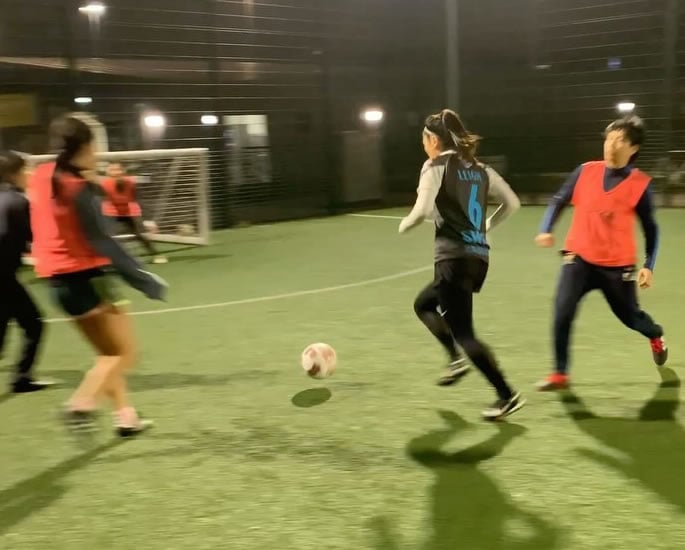
Baes FC’s visibility has drawn attention from major corporations and media, reflecting the rising popularity of women’s football.
Yet, this exposure comes with challenges.
Nicole warns of the risk of tokenism, where brands seek to use Baes FC players as visual symbols without genuinely representing their community.
She said: “What we’ve always centred ourselves on is ‘does it represent us fully?’ as well as the integrity behind why a project has reached out to us in the first place.”
A positive example was a collaboration with Mastercard and feminist platform Freeda, where Baes FC not only appeared visually but shared authentic stories about their existence.
Such opportunities help raise awareness while respecting the club’s values.
Even as Baes FC grows stronger, the broader football culture still resists change.
At the end of training sessions, the team often encounters men’s groups marking territory and expressing impatience, a reminder that the struggle for space and recognition continues.
Baes FC embodies more than just a football club; it represents a necessary shift towards inclusion, respect, and community in British football.
By creating a safe, empowering environment for women, trans, and non-binary people of Asian heritage, Baes challenges the status quo and demonstrates that football can be a space where identity and passion intersect freely.
The club’s journey highlights the persistent inequalities within the sport, but also the resilience and hope that emerge when people come together with intention and pride.
As British football grapples with its diversity challenges, Baes FC offers a powerful model for how to break down barriers and build something truly inclusive.
Their story is a reminder that football’s future depends on recognising and nurturing all voices, not just those historically privileged.
For Baes FC, the struggle continues, but so does the promise of change.