
















































“It’s tied to tea culture, bought fresh each morning"
Naan and roti are staples in Indian cuisine but there are plenty of Indian breads that are fitting accompaniments to meals.
Many of them have been shaped by local grains, climates, and cooking traditions over centuries.
Some are crisp, others soft, some layered, others fried, each with a unique texture and purpose on the plate.
They appear in daily meals, festive celebrations, and family traditions alike.
Exploring them reveals how diverse and inventive Indian bread really is, and why it deserves a place on every table beyond naan and roti.
Bhakri
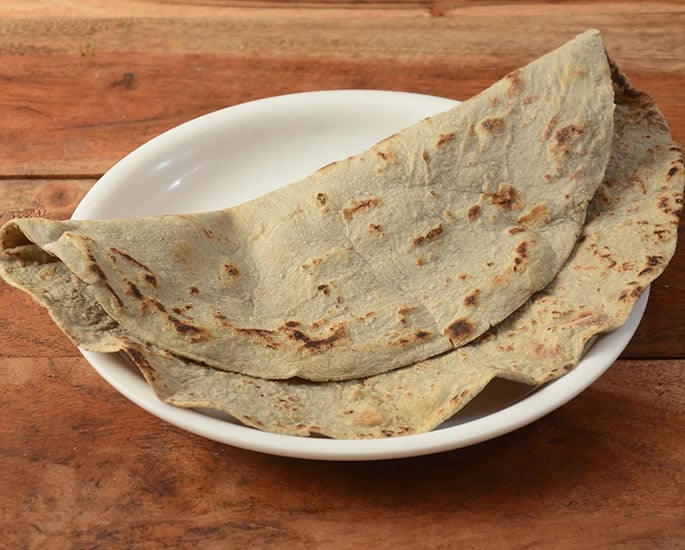
Bhakri is a thick, hand-patted flatbread made from jowar, bajra, or rice flour.
It cooks on a hot tawa until the edges crack and release a nutty aroma. The surface develops a light char, while the inside stays dense and grain-forward.
Bhakri is a staple across Maharashtra, built to handle bold, rustic food.
Bhakri is sturdy enough to scoop pithla, thecha, baingan bharta, and slow-cooked dals without breaking. Its texture is functional as much as it is satisfying.
Omkar Walve, executive chef of Avatara in Dubai, says:
“Bhakri is naturally gluten-free [when made from millets] and high in fibre, with a beautiful hand-pressed texture, offering chefs a versatile canvas, whether paired with bold curries, cultured butter, or reimagined in modern tasting menus.”
Girda
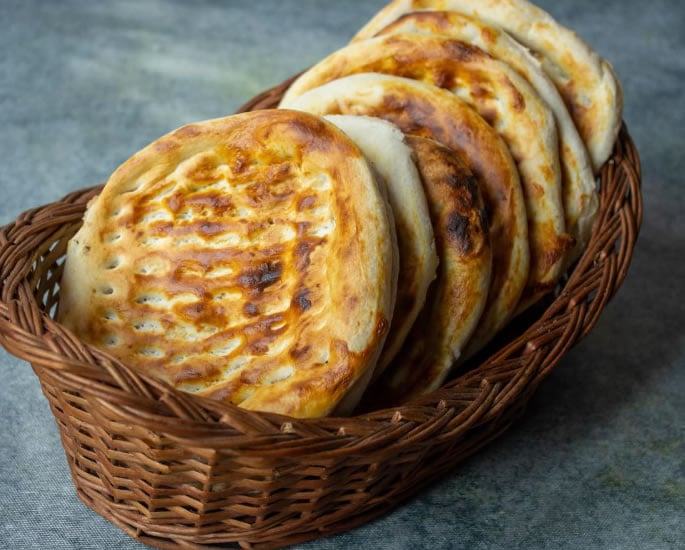
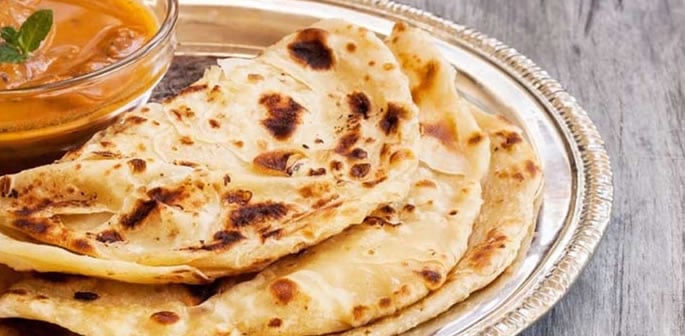
Girda is a Kashmiri bread closely tied to daily chai culture. It is shaped into round discs, pressed with fingertips, and baked in a tandoor.
The result is a crisp exterior with a soft, slightly chewy centre.
Thomas Zacharias, chef and founder of The Locavore, explains:
“It’s tied to tea culture, bought fresh each morning and eaten with noon chai (a salty pink tea) or dishes like harissa (a slow-cooked winter mutton preparation), but not used as the starch in a main meal, where rice dominates.”
Girda is not built for heavy curries or large meals.
It is enjoyed alongside tea, butter, and lighter dishes, reflecting how bread functions differently in Kashmiri food culture.
Poee
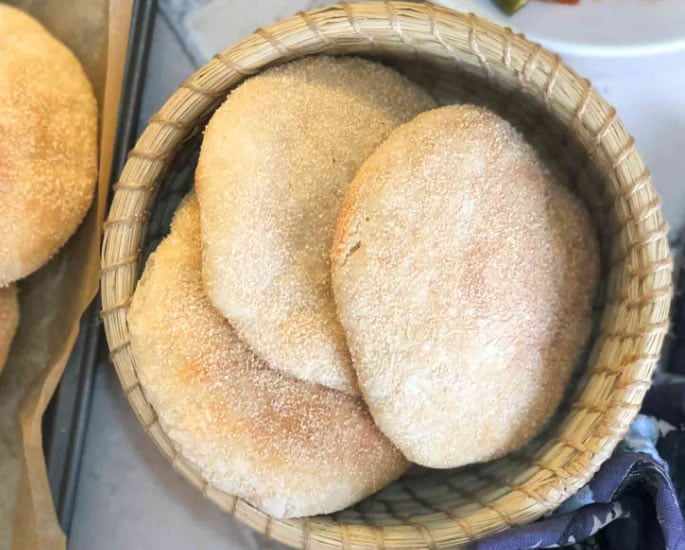
Poee reflects Goa’s layered history, introduced by the Portuguese in the 16th century.
Traditionally, the dough was fermented with toddy, using a mix of whole-wheat and refined flour. This gave the bread a slight tang and airy texture.
Baked in wood-fired ovens, poee develops a thin crust and a soft, hollow interior. It is strong enough to hold fillings yet light enough to tear easily.
It remains a daily staple across Goa, often used for sandwiches or served with gravies. While modern bakeries use yeast, its structure and role have stayed consistent.
Kulcha
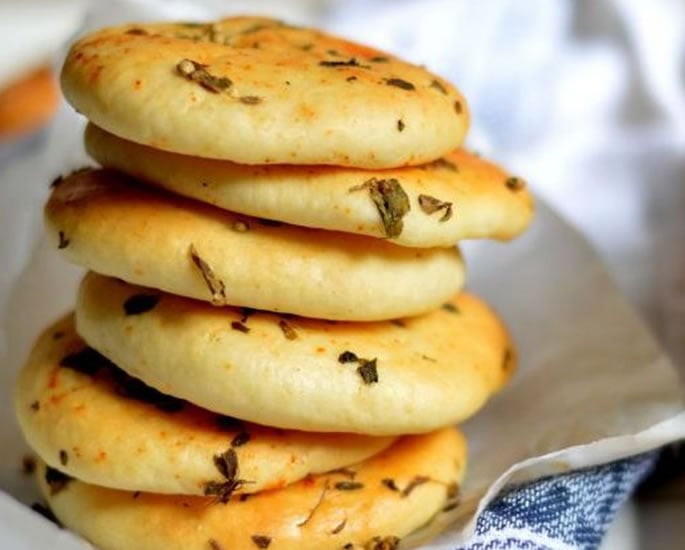
Kulcha is a soft, yeast-leavened flatbread known for its tender crumb and subtle flavour.
Made with refined flour, yoghurt, and ghee, it develops golden blisters during cooking, often in a tandoor.
Its mild taste makes this Indian bread highly adaptable.
Kulcha can be plain, brushed with butter, or topped with nigella seeds. Stuffed versions include spiced potatoes, paneer, or minced meat.
In Delhi and Punjab, kulcha is closely associated with chole. The bread’s softness balances the intensity of chickpea curry and sharp pickles.
Puran Poli
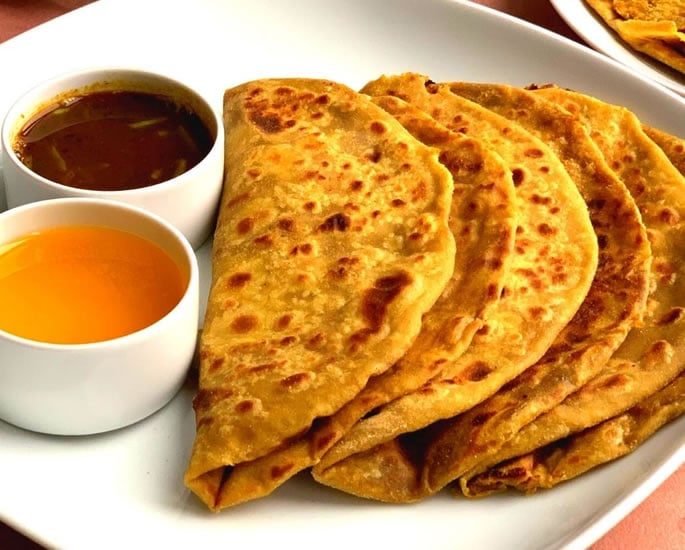
Puran poli is a filled flatbread that sits between everyday food and festive indulgence.
Wheat dough is carefully rolled around a sweet filling of chana dal and jaggery. Cardamom or nutmeg adds warmth without overpowering the flavour.
Rolling it thin without tearing requires skill, and cooking it evenly demands control. The result is soft, golden, and lightly speckled.
It is traditionally made during festivals like Holi. Across southern India, it is known as holige, obbattu, or bobbatlu.
Luchi
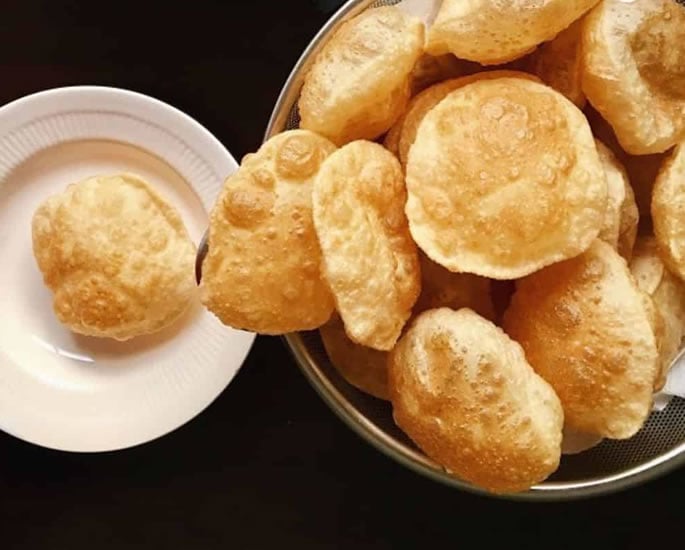
Luchi is a refined flour bread that puffs quickly when dropped into hot oil. It forms a thin, pale disc with a soft interior and lightly blistered surface.
Unlike puri, it remains white rather than golden.
The Indian bread is a staple in West Bengal, especially for breakfast or special occasions. Luchi is often prepared during festivals like Durga Puja.
Best eaten immediately, it pairs well with dal, potato curry, fried aubergine, or a slow-cooked mutton curry called kosha mangsho. Its light texture offsets richer, heavily spiced dishes.
Puri
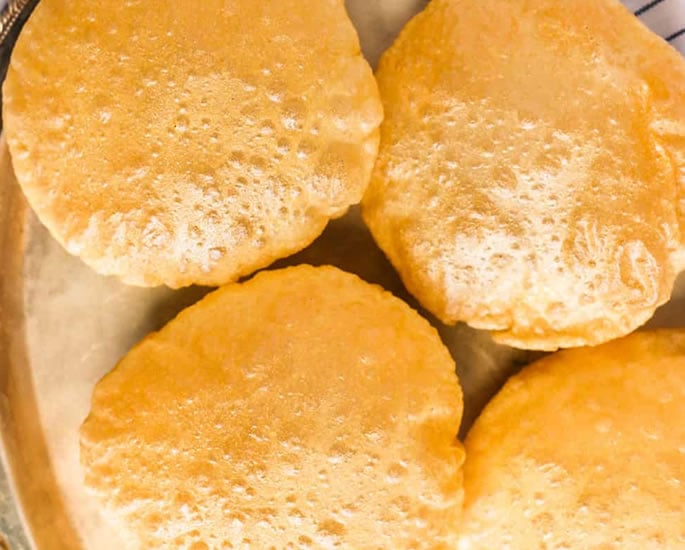
Puri is one of India’s most widely recognised breads, made by deep-frying whole-wheat dough until it puffs into a golden, blistered round.
It is associated with celebrations, religious offerings, and family meals.
Its versatility is reflected in regional variations. Nagori puri in Delhi is paired with sweet semolina halwa, while Bedmi puri in Uttar Pradesh includes lentil stuffing and is served with spicy potato curry.
In the south, sweeter versions appear, including banana-based breads like Mangalore buns. Kachori, a related stuffed bread, uses spiced pulses but puffs less than puri.
Paratha
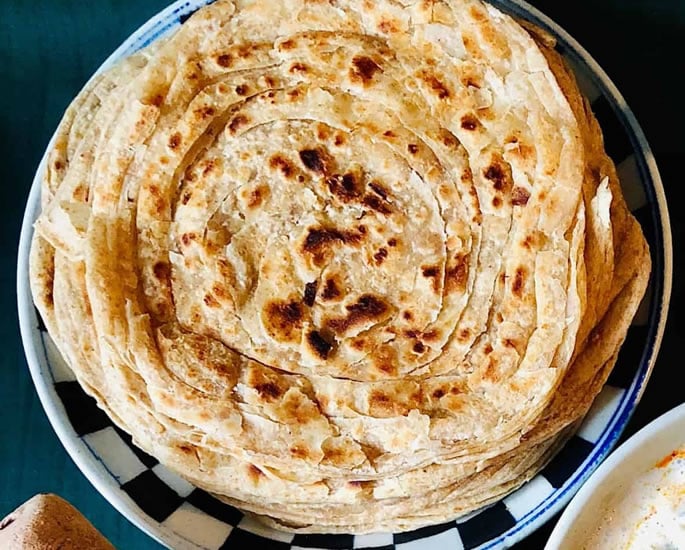
Paratha is a layered, unleavened flatbread cooked on a griddle with ghee or oil.
The dough is folded repeatedly to create a flaky texture, giving it both structure and richness.
It can be eaten plain or stuffed with ingredients like potato, paneer, cauliflower, or minced meat.
There are many varieties of paratha, with laccha standing out for its coiled layers and crisp finish.
Paratha has deep historical roots, with references in the 12th-century Sanskrit text Manasollasa. In Delhi, Paranthe Wali Gali remains a hub for its many variations.
Thepla
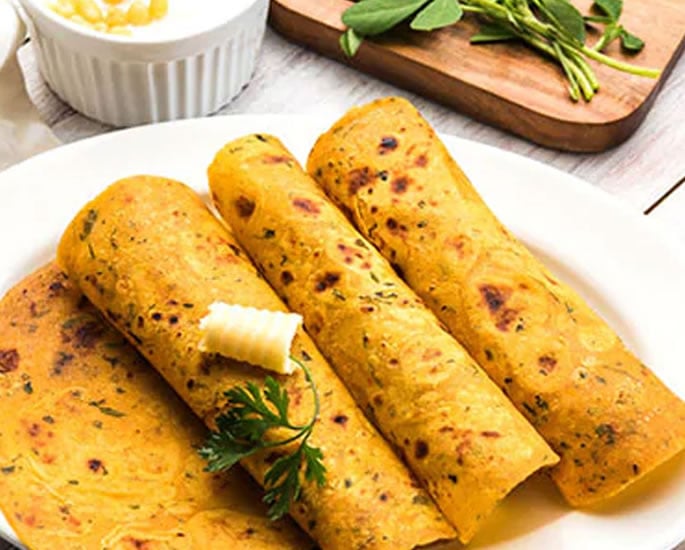
Thepla is a Gujarati flatbread designed for travel and long shelf life. It stays fresh for days, making it a practical choice for journeys and packed meals.
The dough combines whole-wheat flour, fenugreek leaves, yoghurt, and spices like turmeric, chilli, and cumin.
It is rolled thin and cooked on a hot griddle until lightly golden.
Soft and flexible, thepla is easy to carry and eat on the go. It is typically served with pickles, yoghurt, or chhundo, a sweet-spicy mango relish.
Khambir
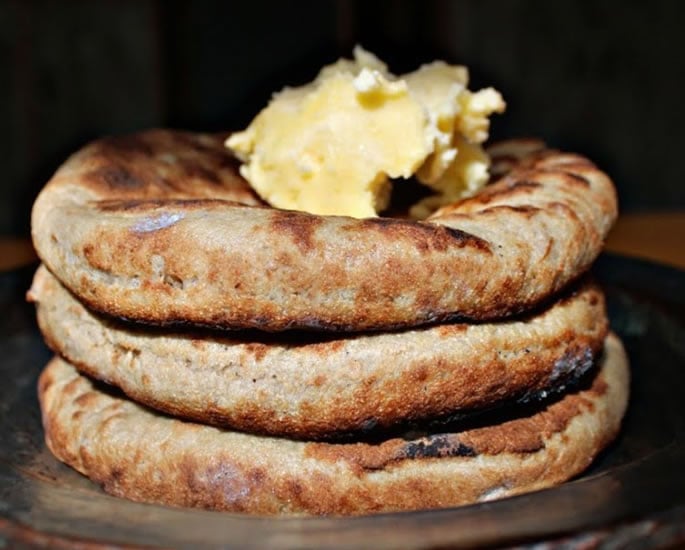
Khambir is a staple bread from Ladakh, shaped by the region’s cold and high-altitude environment. It is thick, dense, and designed to provide sustained energy.
Made from local wheat and sometimes leavened with old dough or barley residue, it is cooked over hot stones or an open fire.
This creates crisp edges and a chewy, tender centre.
Khambir is eaten with butter, added to hearty stews, or served alongside salted butter tea. Its role is practical, built around nourishment and climate.
Indian breads go far beyond naan and roti.
From flaky parathas to hearty khambir, each one tells a story of region, climate, and tradition. Some are made for everyday meals, others for festivals or travel, yet all carry distinct flavours and textures.
Exploring these Indian breads shows how much thought, skill, and local culture shape what lands on the plate.
They are central to the Indian dining experience and are proof that accompaniments extend beyond naan and roti.