

















































“Everything goes to Anju.”
A bitter inheritance row has erupted in the High Court after a woman was left just £250 in her father’s £600,000 will, while her elder sister inherited nearly everything.
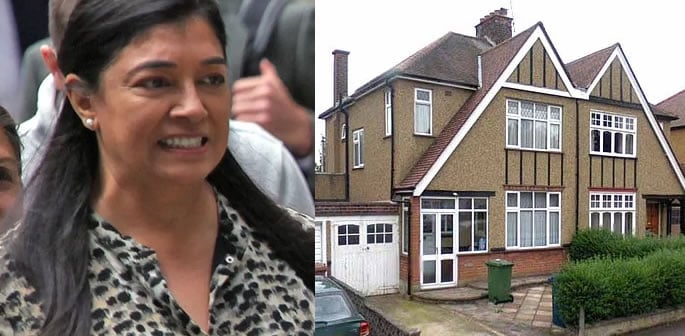
Bhavenetta Stewart-Brown is suing her sister Anju Patel after their father Laxmikant Patel left his entire Harrow home in Cambridge Road to Anju.
Their brother, Piyush Patel, also received just £250.
Bhavenetta claims her father, who died aged 85 in October 2021, did not “know and approve” the contents of the final will. She is seeking to uphold an earlier version which split the estate more evenly between the siblings.
In the contested will, signed in August 2021 shortly after Laxmikant’s lung cancer diagnosis, Anju was named sole heir to the property.
Her barrister, James Kane, said their father made the decision after growing increasingly estranged from his other children.
He claimed the retired Ford factory worker had come to “mistrust” Bhavenetta and believed both she and Piyush had “failed in their sense of duty” as his children.
Mr Kane said: “He asked his friend Vijaykant to draw up a will for him in favour of Anju, the child he felt had done most for him.
“Vijaykant did so and Laxmikant executed the will.”
Vijaykant Patel, a fellow devotee from the Hare Krishna temple, wrote the will despite having no legal training.
He said the father told him: “Everything goes to Anju.”
Laxmikant also left a note in the will stating: “But as a father, I have not forgotten them.”
Bhavenetta’s legal team argue the circumstances around the will raise serious doubts about its validity.
Barrister Timothy Sherwin said: “It is thus Vijaykant’s evidence that he had a nearly one-hour meeting with a man suffering from serious respiratory disease, and who had just been diagnosed with lung cancer, without incident or difficulty.”
“That will was in English, a language he could not properly read.”
He also questioned how the dying man, hospitalised for “lethargy, dizziness and coughing up blood”, could have made such a drastic change so quickly.
Mr Sherwin added: “One would expect a major and incontrovertible change in circumstances… and there is none.”
The court heard that Laxmikant, who arrived in the UK from Uganda in the early 1970s, was a religious and hardworking man.
He worked shifts at Ford’s Dagenham plant while his wife, Shardaben, ran a local newsagent. The couple donated around £180,000 to the Swaminarayan temple in Neasden over their lifetimes.
In his 2019 will, Laxmikant had opted for an almost equal split among his three children, with a slightly larger share for Anju to balance earlier gifts given to the others.
Mr Sherwin alleged the sudden shift in 2021 was influenced by Anju’s increased control over her father’s affairs after 2018, when she allegedly “rejoined the family” following years of distance.
She had moved to India aged 15 and embraced the Hare Krishna faith, differing from the rest of the family’s Swaminarayan Hindu beliefs.
Mr Sherwin explained: “From 2019 onwards, however, Anju and (her husband) began to take much more involvement in the deceased’s finances and personal affairs.
“They procured the 2019 will. They controlled access to the deceased, especially during the key period of August 2021.”
He also accused Anju of isolating Laxmikant from his Swaminarayan faith community.
But Anju, who returned to the UK in 1983, denied the claims:
“I wasn’t estranged from my family, I was with my sister. She chose to disconnect from me.”
Mr Kane insisted there was growing concern over Bhavenetta’s conduct. He referred to a 2018 incident in which she allegedly “removed important documents from a locker or safe deposit box belonging to him, including the title deeds to the property, insurance documents and bank statements.”
Mr Kane said: “The documentary evidence makes plain that by, at the latest, October 2019, Laxmikant had formed a sharply negative view of both Piyush and Bhavenetta.
“Although he did not act on this view immediately, after his diagnosis with cancer in August 2021, he decided to act.”
He argued Laxmikant had long harboured concerns about Bhavenetta’s behaviour.
The will stated: “She apparently has a bad temper.”
It added that she “has taken massive advantage of her father”.
Piyush Patel, who now lives in Texas, is not contesting the will and has taken a neutral stance. The case is being defended jointly by Anju and Vijaykant, who is also the executor of the estate.
The trial is ongoing.