

















































“The evidence shows a clear pattern of isolation"
A woman who inherited her father’s £600,000 fortune has been left with almost nothing after losing a High Court battle against her younger sister.
Anju Patel lost most of her inheritance following a ruling that overturned a will made shortly before her father Laxmikant Patel’s death in October 2021.
Under the disputed 2021 will, Ms Patel was left her father’s Harrow home, while her siblings, Bhavenetta Stewart-Brown and Piyush Patel, received just £250 each.
Ms Patel argued her father had grown mistrustful of her siblings, claiming he believed “they were only after his property”.
However, Ms Stewart-Brown argued that the will had a “cloud of suspicion” over how it was prepared while their father was terminally ill in hospital under Covid restrictions.
In December, Deputy Master Jason Raeburn ruled in favour of Ms Stewart-Brown at London’s High Court, reinstating a 2019 will that divided the estate roughly three ways.
The judge described the circumstances surrounding the 2021 will as “highly suspicious,” concluding it had not been properly executed or approved by the deceased.
As a result, Ms Patel has been ordered to pay her sister’s legal costs, estimated at more than £400,000, in addition to her own undisclosed legal fees.
Vijaykant Patel, executor of the 2021 will, was also found jointly and severally liable for Ms Stewart-Brown’s costs, meaning Ms Patel’s remaining £250,000 share could be wiped out entirely.
The court heard that Laxmikant Patel’s 2019 will left £50,000 to Ms Patel, with the remainder split equally among the three siblings and one per cent assigned to a charitable trust.
The 2021 will marked a dramatic change, leaving almost everything to Ms Patel and effectively disinheriting the other two children.
At trial, Ms Patel said her father had complained that Ms Stewart-Brown and Piyush Patel failed to show him “true affection”.
When asked why he left them so little, he replied: “They have failed in their sense of duty, but as a father I have not forgotten them”.
He was also said to have labelled his son a “hugely controlling” figure and criticised Ms Stewart-Brown’s “bad temper” and her alleged “massive advantage” over him.
Laxmikant Patel was described as a gentle and hardworking man who rebuilt his family’s life after migrating from Uganda in the early 1970s.
He worked shifts at the Ford plant in Dagenham while his wife, Shardaben, ran a newsagent’s shop.
A devout worshipper, he attended the Swaminarayan temple in Neasden daily and donated around £180,000 to the temple over his lifetime.
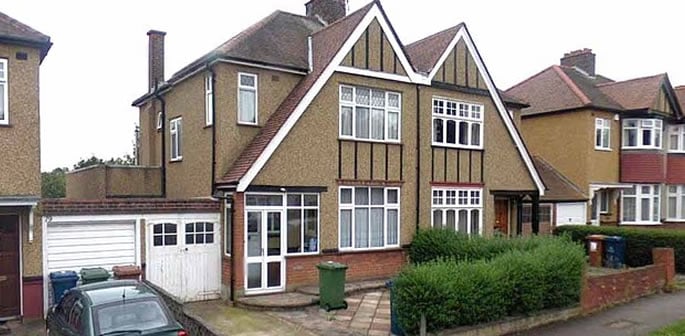
By the time of his death, his main asset was his £600,000 home on Cambridge Road in Harrow.
Ms Stewart-Brown’s barrister, Tim Sherwin, described the decision to leave the property solely to Ms Patel as “most odd”.
He argued that Ms Patel, a Hare Krishna follower, attempted to distance her father from his Swaminarayan faith.
Mr Sherwin told the judge: “The evidence shows a clear pattern of isolation and control over the deceased on the part of Anju and (her husband) which became especially stark when he was in the hospital at the end of his life.
“When, of course, the purported 2021 will was made.”
Ms Stewart-Brown’s legal team said the sudden shift in inheritance contradicted Laxmikant Patel’s previous wills from 2018 and 2019, which favoured equal division.
Ms Patel’s barrister, James Kane, argued her father had formed a “sharply negative” view of her siblings by October 2019.
He told the court that Ms Stewart-Brown “has taken massive advantage of her father”, while Ms Patel remained “the only light in his life”.
The will writer said of Ms Stewart-Brown: “Apparently, she has a bad temper.”
Ms Patel claimed her father asked Vijaykant Patel, whom she knew through the Hare Krishna temple, to help prepare the 2021 will while he was hospitalised at Northwick Park Hospital.
Vijaykant Patel said Laxmikant Patel expressed “revulsion” towards Ms Stewart-Brown and Piyush Patel, stating they were “only after his property” and that “everything goes to Anju”.
However, the judge ruled that the will had not been properly witnessed, raising doubts about its legal validity.
He said: “Both witnesses said they used the same pen as the deceased, but it’s plain from the face of the will that it wasn’t signed by all the participating parties using the same pen.
“I am not therefore satisfied that a signature was made by (Laxmikant Patel) in the presence of all the witnesses at the same time, so there was no due execution of the will.”
The court also found insufficient evidence that Laxmikant Patel “knew and approved” the contents of the 2021 document.
The judge said: “The particular circumstances of the instructions and execution of the 2021 will are suspicious – highly suspicious.”
He added that the will effectively disinherited two of Laxmikant Patel’s three children, calling it a drastic departure from earlier balanced arrangements.
“I have arrived at the clear conclusion that those propounding the 2021 will have not discharged the burden of establishing that he knew and approved its contents.”
At a subsequent hearing, Ms Patel and Vijaykant Patel were ordered to jointly pay Ms Stewart-Brown’s legal costs, which Mr Sherwin said totalled £380,000 plus VAT, exceeding £450,000.
The judge also ordered an upfront payment of around £180,000 plus VAT, while refusing Mr Kane’s request to appeal the ruling on Ms Patel’s behalf.