















































“This deal is now signed, sealed, delivered."
The UK has signed its most significant trade agreement since Brexit, sealing a free trade deal with India worth £6 billion.
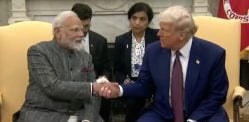
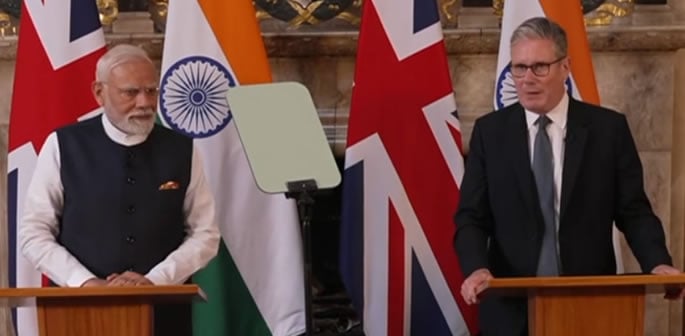
Prime Minister Sir Keir Starmer and Indian Prime Minister Narendra Modi signed the agreement at Chequers after three years of talks.
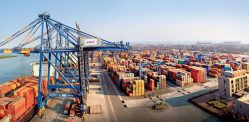
Under the deal, British exports such as cars, whisky and aerospace parts will face lower tariffs when sold in India.
Indian goods like textiles, footwear, jewellery and seafood will become cheaper in the UK under the new agreement.
Sir Keir described the agreement as “the biggest and most economically significant” trade deal Britain has secured since Brexit.
He said: “This deal is now signed, sealed, delivered.
“The UK has been negotiating a deal like this for many years, but it is this government that got it done, and with it, we’re sending a very powerful message that Britain is open for business, and that is already generating huge confidence.”
The deal is expected to boost the UK economy by £4.8 billion a year and create over 2,200 new jobs.
The government confirmed average tariffs for UK goods entering India will fall from 15% to 3%, making exports more competitive.
Whisky duties will be halved immediately, from 150% to 75%, and cut further to 40% by 2035.
Modi called the deal “a blueprint for our shared prosperity” and said it would benefit both countries’ workers and industries.
He said: “On the one hand, Indian textiles, footwear, gems and jewellery, seafood, engineering goods will get better market access in the UK.
“On the other hand, people and industries in India will be able to access products made in the UK, such as medical devices and aerospace parts, at affordable and attractive prices.”
UK products set to benefit include gin, whisky, electrical equipment, cosmetics, medical devices, chocolate, biscuits, lamb and luxury cars.
India will gain improved access to the UK market for electric and hybrid vehicles, along with cheaper tariffs on clothes and shoes.
The deal also includes a social security agreement. Workers temporarily transferred between countries will pay contributions only in their home country.
The Indian government hailed the exemption as “an unprecedented achievement” when the deal was finalised in May.
The UK says similar “double contribution convention” deals already exist with 17 countries, including the EU, US and South Korea.
Critics had claimed this clause could undercut British workers by making Indian labour cheaper.
Business Secretary Jonathan Reynolds rejected that claim, calling it “completely wrong”.
He told BBC Breakfast: “I can categorically tell you that is not the case. There is no tax advantage for hiring an Indian worker over a British worker.
“You’d actually pay more for an Indian worker”, pointing to visa and NHS surcharge costs.
The agreement also includes new partnerships on defence, education, technology and climate change.
Both governments have agreed to improve intelligence sharing to fight organised crime, fraud, corruption and irregular migration.
This includes a new criminal records sharing system to support court cases and enforce travel bans and watchlists.
Sir Keir said the deal was “not the extent or the limit of our collaboration with India”, adding that the UK and India share “unique bonds of history, of family and of culture, and we want to strengthen our relationship further.”
Talks are still ongoing over a bilateral investment treaty to protect UK and Indian investments. Discussions also continue on the UK’s carbon border tax plan.
India fears the policy could penalise its exports unfairly and wants greater access to the UK’s financial and legal services.
The deal was approved earlier this week by India’s cabinet but still requires UK parliamentary approval. It is expected to come into effect within a year.
Negotiations began under Boris Johnson in 2022. This marks Modi’s fourth visit to the UK since becoming prime minister in 2014.
Conservative shadow business secretary Andrew Griffith welcomed the deal but claimed credit for Brexit enabling it.
He said the deal happened “because of Brexit delivered by the Conservatives” but warned Labour policies could harm business.
He added: “The irony should not be lost on anyone that any gains from this trade deal will be blown out of the water by [Deputy Prime Minister] Angela Rayner’s union charter, stifling business with red tape, the jobs tax and, come autumn, Rachel Reeves’ inevitable tax hikes that will punish Britain’s makers just to reward those who do not contribute.”
Liberal Democrat foreign affairs spokesperson Calum Miller said the deal was welcome but did not go far enough.
He said: “We support the opening of trade, which is vital in the face of the tariff wars launched by Donald Trump.
“But the gains from this deal are a small fraction of what the government could deliver for jobs and growth from a better deal with the EU.
“The government needs to cut the mountains of red tape, ushered in by the Conservatives’ botched deal, that currently holds up trade with the EU.”
The agreement, once ratified, is expected to reshape the UK-India economic relationship for years to come.