











































Dhondy recalled programmes that were “extremely patronising”
In 1984, an £84 bottle of wine at The Ivy was the catalyst for South Asian people to be given a voice on British TV.
Farrukh Dhondy, then a writer focused on breakout hits like the Indian restaurant comedy Tandoori Nights, was lured into a commissioning role that would fundamentally dismantle the “patronising” lens through which South Asian lives were viewed.
His appointment at Channel 4 signalled the end of an era where minority programming was designed to facilitate assimilation rather than foster expression.
This shift introduced “direct speech”, a philosophy that allowed communities to speak for themselves without the mediation of the established white elite.
As the British Film Institute (BFI) launches its Constructed, Told, Spoken season, we are reminded of a sophisticated “counter-history” that challenges our current understanding of progress.
Today’s landscape may look more diverse on the surface, but a deeper look at the archives suggests we may have traded structural power for mere visibility.
Dismantling Assimilationist TV
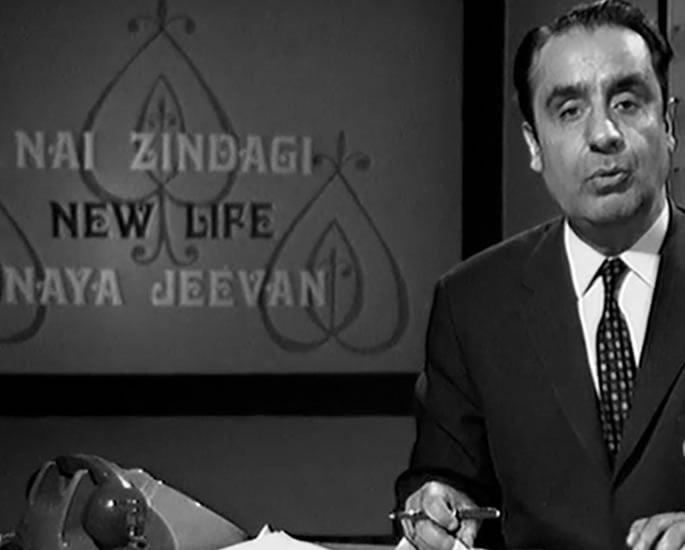
Before the 1980s, the BBC and ITV operated under a framework of “assimilationist TV”, where the primary goal was to mould migrants into “model minorities”.
BBC Hindi shows like Nai Zindagi Naya Jeevan and Apna Hi Ghar Samajhiye were often pedantic, offering instructions on British supermarket etiquette rather than exploring the cultural depth of the diaspora.
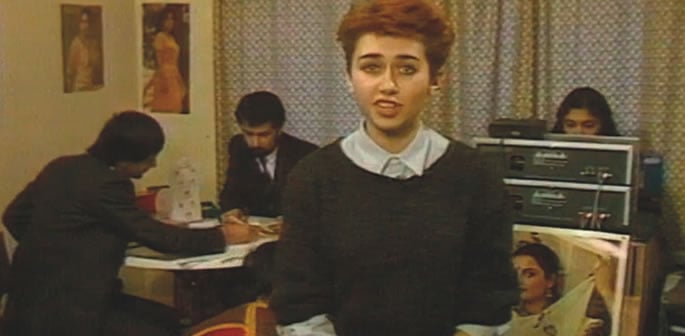
These were followed by a period of television shows for British Asians which dominated slots which were classed as ‘non-peak’. Series such as Network East, Bollywood or Bust and East were primarily broadcasted on BBC 2.
Sarita Malik, professor of media and culture at Brunel University of London, notes that in this period, “Englishness was always positioned as dominant”.
While cultural nuances like food or music were permitted, political resistance was strictly sidelined.
Dhondy recalled programmes that were “extremely patronising”, especially toward Asian women.
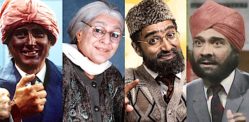
This period was also defined by the ubiquitous presence of sitcoms like Mind Your Language, which mocked South Asian accents and cultures.
The industry’s refusal to engage with the political dissent of the 1960s and 70s eventually reached a breaking point.
Activist groups, including the Indian Workers’ Association, began demanding a media landscape that reflected their reality rather than a caricature.
The demand was clear: Britain’s new communities were no longer willing to be the subjects of a conversation; they wanted to lead it.
The South Asian Radical Press
The 1982 launch of Channel 4, emerging under a radical remit during Margaret Thatcher’s premiership, provided the necessary infrastructure for this new agency.
Dhondy, influenced by his roots in the British Black Panthers and the magazine Race Today, rejected the concept of the “complaint programme”, documentaries that existed solely to explain racism to a white audience.
He said:
“Oh, it’s racism, racism, racism. It’s boring. Nobody wants to watch it.”
Instead, he championed a diverse slate that included everything from high-stakes current affairs to scripted sitcoms.
The pinnacle of this movement was Bandung File, a documentary series commissioned by Dhondy and edited by figures like Tariq Ali.
The show was a pioneer in presenting “third world” and ethnic minority interests to Black, south Asian and white British audiences.
The series addressed consumer issues and naturalisation laws, providing a vital service to the South Asian community while challenging the nuances of border racism.
This era also birthed Channel 4’s Eastern Eye, a South Asian magazine show that proved minority-led production could achieve mass-market competence without sacrificing its political edge.
The Diversity Paradox

As the 20th century closed, the radical multicultural departments that defined Dhondy’s era were largely disbanded in favour of populist, commercial competition.
The transition to digital TV and the rise of New Labour saw a shift back toward a depoliticised version of multiculturalism.
While modern screens are more populated by South Asian faces than ever before, the statistics regarding behind-the-scenes influence remain sobering.
Just 12% of executive or corporate roles in film and TV are held by ethnic minorities, a sharp contrast to the 1980s strategy of decentralising production to fund minority-led companies.
Dhondy remains a sharp critic of what he views as the superficiality of modern representation.
He said: “People are taking representation as the ultimate goal. So what you get is Black or mixed-race families doing advertisements selling soap.
“This doesn’t solve anything.”
The BFI’s archival season serves as a vital contextual tool, showing that the 1980s were not a period of struggle to be forgotten, but a high-water mark for anti-racist television.
Xavier Alexandre Pillai, the curator of the season, argues that by failing to acknowledge this history, we risk revising the past as a bleak vacuum of racism, ignoring the sophisticated, historical context that these early programmes provided for contemporary issues.
The history of South Asian representation on British television is a narrative of a radical peak followed by a slow, commercial dilution.
Farrukh Dhondy’s tenure at Channel 4 proved that television is at its most potent when it reflects the “national conversation” in its most contested, multilayered form.
The archives remind us that true progress is not measured by the number of South Asian actors in advertisements, but by the community’s ability to exert structural influence and challenge the status quo.
As we move further into the digital age, the lessons of the 1980s, focused on financial investment, worker organisation, and “direct speech”, remain the essential blueprint for a media landscape that prioritises dissent over simple presence.