












































"A lot of investors asked us to do this."
Tesla has reported its first annual revenue decline as it shifts its focus to artificial intelligence and robotics.
The electric vehicle maker said total revenues fell 3% in 2025, while profits dropped 61% in the final three months of the year.
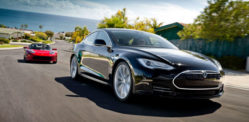
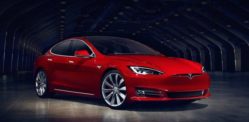
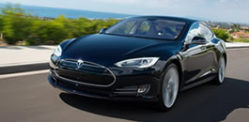
Elon Musk’s company also confirmed plans to end production of its Model S and Model X vehicles.
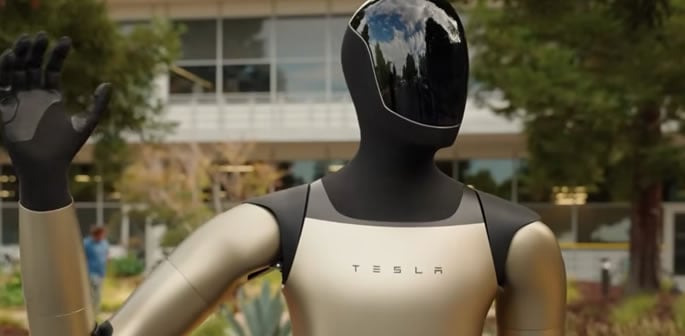
Tesla said its California plant, previously used to manufacture those models, will now be repurposed to produce its humanoid robots, known as Optimus.
The announcement comes as competition intensifies, with China’s BYD overtaking Tesla in January as the world’s largest EV manufacturer.
Musk’s political involvement in the United States and abroad has also drawn controversy, with some critics arguing it has damaged Tesla’s public image.
Tesla revealed it has invested £1.45 billion in Musk’s artificial intelligence company, xAI, as part of a broader push into emerging technologies.
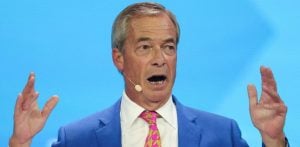
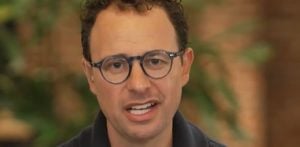
Musk said: “A lot of investors asked us to do this.
“They say we should invest in xAI, so we’re just doing what shareholders asked us to do pretty much.”
The investment follows a recent Tesla shareholder vote on funding xAI, where abstentions and votes against the proposal outnumbered those in favour.
In 2025, investors approved a record-breaking pay package for Musk that could eventually be worth nearly $1 trillion, depending on Tesla’s long-term market performance.
To unlock that payout, Musk must significantly increase the company’s market value over the next decade.
Tesla also said it expects to sharply increase spending, with capital expenditure forecast to rise by around $20 billion.
Despite the financial downturn, Tesla shares rose by roughly 2% in extended trading following the announcement.
The company’s strategic shift comes amid Musk’s growing political profile, including a high-profile cost-cutting role in the administration of US President Donald Trump.
Some customers have responded negatively, with protests reported outside Tesla dealerships in multiple countries.
Tesla’s move away from traditional EV production also coincides with Trump rolling back certain US government subsidies for non-fossil fuel vehicles.
Once one of the world’s most profitable carmakers, Tesla is now expanding deeper into robotaxis and automation as it seeks new revenue streams.
Analysts say Tesla’s existing EV lineup has become increasingly dated, weakening its competitive edge in a crowded market.
Jessica Caldwell, Head of Insights at Edmunds, said:
“The Model S and Model X have been low-volume vehicles for Tesla for a while now.
“From a portfolio and focus standpoints, it makes sense to drop them and concentrate on higher-volume products like the Model 3 and Model Y, along with other business expansion bets.”