















































“It was funny but also made me think."
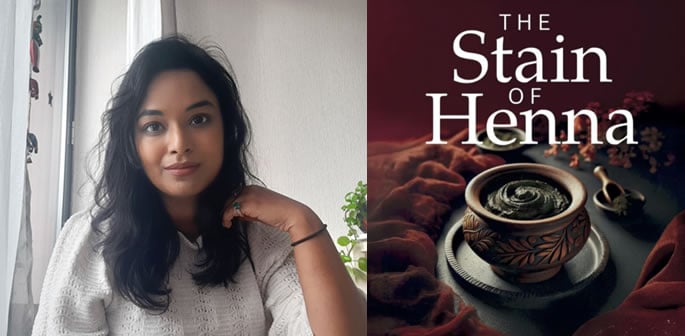
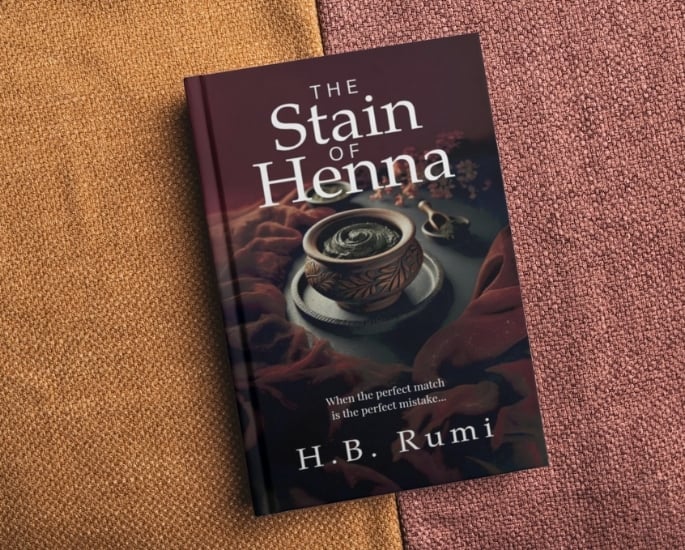
H.B. Rumi’s self-published debut novel, The Stain of Henna, captures the pressure, uncertainty and hidden challenges South Asian women face when navigating love and tradition.
Released in 2024, the novel follows Kalsuma, a quietly independent woman in Oxford approaching thirty, who once dismissed arranged marriage but decides to try it after modern dating leaves her frustrated.
What begins as cautious hope quickly becomes a tense journey as she encounters control, secrecy and manipulation that threaten her independence and future.
Set within the Sylheti Bengali community in the UK, the story reflects cultural expectations, family dynamics and the difficult choices women often have to make between personal ideals and societal pressures.
Rumi draws on her experience in literature, heritage and everyday life to bring authenticity to Kalsuma’s world.
H.B. Rumi spoke to DESIblitz about the ideas, themes and realities behind The Stain of Henna.
Representation, Impact & Community
The idea for The Stain of Henna began with a joke that carried an uncomfortable truth.
H.B. Rumi recalls seeing a meme that read: “I’m tired of dating so I have decided to accept an arranged marriage.”
She says: “It was funny but also made me think.”
The humour masked a wider assumption within South Asian communities, particularly among younger generations. Arranged marriage is often framed as an easier alternative, rather than a complex emotional decision.
Rumi had also long wanted to write fiction with purpose:
“I always wanted to write novels and I wanted to write something that would make an impact on the reader that was lasting, that could potentially change the way they thought.”
Representation played a central role in shaping the book.
Rumi explains: “At the same time, I couldn’t see any books where the lives of ordinary first and second generation Sylheti Bengalis were represented.
“The only book I read or knew about back then was Brick Lane and it wasn’t written by someone from the community.”
That absence became a driving force behind the novel’s creation, grounding it in lived experience rather than external observation.
A Relatable Modern Desi Woman
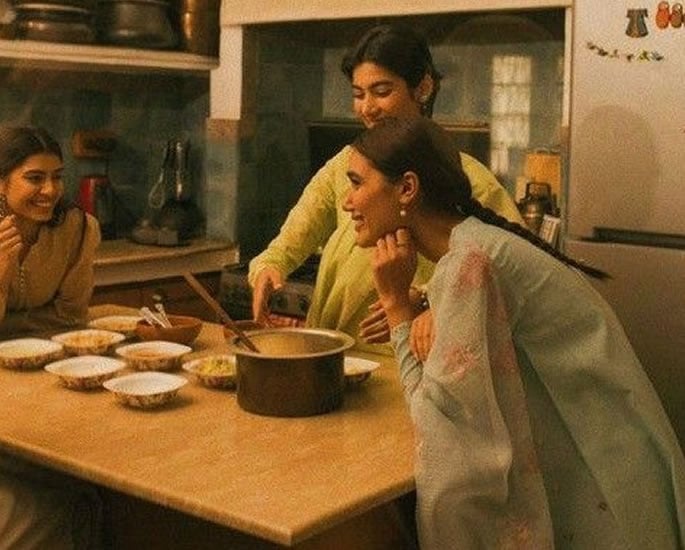
At the centre of the novel is Kalsuma, a character who is “a mix of many women” H.B. Rumi knows.
Kalsuma embodies a generation negotiating cultural tension across borders.
Rumi continues: “She is a modern Desi woman, could be in the UK or a city in the subcontinent, trying to balance progressive ideals versus a traditional upbringing.”
Rather than isolating vulnerability into a single moment, Rumi threads it throughout the narrative:
“I don’t think Kalsuma’s vulnerability is confined to a single dramatic scene – it runs through the entire novel.”
That exposure is rooted in everyday choices.
Rumi says: “She is most exposed not in moments of crisis, but in her everyday willingness to adapt, to hope, to reinterpret herself. Her vulnerability is the story.”
By treating vulnerability as ongoing rather than episodic, the novel reflects the quieter emotional negotiations many South Asian women experience.
Marriage Pressure, Power & Patriarchal Dynamics
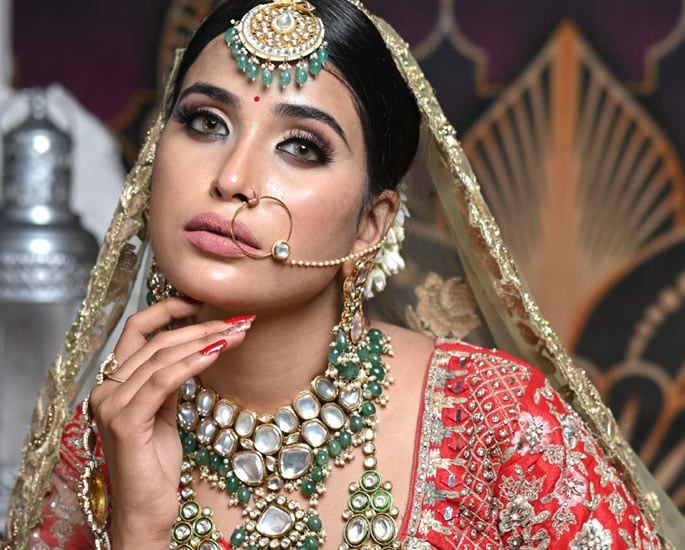
H.B. Rumi’s decision to centre the story around approaching thirty and marriage pressure reflects shifting realities within South Asian communities.
She says: “This is a topic that has been at the forefront of our community for the past decade and even more so now.”
Changing expectations have altered relationship timelines, as Rumi elaborates:
“There are far more single women in their thirties now than ever before, as women are refusing to settle for men who they think are not a good match.”
But greater freedom has also created new pressures.
Rumi says: “Desi girls are allowed to date more often now too and ironically, that choice has created a new kind of pressure.
“Women are not finding it easy to find suitable men who have the desirable qualities they are looking for, such as being responsible or emotionally mature, open-minded etc.”
Despite assumptions, The Stain of Henna does not position itself as a romance.
Rumi reveals: “The book doesn’t actually focus on romance and is not a love story gone wrong.
“It’s more of a story which presents a couple who chose the potential of romance after marriage.”
The story takes a dark turn, a turn that unfolds gradually.
Rumi says: “I think the lighter and darker elements are balanced by the darker themes being hinted at slowly, which creates the suspense and mystery in the novel that keeps readers hooked and has made it a page turner.”
Writing about manipulation required careful characterisation.
Rumi says: “The biggest challenge was to make the characters multifaceted and realistic rather than one-dimensional, especially the negative characters.
“Women I believe experience all kinds of manipulation in the patriarchal society we live in so it’s not difficult writing about it. It’s all around us.”
Reader Response
While the book has resonated with divorced readers, that was not the original focus.
H.B. Rumi admits: “I didn’t have divorced women in mind when I started writing the book.
“Single women, yes, and the struggles of modern dating.
“What I did think about is how to present a positive and supportive family for the heroine instead of one that creates further hurdles for her.”
This approach challenges common narratives of constant familial conflict.
On whether cultural expectations restricted her writing, Rumi says:
“Not really. In fact, this was the easiest part.
“I knew I wanted to capture Sylheti life and traditions as closely and honestly as possible.”
She also wanted to move away from caricature.
“Much of what I had read or seen about migrant life was either negative or reduced to comedy, often making our culture the joke.”
Her own upbringing shaped an alternative portrayal.
“I’ve grown up proud of being Bengali and Sylheti, in a close-knit, supportive family.
“I wanted to show the strength of South Asian families, not just the loudness or interference they’re known for.
“That said, our culture isn’t perfect, which is why The Stain of Henna presents both the good and the bad, laying human flaws bare.”
On technology and publishing, Rumi draws clear boundaries:
“My opinion is using AI to support brainstorming or to help us in other ways is fine but if AI is used to write a complete book, then what is there left for a human to do?”
“Where is the excitement of creativity, the frustration, the exhaustion, the anger?
“I think AI cannot replace human sensitivity, complexity and authenticity. I don’t believe it will replace writers.”
Reader feedback has shaped how she views the book:
“Generally, the feedback has been positive and even those who gave lower ratings have good things to say, so that’s encouraging.”
Some reactions caught her off guard:
“I think it shocked a lot of people as it was more intense than they expected!”
When it comes to emotional responses, they have been varied.
Rumi says: “A lot of readers said they were hooked, it was a page turner, it broke their heart and healed it, and one said they felt haunted!”
Others have drawn literary comparisons, as Rumi adds:
“Some have compared it to A Thousand Splendid Suns by [Khaled] Hosseini and books of that genre.”
The Stain of Henna offers a vivid look at the realities of marriage pressure, cultural expectation, and personal choice through the experiences of Kalsuma.
H.B. Rumi brings depth and nuance to her characters, showing both strength and vulnerability while portraying the complexities of Sylheti Bengali life in the UK.
The novel balances suspense, emotional intensity and cultural insight, inviting readers to reflect on the difficult decisions women face in love and family.
Through the book, Rumi establishes a voice that is observant, empathetic and unflinching, leaving a lasting impression on those who engage with her story.