
















































"It was important to document the relationship between both of these leaders"
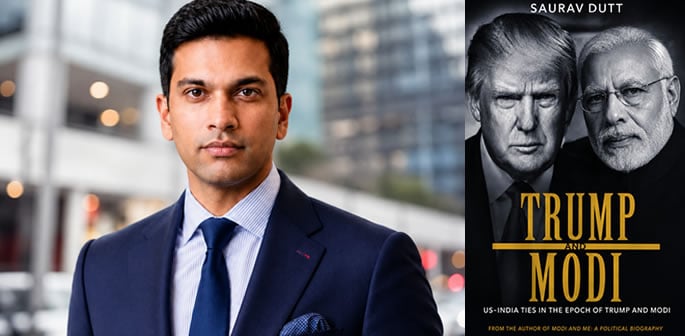
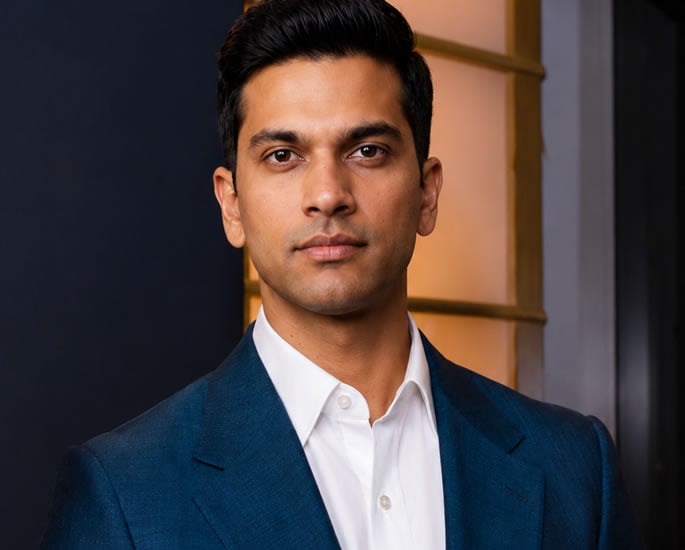
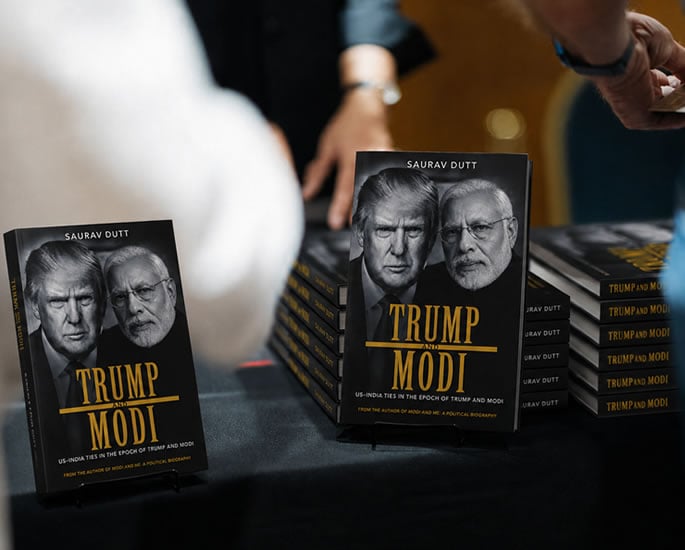
Saurav Dutt examines the increasingly consequential relationship between Narendra Modi and Donald Trump in his book Balance of Power: US-India Relations in the Epoch of Trump and Modi.
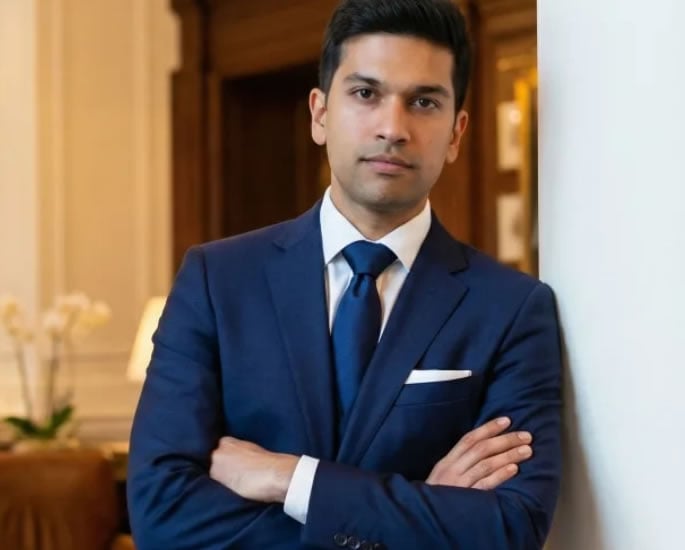
The British Indian author and geopolitical commentator explores the political, diplomatic and ideological forces shaping ties between India and the United States.
The book considers how trade, defence, immigration, China and national identity have influenced the relationship, while examining the parallels between Trump’s MAGA movement and Modi’s political vision.
For his contribution to international affairs through his writing and geopolitical analysis, Dutt has been shortlisted for the Asian Achievers Awards.
A second printing of Balance of Power features a new title and cover, reflecting significant developments since the original edition.
In an interview with DESIblitz, Saurav Dutt discusses Trump and Modi’s political movements, the changing nature of US-India relations, and what it means to be recognised by the Asian Achievers Awards.
Why Trump and Modi’s Relationship Matters
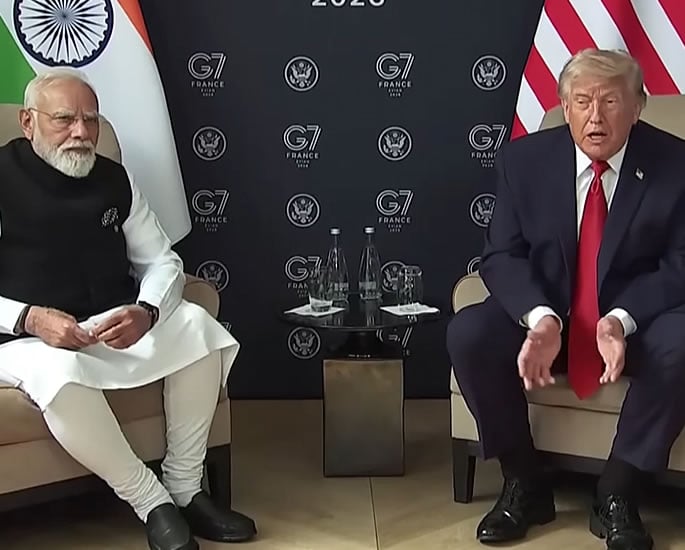
For Saurav Dutt, the relationship between Donald Trump and Narendra Modi cannot be understood through personality or political controversy alone.
His book, Balance of Power: US-India Relations in the Epoch of Trump and Modi, examines what connects two leaders whose political movements have reshaped how their countries project themselves internationally.
Dutt argues that Trump and Modi remain two of the most consequential modern leaders, despite attracting significant opposition.
He says: “It was important to document the relationship between both of these leaders and to understand exactly what they represent at this moment in time for their nations as they strive to be ‘Great Again’ and to examine what that motivation actually means and to unpack what that speaks to.
“I think the key thing to understand is that both leaders, for very different reasons, are immensely liked and immensely disliked.”
“But nonetheless, they remain two of the most consequential and powerful modern leaders of the current day and age with popular mandates and, surprisingly, some might think, similar personalities and outlooks – just through different prisms.”
That personal connection is central to the book, as he explains:
“I wanted to understand what brings these types of characters together, what synchronicities do they have, what are their most common goals and objectives, and how do they coalesce?”
The book’s title reflects Dutt’s view that the relationship between India and the US has changed. He says the balance between the two countries cannot be understood simply through the personal friendship between their leaders.
Trump 2.0 and a More Transactional Relationship
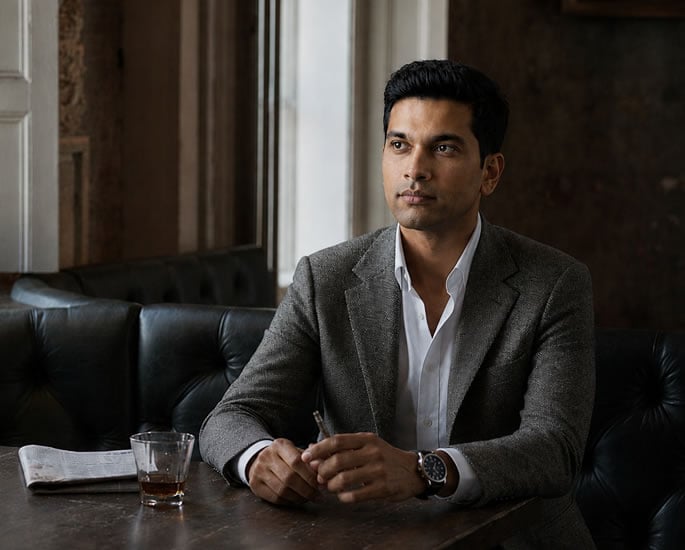
Saurav Dutt’s assessment of Trump’s second presidency centres on a more transactional approach to international relations.
He says: “It’s obvious that in the second premiership for Donald Trump, much of the will, discourse and activity is going to become far more transactional for America.
“Trump wants to push forward his agenda in an extremely stubborn fashion, and that means being transactional.
“That means putting America first in a way it perhaps wasn’t doing during the first term.”
For India, Dutt believes this creates a need for greater strategic caution.
The relationship between Trump and Modi may remain warm, but he argues that India must distinguish personal diplomacy from national interest.
He says: “What that means in terms of the balance of power that I hint at in my title, is that Modi and India shouldn’t necessarily think that America is out to do her favours or put India at the top of the pecking order just because their leaders are great friends.
“India, after all, has to put her own interests first, and that selfish mindset is something the Modi administration may well have adopted right back in 2016.”
The impact of tariffs and visa issues has also altered the dynamic, according to Dutt. He sees these developments as evidence that India has had to become more tactical in its dealings with the US.
“Perhaps Modi and India have become a bit more circumspect because they’ve seen that under different tariff regimes and issues around visas, that India has to be a bit more careful and must be more tactical and show a bit more wherewithal about putting her interests first.”
MAGA & MIGA
In his book, Saurav Dutt draws a direct comparison between MAGA and what he describes as Make India Great Again (MIGA).
He details: “There definitely is some symmetry between these two movements, particularly around the idea of populism and nationalism, and putting forward the identity of a nation as the first, overriding interest and in preserving history.”
However, the author distinguishes the historical and cultural foundations of the two movements.
He describes India’s political identity through its civilisational Hindu roots, constitutional framework and post-independence assertion of sovereignty.
For America, he points towards the country’s heritage, ancestry and capitalist traditions.
In both cases, he sees an emphasis on national confidence and a desire to project strength internationally.
Dutt adds: “So really, for both these nations, it’s about asserting themselves in a muscular way and ensuring that their respective citizens come first.”
He also rejects what he considers overly broad descriptions of the movements as being defined purely by ethnic or religious identity, arguing:
“These movements have allowed both nations to be far more selfish, to assert their sovereignty, and to be unafraid of asserting the vitality of their heritage, whether religious, whether economic, and certainly in terms of promoting their reputation around the world.
“And that’s illustrated through both soft power and hard power, and ultimately in being unapologetic about the virtues of both of their respective nations.”
The comparison also extends to the longer-term ambitions of the two political movements.
Dutt argues that both seek to establish a political direction that extends beyond the immediate tenure of their current leaders.
Long-Term Ambitions
Saurav Dutt views Trump and Modi as politicians whose individual leadership styles are closely tied to broader political projects.
He says: “So, in that sense, there is a long-term view where he would like the ethos of MAGA to become self-fulfilling, and for Republican governments to be re-elected with a distinctly Trump-style governance and outlook, one that acts rather than reacts.”
In Balance of Power, Dutt sees Modi’s political project differently but believes it similarly extends beyond one electoral cycle.
He elaborates: “For Modi, the long-term view is in reshaping India as an unashamed capitalistic, forward-looking, and strong civilisational nation, and that is unafraid of shaking off the pains of colonialism, and which is unafraid of asserting itself as a major player on the world stage.”
His analysis places these ambitions within India’s longer political history.
Dutt points to what he describes as periods of corruption, mismanagement and incompetence since independence, while arguing that the BJP and Modi have provided a different political direction.
“Of course, India has many faults and many faultlines to repair, but that has come about not just through colonialism and hundreds of years of imperialism, but also through truly neglectful rule since independence with staggering chapters of corruption, mismanagement, and incompetence.
“And for both of these nations, the long-term view is essentially in ensuring that a right-wing government stays in place, and one that is unafraid of promoting the vitality and ingenuity of its roots and bringing up all of the population as one cohesive ‘nation-first’ populace.”
The changing relationship between Trump and Modi has required Dutt to revisit how those political ambitions interact.
Developments since the book’s first publication, particularly around trade and visas, have altered the political assumptions surrounding the relationship.
A New Perspective in the Second Printing
The second printing of Balance of Power reflects how quickly US-India relations have changed since Trump returned to office.
Saurav Dutt says the speed of those developments created an unusual challenge because the political constituencies he initially considered to have significant common ground began moving apart.
“It’s not been easy publishing and promoting this book because the headwinds around the India and US relationship have been changing so drastically since Trump 2.0 to say the least!”
The original analysis was shaped by what Dutt saw as strong commonality between right-wing Indians and Americans. However, he says that changed:
“There was such commonality between right-wing Indians and right-wing Americans at the beginning of Trump 2.0.”
“But as things changed, when Trump became a bit more assertive regarding his tariff regime and around visas to Indians, there was a right-wing surge in India against Trump that I hadn’t banked on.”
This meant the book needed to address a growing divide between political groups that had initially appeared closely aligned.
He details: “The book also needed to be updated to take advantage of the fact that things were changing so much around trade, the visa regime, the rhetoric in some far-right circles in America, some of which was truly ugly to see.”
Dutt maintains that the relationship between Trump and Modi retains a degree of personal closeness, despite those tensions.
However, he argues that this has not prevented sections of the Indian right from becoming increasingly critical of Trump.
Dutt says: “There is still a core friendship there and key camaraderie between the leaders, and a new US Ambassador and envoy framework to India has been appointed which is doing a fantastic job, and yet it’s still not enough to appease the more vocal elements of the Indian public and right-wing orthodoxy that quite frankly now really, really, dislike Trump and all he stands for.”
The pace of change has even made the future of the book difficult to predict, as Dutt admits:
“But the fact is things changed so swiftly within this particular dynamic that we’ll probably be needing a third printing!”
Receiving Recognition
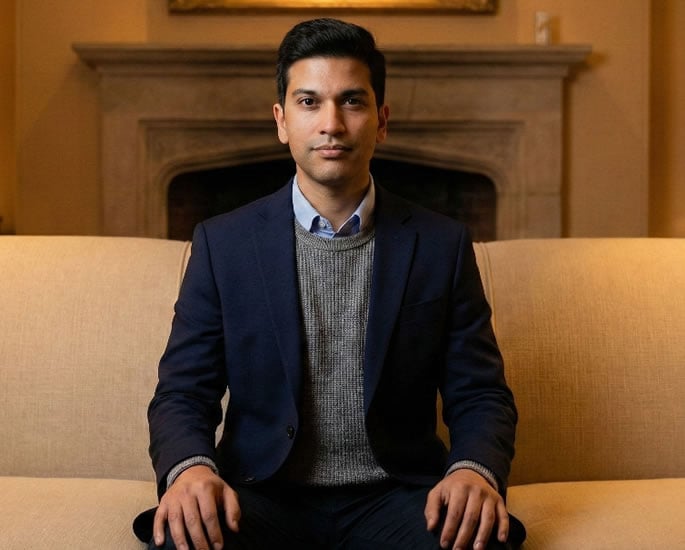
For Saurav Dutt, the implications of closer US-India relations extend directly to Britain because “both countries are central to its strategic interests”.
Dutt believes Britain should position itself as an active participant in the evolving relationship rather than simply observing the shift in global influence.
He identifies trade, defence, technology and the Indo-Pacific as areas where Britain can develop deeper engagement with India.
Dutt’s work on Balance of Power has received recognition as he has been shortlisted for the Asian Achievers Awards, which will be held on September 18.
He says: “Being shortlisted by such an illustrious award and body as the Asian Achievers Award means a great deal to me because, as a British Indian who was born in India, I feel both honoured and almost feel duty-bound to talk about these issues.
“To talk about them within the context of international affairs also means that I am hopefully promoting the idea of being politically literate and politically astute, which is so important for current and future generations of British Indians.”
Saurav Dutt also sees a role for British Asian writers in broadening discussion about India beyond cultural subjects.
He continues: “It’s vital British Asian writers contribute in the arena of international politics, especially pertaining towards India and its relationship with our island, because it’s really important to have that connection to India.”
For Dutt, that responsibility extends to keeping younger generations engaged with India and its changing position in the world.
He says: “And as India marches towards its extremely ambitious, but not entirely unrealistic, goal of becoming a superpower, it needs to learn from arguably the most preeminent superpower in the world.”
Ultimately, Dutt wants Balance of Power to encourage readers to look beyond the headlines surrounding Trump and Modi and examine the strategic interests bringing the two countries together.
“What I want readers to understand, for better or worse, is that there is true commonality between two powerful personalities who one might not think would have any common interests at heart.”
On a world after Trump and Modi’s leaderships are over, Dutt says his book explores what may happen:
“What will happen after Trump and Modi are no longer premiers, that’s a much more difficult question to tackle.
“But hopefully this book explores what may potentially happen after Trump and Modi have both walked off into the distance.”
Saurav Dutt’s analysis in Balance of Power places the relationship between Trump and Modi within a wider shift in how India and the United States approach national interest, sovereignty and their global influence.
While their personal relationship remains significant, the developments explored in Balance of Power demonstrate why the partnership cannot be understood through political personalities alone.
The changing dynamic also has implications for Britain as India’s economic, diplomatic and strategic importance continues to grow.
For British Indians, Dutt sees greater engagement with these developments as an important part of understanding both their heritage and Britain’s future relationship with India.
The book ultimately highlights how decisions made in Washington and New Delhi can shape political and economic realities far beyond the two countries.