
















































"I had stumbled upon a gold mine."
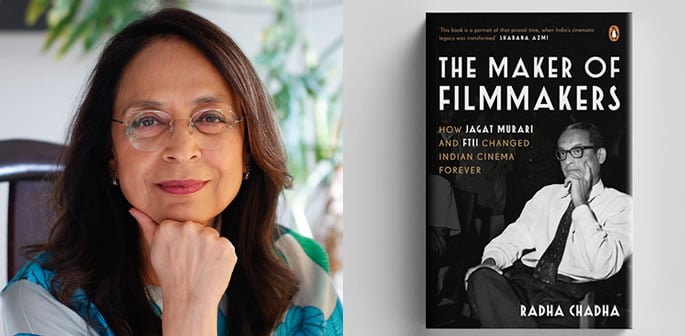
Radha Chadha’s The Maker of Filmmakers explores the remarkable life and legacy of her father Jagat Murari, who played a pioneering role in the Film and Television Institute of India (FTII).
The book looks beyond Indian cinema’s biggest stars to examine the educator and institution-builder who helped shape generations of filmmakers.
Through Murari’s journey, Chadha traces the evolution of Indian cinema and the transformative role FTII played in developing talent across acting, directing, cinematography, sound and editing.
Drawing on Murari’s extensive personal archive and more than 100 interviews, the book also places his work within the wider cultural and creative development of post-Independence India.
His influence can be seen across the Indian New Wave, regional-language cinema, television and the industry’s growing international presence.
In an interview with DESIblitz, Radha Chadha discusses The Maker of Filmmakers, her father’s extraordinary career and the enduring influence of FTII on Indian cinema.
Discovering Jagat Murari’s Story
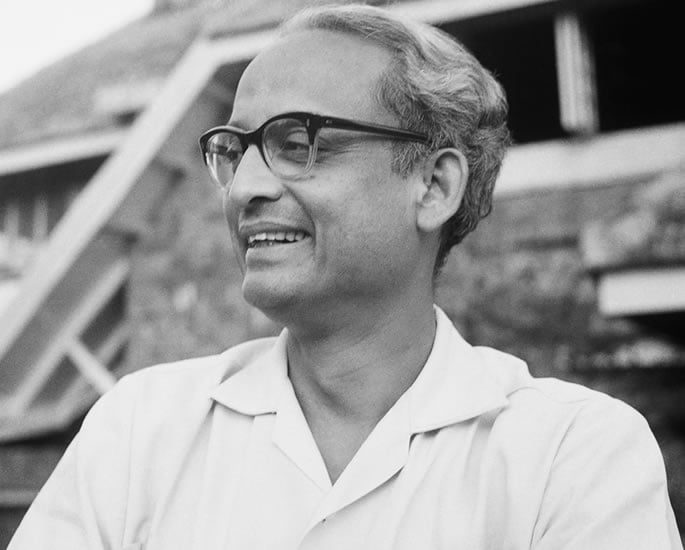
The Maker of Filmmakers was an unexpected departure from Radha Chadha’s previous work in branding, marketing and consumer culture.
The book emerged from a deeply personal discovery after the death of her father, Jagat Murari, whose career was closely intertwined with the development of Indian cinema.
She says: “It’s actually quite an unusual story because writing this book was never part of my plan.
“My previous work has been in branding, marketing and consumer culture, and my earlier book explored luxury brands in Asia. Cinema wasn’t the obvious next step.”
A few years after her father passed away, Chadha helped her mother clear his study.
What she found transformed the project into an extensive investigation of Murari’s life and the institutions he helped establish:
“She hoped we would sort through his papers and discard most of them.
“Instead, I found three steel cupboards, old Godrej almirahs, filled with meticulously preserved personal files, diaries, letters, speeches, film scripts, and photographs spanning almost his entire adult life.
“As I began reading those papers, I realised I had stumbled upon a gold mine. I was looking at India’s cinematic history unfolding day by day through the eyes of a man who had shaped it.
“The material was very rich. I could hear his voice, his hopes, frustrations, triumphs, doubts, coming alive on every page.”
“How he went from being a ‘filmmaker’ to a ‘maker of filmmakers’. How he built the Film and Television Institute of India (FTII) from the ground up, and turned out legends like Shabana Azmi, Jaya Bachchan, Adoor Gopalakrishnan, Subhash Ghai, Mani Kaul, Shatrughan Sinha, and scores more.”
Those alumni would go on to influence acting, directing, cinematography, sound, editing, regional cinema, television and the Indian New Wave.
For Chadha, however, the significance of Murari’s story went beyond the careers of individual graduates.
Building FTII against the Odds
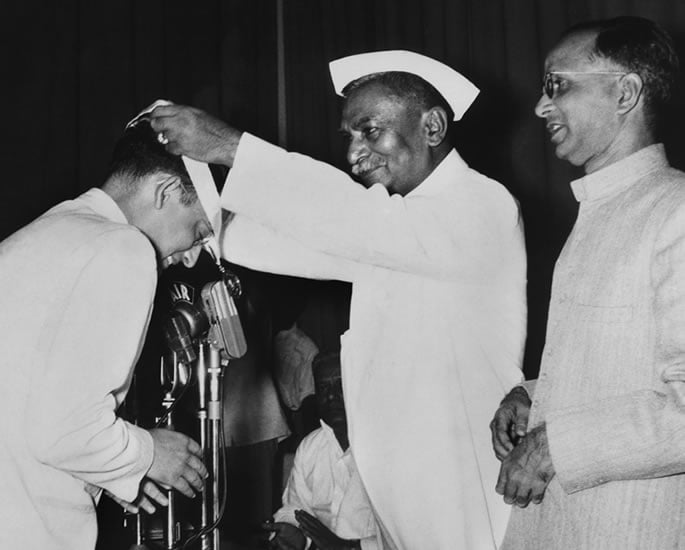
Jagat Murari’s leadership of FTII forms one of the central strands of the book.
Chadha says: “What impressed me was the sheer scale of his ambition. He wasn’t simply trying to build a film school; he wanted to transform Indian cinema by creating an entirely new kind of filmmaker.
“When Jagat Murari took charge of FTII in the early 1960s, India was still a young nation with very limited resources.
“The institute had almost no academic infrastructure, hardly any teachers and an annual budget of just Rs. 3 lakhs, which was about £25,000 at that time.
“Yet he never allowed those constraints to define what the institute could become.”
Murari believed that improving Indian cinema required more than technical training, as Chadha elaborates:
“His vision was that India needed a different kind of cinema, one that was more original, technically accomplished and rooted in authentic storytelling.
“To achieve that, he believed India first needed a different kind of filmmaker.
“He developed a ‘secret formula’, which I unpeel in the book, for making brilliant filmmakers with unfaltering consistency.”
His response to FTII’s lack of teachers demonstrated the practical side of that vision. Rather than allowing a shortage of faculty to limit the institute, he persuaded leading practitioners to teach students directly.
Chadha adds: “For example, in the early years, he faced a dire shortage of teachers, so dire that he could barely keep the school running. So, what did he do?
“He persuaded some of the world’s best filmmakers to teach as visiting faculty.
“Directors such as David Lean, Satyajit Ray, Raj Kapoor, Ismail Merchant and James Ivory, and many others walked through the doors of FTII, giving students direct access to some of the world’s finest creative minds.
“Cinematographers like R.D. Mathur (of Mughal-e-Azam fame) and Subrata Mitra (who was Ray’s cameraman) came.
“Actors like Kamini Kaushal and Balraj Sahni, both top of their game then, came. In the academic year 1963-64, he pulled in fifty such guest lecturers.”
Murari’s ability to turn ambition into practical action is what Radha Chadha sees as one of his defining qualities.
“For me, his greatest strength wasn’t simply having a vision; it was his ability to make that vision real despite enormous limitations. That’s a quality that feels just as relevant today as it did sixty years ago.”
The FTII Influence across Indian Cinema
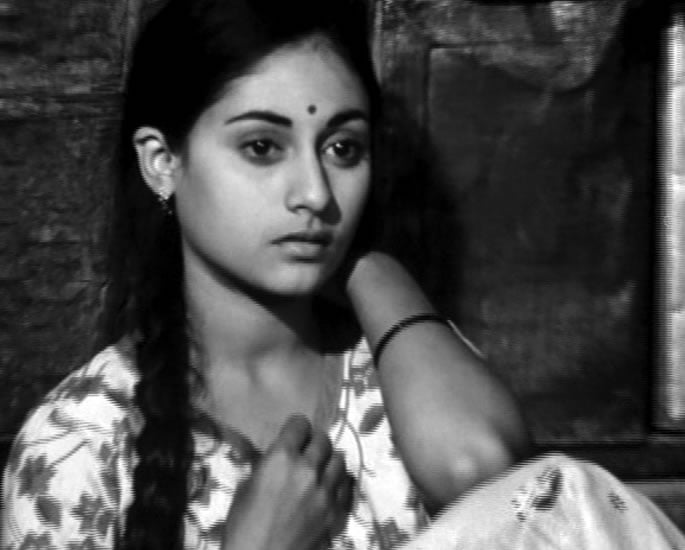
Jagat Murari’s career also provides Radha Chadha with a way of tracing the development of Indian cinema itself.
Chadha says: “Interestingly, I never really saw those as two separate stories.
“Jagat Murari’s life and the evolution of Indian cinema are so closely intertwined that one naturally leads into the other.
“Professionally, the same thing happened. He joined the Films Division soon after it started.
“He not only built FTII, but he also founded the National Film Archive of India, and later the Directorate of Film Festivals.
“Through Films Division, Jagat Murari also became part of Jawaharlal Nehru’s vision of using cinema to help a newly independent nation understand itself. That experience deeply shaped the way he later approached FTII.”
FTII subsequently became synonymous with the Indian New Wave, but Chadha stresses that its contribution was much broader than that movement:
“People often associate FTII with the Indian New Wave cinema, and rightly so, because FTII alums were the beating heart of that movement.
“Uski Roti, directed by Mani Kaul, marks the start of the New Wave.”
“Cinematographer K.K. Mahajan shot many of these films, bringing an exquisite visual language to Indian cinema.
“Shabana Azmi and Naseeruddin Shah acted in multiple such films, giving natural, nuanced portrayals, using the Method Acting skills they had learned at FTII.”
She said Murari’s philosophy encompassed the full range of Indian filmmaking rather than privileging one category.
“But FTII’s contribution and Jagat Murari’s vision was much broader than the New Wave. He believed every form of cinema mattered.
“Commercial films, regional language cinema, documentaries, television, advertising films – they all shaped India, and all of them deserved better storytelling and higher creative and technical standards.”
That philosophy helped graduates move into different parts of the industry, from mainstream and regional cinema to advertising and television.
The FTII’s influence remains visible through awards, festivals and film education.
Radha Chadha notes: “FTII alumni routinely win a very large number of awards.
“National Award functions are only half-kiddingly called FTII reunions, because almost always nearly half the awards are won by FTII alums.
“At an international level too, alumni like Payal Kapadia have ruled at festivals like Cannes, where she has won two awards, and headed one jury.”
The influence also extends into the next generation through India’s expanding network of film schools.
“Film schools have now proliferated across India, and almost always the majority of teachers at any given school are FTII alumni.
“The film school, Whistling Woods, which ranks among the top, was founded by FTII alumnus Subhash Ghai, and has a number of FTII alumni on its roster of teachers.
“In that sense, the quintessential FTII philosophy of excellence continues to spread to future generations. And with it, Jagat Murari’s vision.”
From FTII to Indian Cinema’s Global Rise
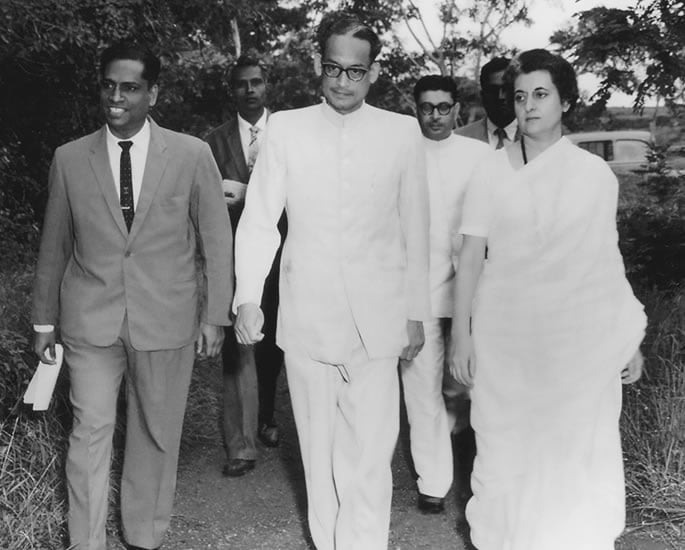
For Radha Chadha, FTII’s influence can also be connected to the growing international recognition of Indian cinema:
“Institutions like FTII gave generations of filmmakers the confidence to tell authentic stories rooted in their own experiences.
“That spirit of originality continues to shape how Indian cinema is recognised around the world, and I believe we’re only beginning to realise its full global potential.
“FTII helped establish the idea that filmmaking could be approached as an art form and it is these art films, almost always independently produced, that win at international festivals.”
Recent Cannes success provides several examples.
“At Cannes, a couple of years ago, not only did Payal Kapadia’s All We Imagine as Light win the Grand Prix, but also Chidananda S Naik’s short film Sunflowers Were the First Ones to Know won the first prize (La Cinef), and Santosh Sivan was honoured with the Pierre Angénieux ExcelLens in Cinematography award. All three are FTII alums.”
The international conversation around Indian cinema is also becoming more diverse, as Radha Chadha details:
“What encourages me today is that Indian cinema is no longer viewed through a single lens.
“International audiences are discovering Malayalam films, Tamil cinema, Marathi cinema, documentaries and independent films alongside Bollywood.
“They’re beginning to appreciate that India isn’t one cinematic tradition but many.”
Chadha has seen that interest personally while speaking to students abroad.
She reveals: “I recently spoke to film students at NYU’s Tisch School of the Arts, and one of the questions I was asked most often was, ‘How do we break into Bollywood?’ That reflects how India’s film industry is increasingly seen as a place of creative opportunity.”
The Importance of Finding Your Own Voice
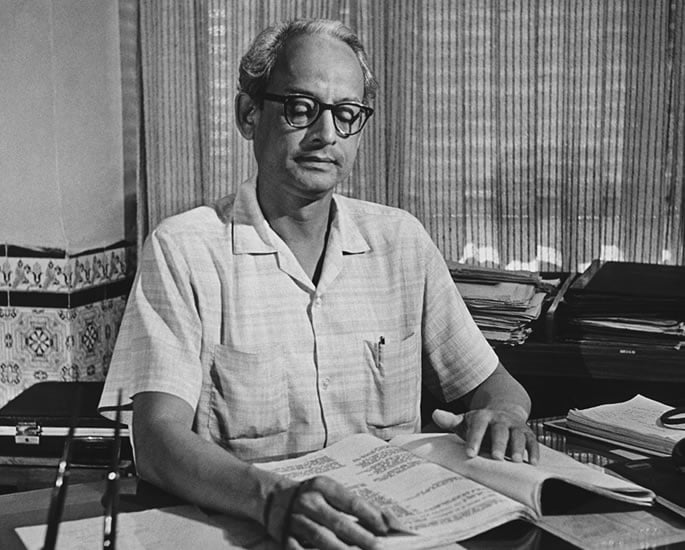
For Radha Chadha, the creative philosophy behind Jagat Murari’s teaching remains relevant to filmmakers and storytellers today.
She says: “If I had to distil Jagat Murari’s philosophy into one idea, it would simply be this: find your own voice.
“He believed that every artist was unique.
“When students arrived at FTII, many naturally wanted to imitate their idols.
“If you were an acting student, perhaps you wanted to become the next Dilip Kumar. If you were a director, you might dream of making films like Guru Dutt or Mehboob Khan.
“His role, as he saw it, was to gently dismantle that instinct.”
That approach was reflected in Murari’s teaching exercises.
“Jagat Murari also taught the Direction class, and I found his teaching notes illuminating.
“Some of the exercises he gave his students had nothing to do with filmmaking. Instead, they were about understanding their own selves.
“What kind of storyteller are you? What do you believe in? What values do you cherish?
“He felt that unless you understood yourself, you couldn’t possibly create authentic art.”
Adoor Gopalakrishnan, one of Murari’s former students, later articulated a similar principle at one of Chadha’s book events.
Radha Chadha’s own career provided a different perspective on the same question, as she says:
“Very much so, although perhaps not in the way people might expect.
“When I first considered writing this book, I actually hesitated because it was unlike anything I had written before. It spans almost eight decades and brings together biography, history, cinema and culture.
“That felt quite different from writing about branding or even my earlier book, The Cult of the Luxury Brand.
“But over time I realised there was a common thread running through all my work.
“Whether I’m writing about brands, cultures or filmmakers, I’m always asking the same question: what makes people think and behave the way they do?
“Writing The Maker of Filmmakers required the same mindset.
“I had to step back into post-Independence India and understand how a young nation imagined its future, how a creative institution develops its own culture, and what kind of environment allows originality to flourish.
“Most of all, I had to step into my father’s skin, and understand him!”
The research combined Murari’s archive with more than 100 interviews involving FTII alumni, colleagues, surviving family members and Chadha’s own family.
She interviewed her mother more than 40 times, while former students including Adoor Gopalakrishnan, Subhash Ghai and Method Acting teacher Roshan Taneja provided personal recollections.
The research also produced one particularly striking discovery, as Chadha reveals:
“As for surprises, my jaw dropped when I learned of his internship with the legendary Orson Welles.”
“I had no idea that as a student in America, he interned on the production of Macbeth in 1947, and closely observed one of cinema’s greatest directors at work.
“It’s a reminder that great filmmaking isn’t necessarily about having the biggest budget. It’s about imagination, discipline and being a master of your craft.”
For Chadha, Murari’s influence is ultimately a reminder that cinema is shaped by more than the people whose names appear most prominently on screen.
Teachers, mentors and institution-builders can influence generations through the opportunities they create for others.
“More than anything, I hope readers come away with a renewed appreciation for the leaders who quietly build institutions and create opportunities for others.
“We often celebrate the stars on screen, but cinema is also shaped by teachers, mentors and visionaries whose influence is felt through generations rather than individual films. Jagat Murari was one of them.”
She also wants The Maker of Filmmakers to place Indian cinema within the wider story of nation-building after Independence:
Chadha adds: “I also hope readers discover a different story of Indian cinema.
“It isn’t only the story of famous films or celebrated actors. It’s also the story of a newly independent nation that believed culture, education and creativity were worth investing in because they would shape the country’s future.”
That investment extended beyond physical infrastructure to the cultural life of a diverse nation:
“Bridges and roads, railways and shipyards are essential to build the physical infrastructure of a newborn nation.
“But to build its soul, especially that of a far-flung nation with very low literacy rates then – for that, you need cinema.
“Jagat Murari devoted his life to ‘making’ young filmmakers, who in turn, nurtured the soul of a young nation.”
Through Jagat Murari’s story, The Maker of Filmmakers offers a different perspective on how Indian cinema developed and the people who helped build its foundations.
His contribution extended beyond individual films, with his work at FTII helping generations of filmmakers develop their skills, creative identities and confidence.
Radha Chadha’s research also places that legacy within the broader cultural ambitions of post-Independence India, when cinema was viewed as an important part of shaping a new nation.
The book consequently brings greater attention to the teachers, mentors and institution-builders whose influence can continue through others long after their own careers have ended.
Murari’s legacy remains visible not only in the filmmakers he helped nurture, but in the continuing evolution of Indian cinema itself.