















































"He has immortalised himself through his work."
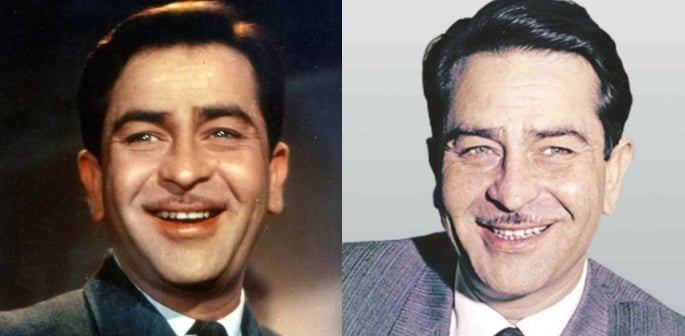
On December 14, 1924, a child was born in Peshawar, which is now in Pakistan.
On this humid day, Prithviraj Kapoor and Ramsarni Kapoor had a baby boy named Ranbir Raj Kapoor.
With the birth name of Shrishti Nath Kapoor, this newborn would go on to become one of the greatest actors and filmmakers Indian cinema has ever known.
When the boy was seven years old, Prithviraj Sahab became a famous actor in theatre and cinema.
Little did he know that his son had also inherited his flair for performing and natural talent for drama.
DESIblitz proudly presents a unique look at the life of the one and only showman – Raj Kapoor.
Early Life & Marriage
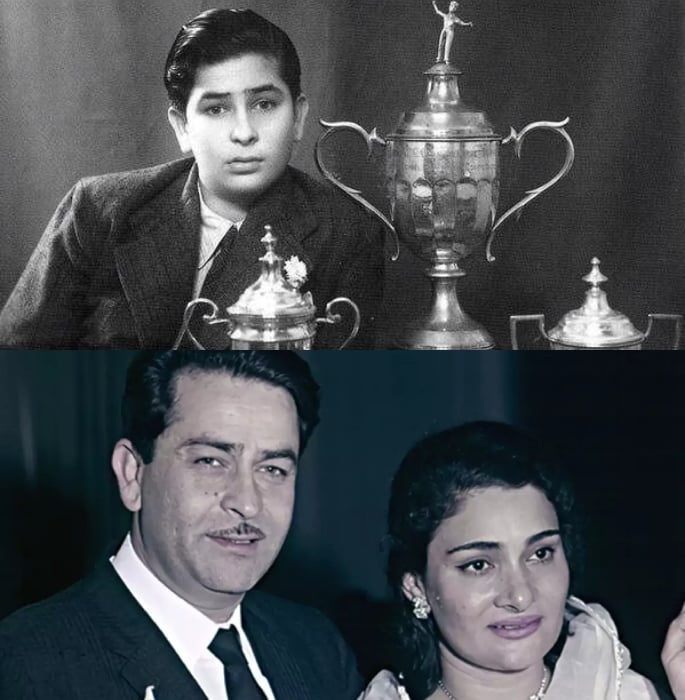 Growing up, studies did not interest Raj Sahab as much as drama did. He performed in several plays and shows at school.
For these performances, he won many prizes, demonstrating his talent and charisma.
He longed to be an actor like his father. His brother, Shashi Kapoor, narrates an interesting anecdote:
“He was a born showman.
“If Raj Kapoor got a firing or a yell as a kid, there came a natural reaction of weeping.
“He would go near a mirror and watch himself.
“My father said, ‘He will be fantastic’.
Prithviraj Sahab’s intuition proved to be accurate. At the age of 17, Raj Sahab sought the former’s consent to join a film studio.
His responsibilities included sweeping the floor, cleaning sets, and carrying items from one place to another.
Although he was the son of one of the biggest film stars of the time, Raj Sahab learned the ropes of being on a set from scratch.
This fuelled his passion for cinema, which would transform into a glowing career in later years.
In 1946, when Raj Sahab was in his early twenties, he married the 16-year-old Krishna Kapoor. She was Prithviraj Sahab’s first cousin.
Raj Sahab recalls that when he first laid eyes on Krishna, he saw a beautiful woman dressed in white strumming at the sitar.
The woman in white became a key fixture in Raj Sahab’s cinema.
The couple went on to have five children together – Randhir, Ritu, Rishi, Reema, and Rajiv Kapoor.
Entry into Acting & Direction
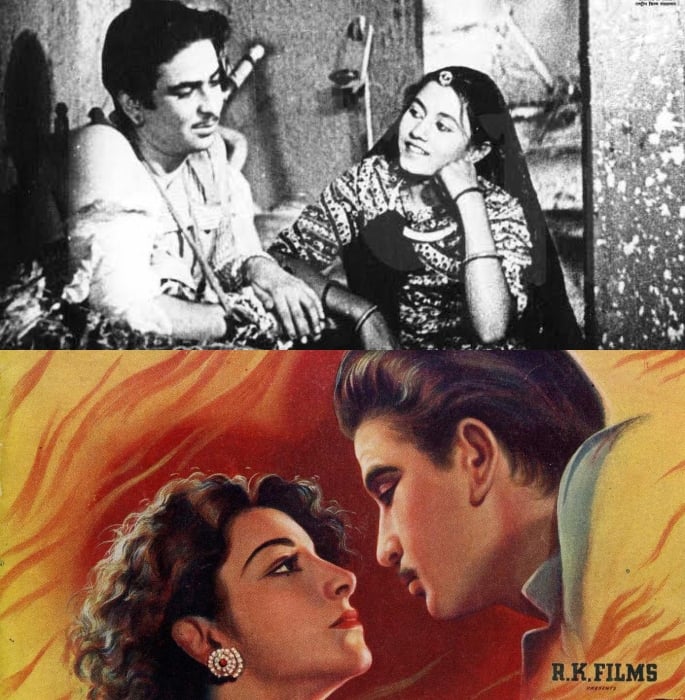 In 1947, Raj Sahab appeared in Kidar Nath Sharma’s Neel Kamal.
Also debuting with him in the film was none other than Madhubala.
The film did well at the box office, introducing the audience to Raj Sahab’s light-heartedness on celluloid.
However, acting was not enough. The very next year, Raj Sahab plunged into filmmaking.
With his production company, RK Films, he directed and starred in Aag (1948).
The film featured him opposite Nargis, with whom Raj Kapoor would share an everlasting and enduring association.
When Aag was released, Raj Sahab was 24 years old, thus becoming the youngest producer-director in the world at the time.
Aag was a gritty drama, displaying Raj Sahab’s penchant for making hard-hitting cinema that highlighted the underdog of society.
It also showed traces of the iconic filmmaker he would later become.
Evergreen Partnerships
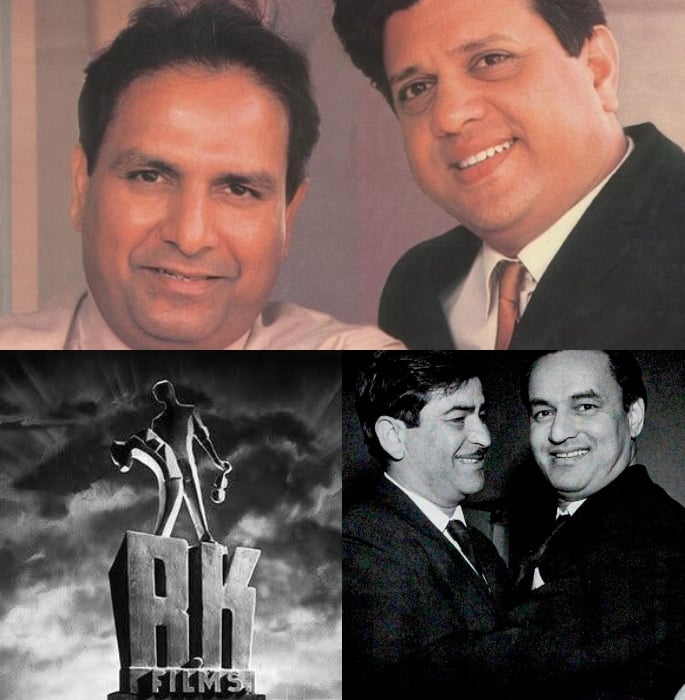 1949 was the year when Raj Sahab firmly cemented his dominant position in Bollywood.
That year, he starred in Andaaz – a film which reunited him with Nargis and also featured him opposite the legendary Dilip Kumar.
The two male actors had been good friends in their growing-up years, as they both hailed from Peshawar.
In Andaaz, Dilip Sahab (Dilip) and Raj Sahab (Rajan) must fight for the love of Nargis (Neena).
The audience loved seeing Raj Kapoor go head-to-head with Dilip Kumar.
This allowed Andaaz to become the highest-grossing Indian film of the time.
The same year, Raj Sahab returned to the director’s chair with Barsaat. He cast Nargis again in the movie.
The iconic shot of Raj Sahab holding Nargis as she leans backwards is the emblem of RK Films.
Barsaat was a massive success, breaking the records which were previously established by Andaaz.
The film also capitalised on an evergreen partnership between Raj Sahab and the music composer duo Shankar-Jaikishan.
This combination boasts many popular songs.
In Andaaz, music composer Naushad had Mukesh give playback for Dilip Kumar while Mohammad Rafi sang for Raj Sahab.
In Barsaat, Mukesh became Raj Sahab’s voice, beginning a collaboration that would enthral the nation for nearly 30 years.
Reflecting on his bond with Mukesh, Raj Sahab admits: “There was Mukesh – my soul, my voice. I was just a mere body.
“It is he who sang through the hearts of people all over the world. Not me. Raj Kapoor was an image – just a carcass of flesh and bone.”
The 1950s: Reigning Supreme
 In the 1950s, Raj Sahab enjoyed a wonderful heyday as an actor and filmmaker.
During the 1950s and 1960s, Raj Kapoor, Dilip Kumar, and Dev Anand were a triumvirate of stylish and captivating leading men.
Their films always reigned supreme at the box office.
In 1951, Raj Sahab made the blockbuster Aawaara, in which he starred alongside his father, Prithviraj Kapoor, for the first time.
Also featuring Nargis, the film is renowned for its dramatic conflict, gripping emotion, and unapologetic romance.
Aawaara also opened a plethora of fame for Raj Sahab in Russia and China.
The title song of the film, ‘Aawaara Hoon‘, became a rage in the countries and continues to be popular.
In 1955, Raj Sahab made Shree 420, in which he starred alongside Nargis again.
In the film, Raj Sahab underscores his devotion towards the Hollywood icon Charlie Chaplin.
His mannerisms, dialogue delivery, and code of clothing all mirror the acting legend, dubbing Raj Kapoor: ‘The Charlie Chaplin of India’.
In one of the evergreen songs, ‘Pyaar Hua Iqraar Hua‘, Raj Sahab includes his children, Randhir, Ritu, and Rishi, enhancing the relatability of the film.
After Jaagte Raho (1956) and Chori Chori (1956), Raj Sahab and Nargis ended their association.
The two stars are said to have had an affair while working together. However, Raj Sahab disputes this claim in a documentary.
He says: “I must say that Nargis contributed a lot to what RK [Films] is.
“But she was not meant to be my wife, and my wife was not to be my actress. Nobody cheated anybody.”
Nargis later married the actor Sunil Dutt, with whom she had three children, including Sanjay Dutt.
The 1960s: A Colourful Era
 In 1960, Raj Sahab won his first Filmfare ‘Best Actor’ Award for Anari (1959).
This was followed by another ‘Best Actor’ Filmfare win in 1962 for Jis Desh Mein Ganga Behti Hai (1960).
However, 1964 marked a significant transition for Raj Kapoor and RK Films.
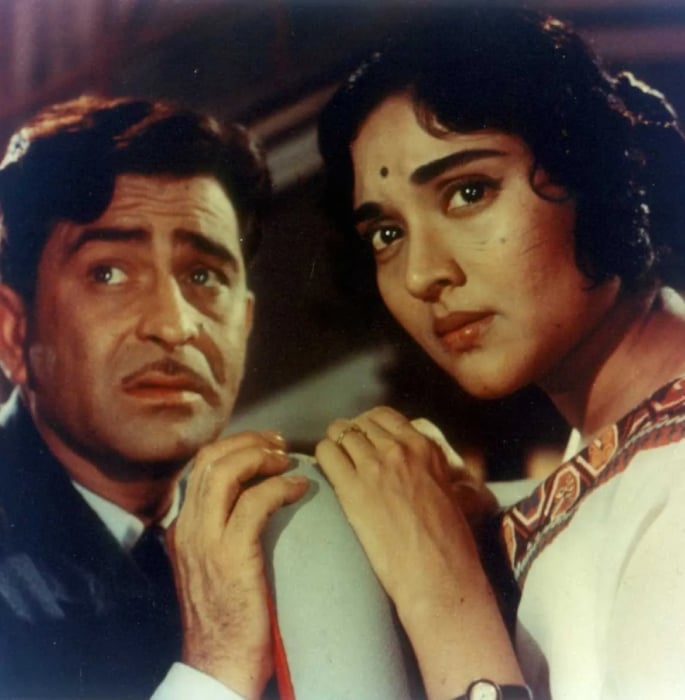
The release of Sangam marked Raj Sahab’s first film in colour. The film was the first to transport the Indian audience to abroad locations.
This magnum opus narrated the story of Sundar Khanna (Raj Sahab), who is in love with Radha (Vyjayanthimala).
However, he is unaware that Radha is already in love with his best friend, Gopal Verma (Rajendra Kumar).
In this bright and complex love triangle, Raj Sahab shows his magnificent acting and directing skills in top-class fashion.
Adorned with a beautiful soundtrack, Sangam is often counted as one of the greatest Indian films ever made.
However, the film was not free of controversy. During the making of the film, Raj Sahab was alleged to have engaged in an affair with Vyjayanthimala.
The actress denied this, deeming the scenario a publicity stunt by Raj Sahab.
But in his 2017 autobiography, Khullam Khulla, Raj Sahab’s son Rishi, confirmed that an affair took place between the actors.
In the 1960s, Raj Sahab put on considerable weight, which hindered his opportunities as a hero.
Sangam is, therefore, Raj Kapoor’s final success as a leading man.
The 1970s: A Pendulum of Success and Failure
 The 1970s saw Raj Kapoor step away from acting and make socially relevant cinema that centred on strong female characters.
He kicked off the decade with his dream project, Mera Naam Joker (1970).
This semi-autobiographical showpiece was in production for over six years. Raj Sahab also invested his fortune into its making.
However, when the movie was released, it was an unequivocal disaster.
The lengthy runtime of over four hours and unorthodox narrative were cited as reasons for its debacle.
Mera Naam Joker threw Raj Sahab into financial ruin. However, it has since been recognised as a cult classic.
Many classic film connoisseurs term the movie as a “misunderstood masterpiece”.
In 1971, Randhir Kapoor made his acting and directorial debut with Kal Aaj Aur Kal.
A moderate success, the film narrated the idea of moving with changing times through the lenses of three generations.
This film was unique in that it starred Prithviraj Kapoor, Raj Sahab, and Randhir in their real relationships onscreen.
Randhir’s wife, Babita Kapoor, also starred as his onscreen girlfriend.
Although Kal Aaj Aur Kal made up for the losses incurred by Mera Naam Joker, it was Bobby (1973) which truly saved the career of Raj Kapoor.
Marking the adult debut of his middle son Rishi Kapoor, Bobby was a young love story of two teenagers.
During an interview on Aap Ki Adalat in 2016, Rishi remarks:
“Before Bobby, actors in Indian cinema were called ‘men and women’. Afterwards, they came to be known as ‘boys and girls’.”
These words illustrate the stratospheric and seismic change that Raj Sahab brought into the industry with Bobby.
In this decade, Raj Sahab also helmed a daring Zeenat Aman in Satyam Shivam Sundaram (1978).
The 1980s: Final Years
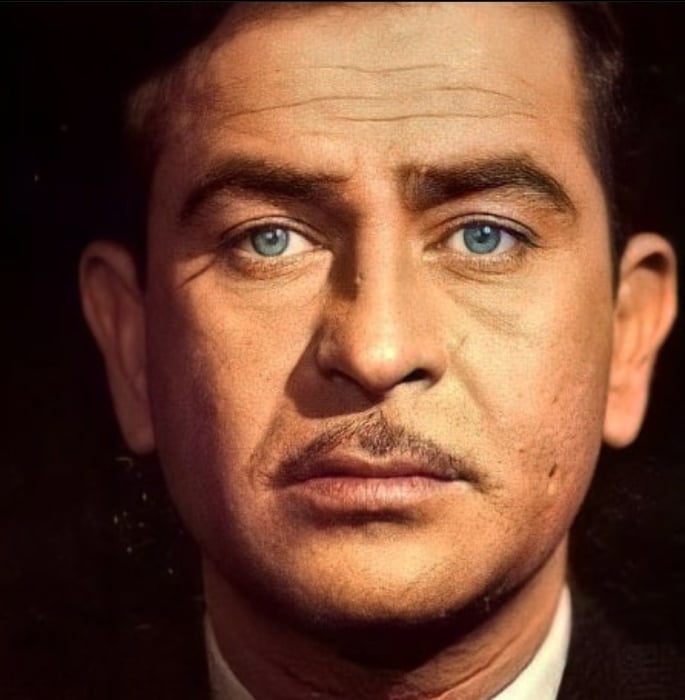
5 Unique Facts About Raj Kapoor
Raj Sahab began the 1980s with Prem Rog (1982), in which he directed his younger brother Shammi Kapoor, his son Rishi, and a young Padmini Kolhapure.
He followed this up with his final directorial venture, Ram Teri Ganga Maili (1985).
The film stars his youngest son, Rajiv Kapoor and a sensual Mandakini as Ganga.
Ram Teri Ganga Maili generated controversy for Mandakini’s scenes in which her breasts were visible.
However, Raj Sahab stays true to the story he wants to tell. The film is a Bollywood classic.
In the late 1980s, Raj Sahab contracted asthma, which impacted his respiratory system.
In May 1988, he was awarded the Dadasaheb Phalke Award – the highest honour of Indian cinema.
He fell ill at the ceremony and wore a ventilation mask. Breaking protocol, the President came to Raj Sahab while the latter was sitting in his seat.
Raj Sahab collapsed at the ceremony, never to recover. Raj Kapoor died on June 2, 1988, at the age of 63.
A Legend Lives On
At the time of his death, he was working on Henna (1991), which was completed by Randhir.
In his career, Raj Sahab won Filmfare ‘Best Director’ Awards for Sangam, Mera Naam Joker, Prem Rog, and Ram Teri Ganga Maili.
After he passed away, his friend and contemporary Dev Anand wrote:
“Raj Kapoor is not dead. He has immortalised himself through his work – his unparalleled contribution to the film industry.
“He will live forever in the hearts and minds of his audience. They will always see him smiling and laughing with pride.”
Raj Kapoor is undeniably one of the greatest cinematic minds in the Indian movie industry.
He has created and worked in unforgettable gems of cinema, pioneering change and shifting dynamics.
His representation of humanity shines through his films with an unmatched glean. They have given the audience several important lessons.
In December 2024, to commemorate his birth centenary, the Indian Film Heritage Foundation restored and re-released several of Raj Sahab’s classics.
These included Aag, Aawaara, Sangam, Mera Naam Joker, and Bobby, thereby keeping Raj Kapoor’s legacy alive.
In the aforementioned documentary, Raj Sahab states: “Films are my life. My benediction. They are the very breath of my soul.
“Over the years, I have grown to realise that I could not have known this beautiful world and its people as I have done through making films.”
That passion and commitment to cinema remains timeless. So, go ahead and celebrate the iconic showman, Raj Kapoor.