














































“We need real solutions. We need investment in prevention."
The murder of 18-year-old Henry Nowak has reignited debate over knife laws and kirpans in Britain, with questions being raised about religious exemptions and whether current rules go far enough to protect the public.
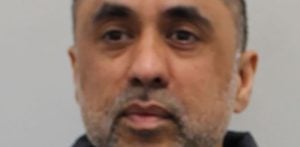
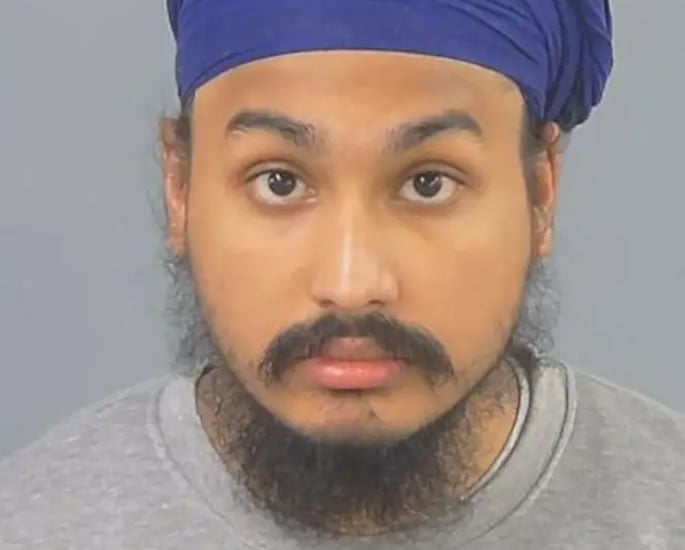
Henry was stabbed to death in Southampton by Vickrum Digwa, who told the court he was carrying a kirpan for religious reasons.
Digwa was wearing a small kirpan under his clothing but he was also carrying a much larger knife, which was used in the attack.
The case has sparked widespread discussion and has left Henry’s family demanding change, while politicians and community leaders try to balance public safety with religious freedoms.
As Digwa was convicted at Southampton Crown Court, Henry’s father Mark Nowak said outside court:
“People should not be able to walk openly through the streets of Britain carrying a 21cm blade.”
Since then, pressure has grown on the government to look again at how knife laws are applied in practice.
What began as a local tragedy has now become part of a national conversation about knife crime, policing and the limits of the law.
What the Law Says
In the UK, it is illegal to carry most knives in public without a valid reason. Anyone caught doing so can face up to four years in prison, an unlimited fine, or both.
But there are exceptions. The law allows knives to be carried for work, as part of national dress, or for religious reasons under Section 139 of the Criminal Justice Act 1988.
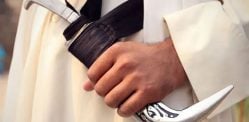
The Offensive Weapons Act 2019 further protects the right of Sikhs to possess and supply kirpans – a ceremonial sword or dagger that is one of religion’s five articles of faith.
During sentencing, Judge William Mousley explained how these rules apply in practice. He said someone carrying a blade of up to nine inches for religious reasons would not normally be prosecuted under current exemptions.
The blade Digwa used to kill Henry measured eight inches, and was therefore within that limit.
The judge was equally clear, however, that the privilege of carrying such a weapon “brings with it huge responsibility”, and that a kirpan should only ever be used offensively as a last resort, such as in an act of legal self-defence.
Digwa was carrying the small kirpan under his clothing and the larger dagger in a sheath around his neck.
There were reports that Digwa used a kirpan to stab Henry, however, the Sikh Federation (UK) said that was not the case.
Calls for Change
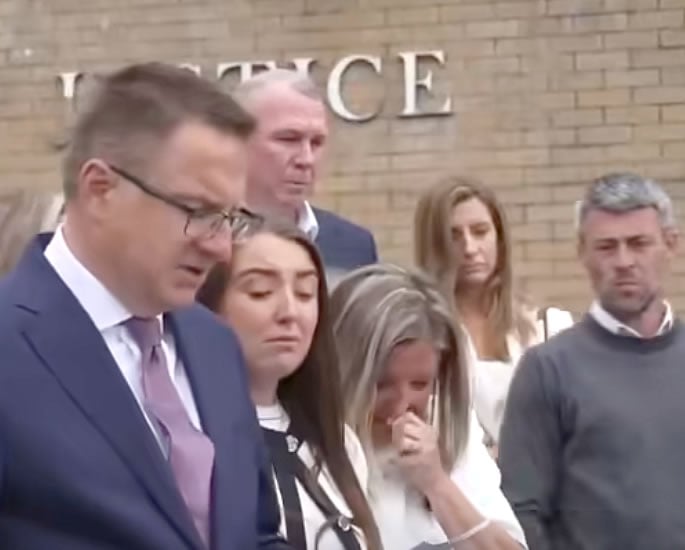
Henry’s father Mark Nowak has called for urgent reform and stronger action on knife crime.
He said he wants his son’s death to lead to change, adding:
“That is why we are calling on the government to treat knife crime as the national emergency that it is.
“We need real solutions. We need investment in prevention. We need stronger action on the sale, the ownership and carrying of all knives.”
He also said “common sense” should be applied to existing laws, arguing that people should not be allowed to carry blades of that size in public.
Hampshire and Isle of Wight Police and Crime Commissioner Donna Jones has backed calls for a review of knife laws.
She said: “If that knife was not legal on the 3rd of December 2025, I am certain that Henry Nowak would still be alive today.”
However, she stressed that any review should not affect religious practice:
“It is possible to carry a small kirpan dagger around the neck without infringing on someone’s right as a member of the Sikh community.”
What the Sikh Community has Said
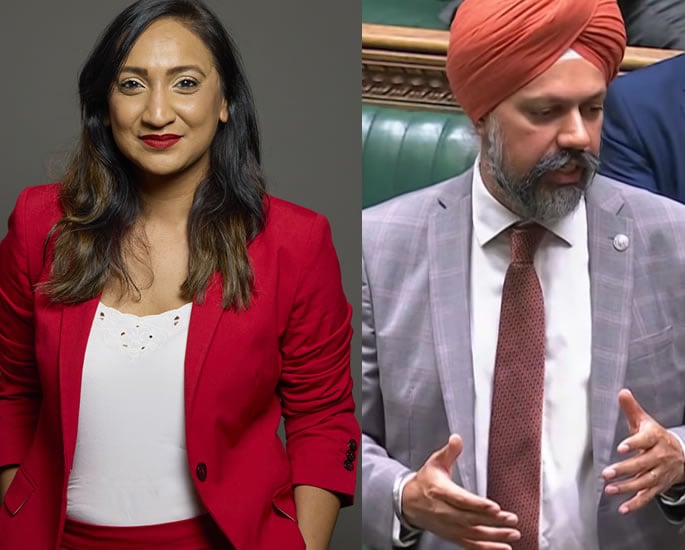
Southampton Test MP Satvir Kaur said the case should not be used to generalise about Sikh beliefs.
She said: “It is absolutely right that a single person’s evil act is not representative of an entire community.”
She has called for proper scrutiny of the case but stopped short of supporting a full overhaul of the law, instead focusing on ensuring the investigation is thorough and transparent.
Writing in The Telegraph, Labour MP Tan Dhesi said the case should not result in a kirpan ban and added:
“We cannot allow the Kirpan to be misrepresented in this way, and we must continue to uphold the right for Sikhs to practise their faith freely in an open, inclusive and fair society.”
The wider Sikh community has strongly condemned the killing and any attempt to use it to demonise the faith.
The judge noted in his sentencing remarks that Digwa was a member of the Nihang, a Sikh order with a tradition of carrying a second, visible blade, though he was clear it was not a strict requirement, noting that neither Digwa’s brother nor father were carrying one when they arrived at the scene.
The Sikh Federation (UK) said the weapon used was not a kirpan.
The Sikh Press Association said work is already under way to remind Sikhs in the UK about guidance on kirpan use and responsibility.
The Attorney General’s Office is reviewing whether Digwa’s sentence should be referred to the Court of Appeal under the unduly lenient sentence scheme.
The Independent Office for Police Conduct is also investigating the police response at the scene, including concerns raised about how Henry was treated as he lay dying.
Henry’s father has said he will continue pushing for change.
He said: “We want to use Henry’s heartbreaking story to make change for the better.
“No other family should experience the heartbreak and horror of losing a child to knife crime.”
For now, the case continues to sit at the centre of a wider debate about knife laws, religious exemptions and how to keep streets safe without undermining long-standing protections.