


















































"we've kind of taken the opposite action."
A video game’s price tag once told you almost everything.
In the UK, £70 usually means you are getting an “AAA” – a big-budget game made by a large team, built around cutting-edge graphics, sprawling worlds and dozens of hours of gameplay.
That logic is now under pressure.
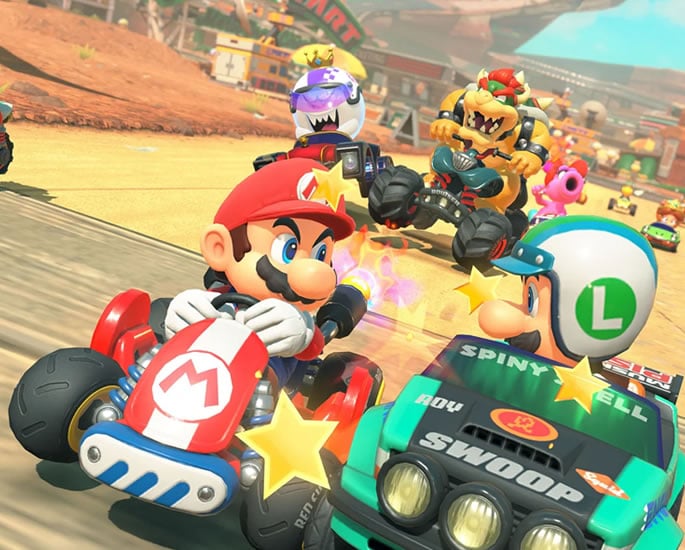
In 2025, Nintendo pushed major Switch releases such as Mario Kart World to £74.99.
There has also been speculation that Grand Theft Auto VI could be the first video game to be priced at £100, paving the way for others to either follow suit or at least contemplate a price hike.
But some recent titles lauded for their AAA-feel, such as ARC Raiders, Split Fiction and Clair Obscur: Expedition 33, have been modestly priced between £30 and £40.
Clair Obscur, in particular, has won a record 436 game of the year awards. Its publisher insists the lower price was not accidental. It was strategic.
This raises a pressing question for 2026: Is the blockbuster price tag still justified, or is the industry entering a new era of value-led pricing?
The £70 Benchmark
For over a decade, the AAA pricing model followed a predictable pattern. Development budgets increased. Teams expanded. Production values soared. Retail prices crept upwards.
Nintendo’s decision to price Mario Kart World at £74.99 set a new benchmark for first-party releases.
Although the GTA VI pricing is just a rumour, expectations remain high.
The game has thousands of developers attached and has already been delayed twice. Costs are significant. Anticipation is immense.
Blockbuster releases such as Resident Evil Requiem and GTA VI remain this year’s two most-anticipated games.
But rising production costs are not the only factor.
Hardware economics are also shifting. The price of RAM, a critical component in gaming hardware, has more than doubled since October 2025.
That increase filters into development, distribution and consumer spending decisions.
The result is a market testing the upper limits of player tolerance.
Value Over Spectacle?

Despite industry momentum toward higher prices, some gaming publishers are deliberately moving in the opposite direction.
Alexis Garavaryan, chief executive of publisher Kepler Interactive, told BBC News the pricing of Clair Obscur was intentional.
He said: “Ultimately, we’ve seen a number of larger companies increase prices quite regularly. And we’ve kind of taken the opposite action.
“We try to think, ‘What do we think the price should be?’ And then we price it lower.”
Garavaryan believes player priorities are shifting.
Traditional AAA value has centred on visual fidelity and scale. Bigger worlds. Longer campaigns. Higher graphical standards.
He argues that this formula may be weakening.
According to him, players are increasingly focused on how “exceptional” or “novel” an experience feels rather than the number of hours delivered.
A recent consumer study supports this pressure on pricing. Only 4% of US players buy a new game more often than once per month. A third do not buy new games at all while most are spending less.
In that context, Garavaryan said Kepler’s pricing strategy aims to create a sense of value.
He explained: “We want them to feel like we are respectful of their money, respectful of their time, and that fundamentally every time they buy a game from us, they’re getting a great deal.
“And we’re excited for players to be able to play five, six different experiences with the same amount of money than a traditional AAA game would bring them.”
The strategy reframes competition. Instead of one £70 purchase, players could explore multiple £30-£40 titles.
That model depends on attention, not spectacle.
Attention in a Crowded Market

Kepler Interactive is not a small independent studio. It is a collective of several independent developers operating under a shared publishing structure.
Rebekah Valentine, senior reporter at IGN, cautioned against reading Clair Obscur’s success as a full rejection of AAA.
She said its performance may not signal a “shift away from AAA expectations” entirely, highlighting the durability of live-service giants.
“Forever” AAA games such as Fortnite and Call of Duty, which are frequently updated and socially driven, “consistently have the most players, month after month after month”.
Valentine added: “There are dozens, hundreds of really unique, interesting games published every week, month, and year – most of which do not sell well nor do they gain this level of attention.”
Christopher Dring, editor-in-chief and co-founder of The Game Business, echoed that perspective. Smaller-budget titles can achieve breakout success. However, blockbuster franchises still dominate anticipation cycles.
He reframed the challenge as one of visibility rather than pricing:
“In a challenged attention economy, where consumers are awash with choice, doing something interesting is key.”
That assessment aligns with broader digital trends.
Streaming platforms, social media and subscription libraries compete for limited leisure time. Games are no longer just competing with each other. They are competing with everything.
Garavaryan appears aware of that dynamic. Kepler is planning to produce a physical magazine, an unusual move for a digital-first publisher:
“I think as people move away from the more physical, the more human touch, we want to find that as a place where we find a lot of comfort.
“It may not be for everybody, but we know that there’s an audience that’s going to care about well-crafted, human-crafted products.”
The emphasis is clear. Craft over scale. Distinction over spectacle. Human touch over algorithmic optimisation.
The AAA model is not collapsing.
The most anticipated titles of 2026 remain large-scale franchises with global reach. Yet the meaning of price is changing.
A £70 tag once guaranteed scale and a potential £100 title would test loyalty further.
At the same time, critically acclaimed games priced at £30 are proving that perceived value can outweigh raw production cost.
Players are buying fewer games. Hardware costs are rising. Attention is fragmented.
In that environment, pricing becomes more than a financial calculation. It becomes a signal of intent.
Blockbusters may continue to dominate headlines. But publishers willing to rethink value, novelty and respect for player time are reshaping the conversation.
The question is no longer whether £70 guarantees quality. It is whether scale alone still justifies the cost.