

















































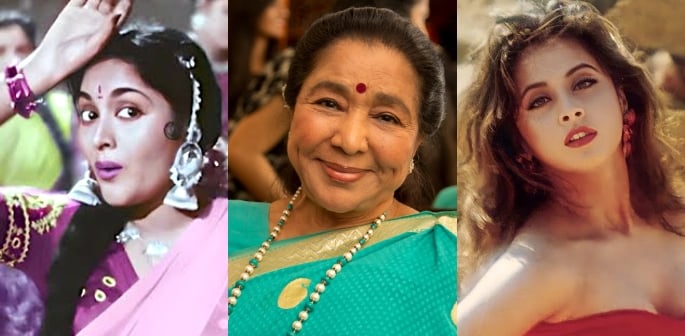
"She could sing any kind of song with ease."
Born on September 8, 1933, Asha Bhosle began singing at the age of ten.
She was the younger sister of Lata Mangeshkar, who was widely proclaimed as the ‘Nightingale of India’.
Through a career spanning over eight decades, Asha Ji sang thousands of soul-stirring songs, evoking emotion and melody in the hearts of many listeners.
In her career, she worked with top composers and sang duets and group songs with several generations of singers.
In 2011, the Guinness Book of World Records recognised Asha Ji as the most recorded singer in music history.
She is also one of the few Indian artists to be nominated for Grammy Awards.
Paying tribute to this brilliant singer, we proudly present 20 evergreen songs sung by Asha Bhosle.
Chhod Do Aanchal – Paying Guest (1957)
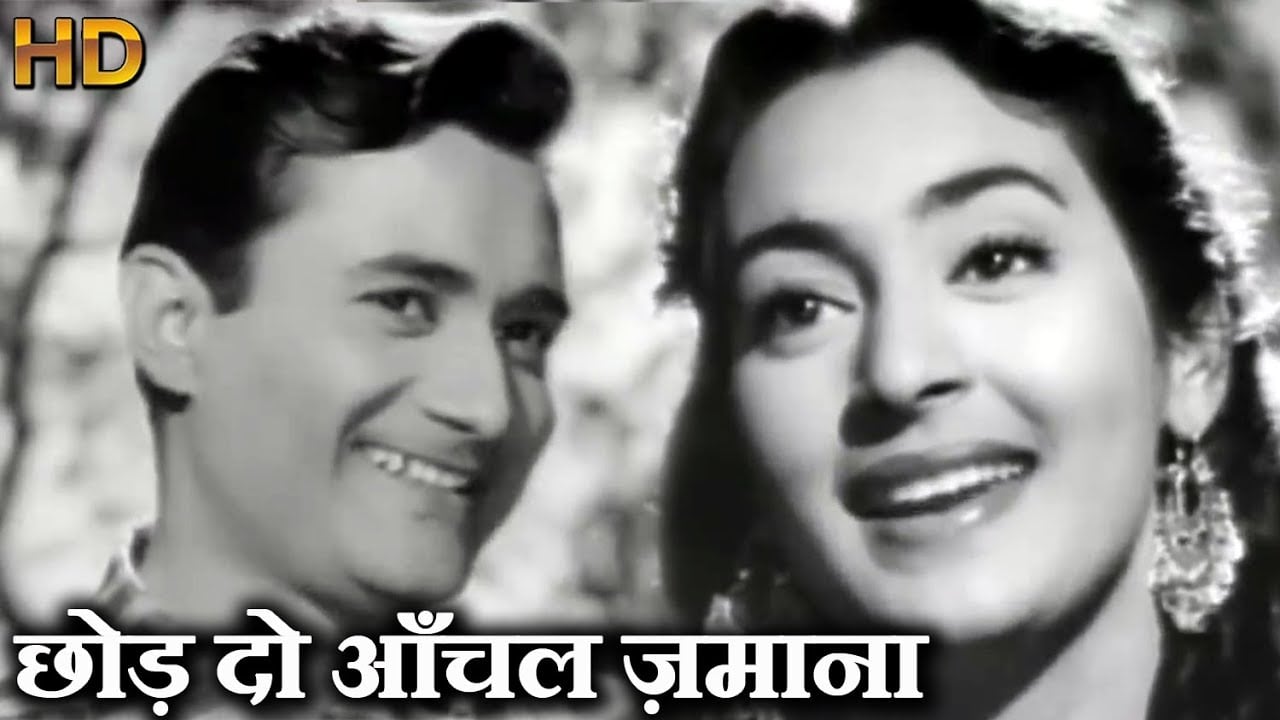
In the 1950s, female Bollywood singers, including Lata Mangeshkar, Geeta Dutt, and Shamshad Begum, were ruling supreme.
It was when the music composer, SD Burman, fell out with Lata Ji that he decided to give the relatively new Asha Bhosle more opportunities.
That came with Subodh Mukherjee’s film, Paying Guest, which featured Dev Anand (Ramesh Kumar) and Nutan (Shanti).
‘Chhod Do Aanchal’ is a lovely duet between Asha Ji and Kishore Kumar, where they prance through fields, celebrating their romance.
Compared to Lata Ji’s voice, Asha Ji is noticeably lively and a bit more eccentric.
That enables her to carve her own identity, which went on to enthral and amaze listeners.
Ude Jab Jab Zulfen Teri – Naya Daur (1957)
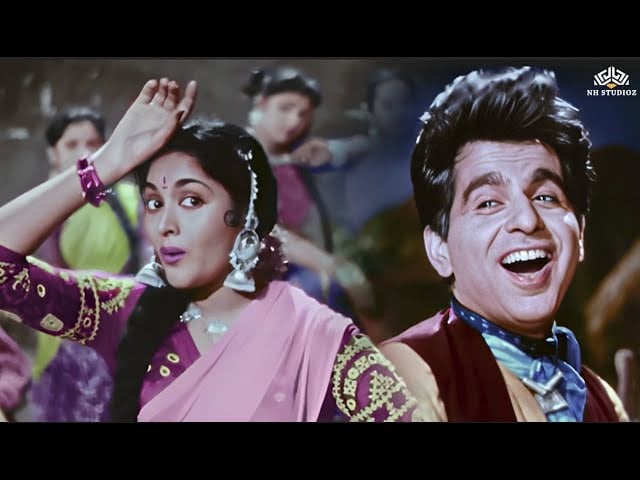
Along with SD Burman, another composer who believed in Asha Ji in the late 1950s was OP Nayyar.
In BR Chopra’s Naya Daur, the most famous number is ‘Ude Jab Jab Zulfen Teri’.
This charming duet between Asha Ji and Mohammad Rafi stars Dilip Kumar (Shankar) and Vyjayanthimala (Rajni).
In the song, the couple sing and dance, praising the beauty of one another.
Asha Ji’s fast pace, her control over the melody, and her confidence in front of the microphone make this song a joy to hear.
It became one of Dilip Sahab’s most famous songs and the number with which many associate his career.
For Naya Daur, OP Nayyar won the Filmfare ‘Best Music Director’ Award in 1958.
That would not have happened without the contribution of Asha Bhosle.
Sar Pe Topi Lal – Tumsa Nahin Dekha (1957)
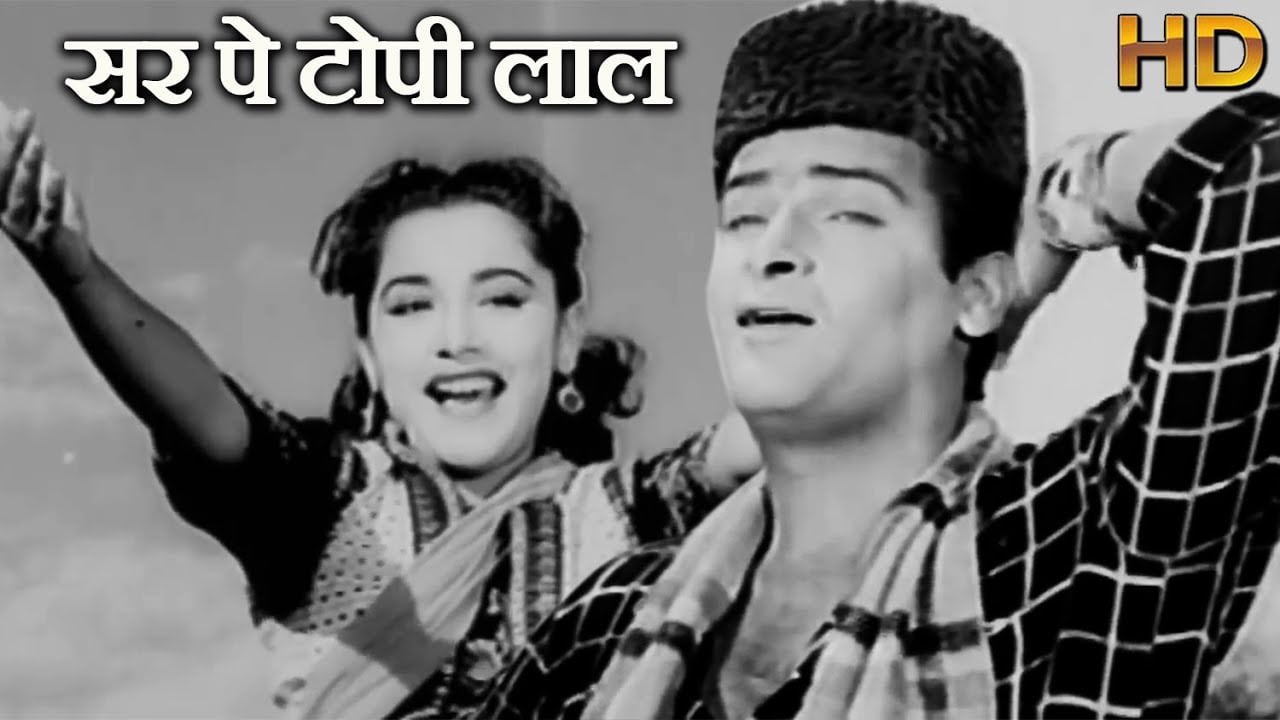
Continuing with the collaborations of Asha Bhosle, Mohammad Rafi, and OP Nayyar, we come to ‘Sar Pe Topi Lal’ from Nasir Hussain’s Tumsa Nahin Dekha.
The song showcases Shammi Kapoor (Shankar Bhat) praising the appearance of Ameeta (Meena).
Asha Ji’s daring voice and charm brighten Ameeta’s screen presence and show why she deserves a place in the legion of Bollywood’s iconic playback singers.
Tumsa Nahin Dekha was also the beginning of a successful association that Asha Ji shared with Nasir Hussain.
This film is usually considered the launchpad of the actor-singer combination of Shammi Kapoor and Mohammad Rafi.
However, Asha Ji undeniably makes a glorious impact on the soundtrack, leading the film to the success it ultimately attained.
Acha Ji Main Haari – Kala Pani (1958)

This song, adorned with fun and frolic, is another iconic duet between Asha Ji and Mohammad Rafi.
‘Acha Ji Main Haari’ shows Dev Anand (Karan Khanna / Karan Mehra) and Madhubala (Asha).
Asha playfully teases Karan as he laps it up happily.
The chemistry between Madhubala and Dev Sahab is supported by Rafi Sahab and Asha Ji’s seamless equation.
In his career, Rafi Sahab sang the most duets with Asha Ji, totalling 796 songs.
Speaking about Rafi Sahab, Asha Ji reminisces: “If anyone said something to him, he would stay quiet and would not answer.
“I would get irritated. I would ask him why he would not answer back. He would then tell me to let it go.”
This respect translates beautifully to the microphone, making ‘Acha Ji Main Haari’ the sterling song it is.
Aaiye Meherbaan – Howrah Bridge (1958)

This sultry number from Shakti Samanta’s Howrah Bridge presents a beautiful Madhubala (Edna).
She glides and sways across the floor, lip-syncing to Asha Ji’s sublime intonations.
As much as ‘Aaiye Meherbaan’ emboldens Madhubala’s beauty, it also capitalises on Asha Ji’s expert control over music.
Madhavi Pothukuchi, reviewing the music of Howrah Bridge on ThePrint, says:
“‘Aaiye Meherbaan’ is a showstopper, but also reveals more about Madhubala’s character — her intentions to make another man jealous by dancing.”
This gorgeous song is the jewel of Howrah Bridge.
It is said that Madhubala had a preference for Lata Mangeshkar’s voice.
However, Asha Ji’s contribution towards the actress’s career should never be denied.
Haal Kaisa Hai Janaab Ka – Chalti Ka Naam Gaadi (1958)
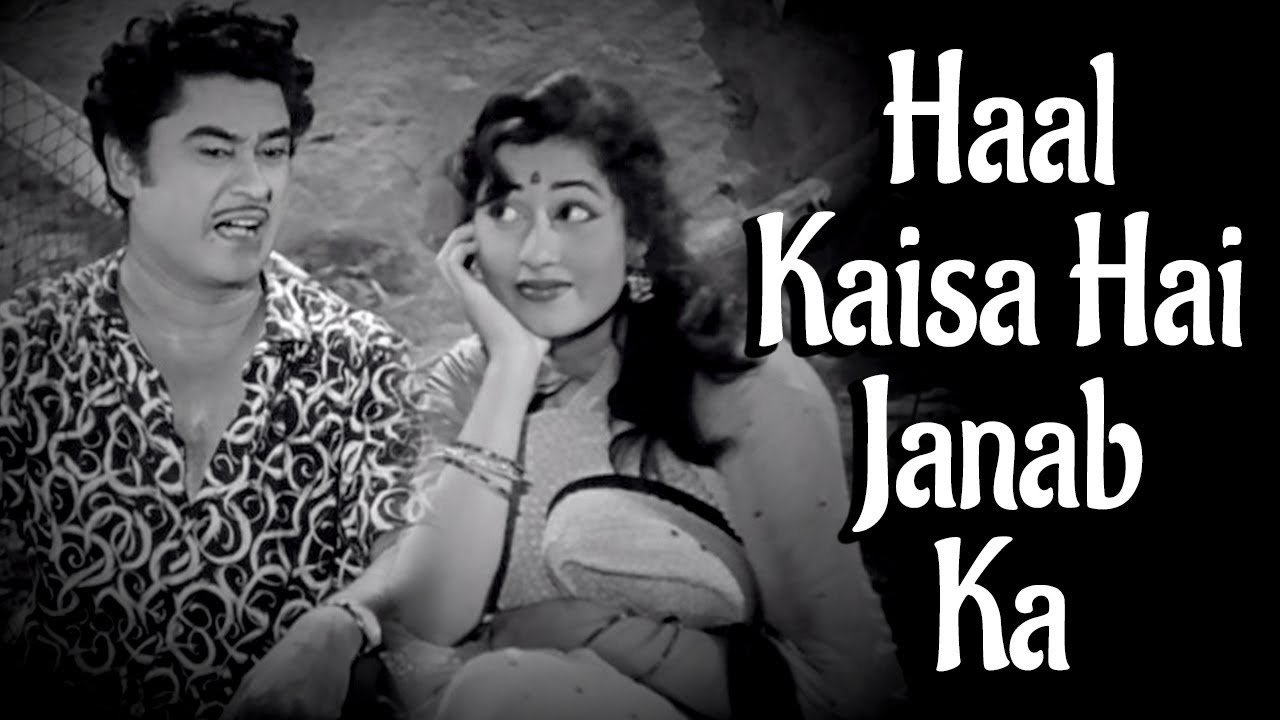
1958 was an immensely successful year for Madhubala. Another hit she starred in during this year was Chalti Ka Naam Gaadi.
The joyful song, ‘Haal Kaisa Hai Janaab Ka’, combines the voices of Asha Ji and Kishore Kumar.
It presents Kishore Da (Manmohan ‘Mannu’ Sharma) and Madhubala (Renu) singing.
Kishore Da’s yodelling and Asha Ji’s crooning make this song an instant classic.
Like Rafi Sahab, Kishore Da’s highest number of duets is also with Asha Ji.
They sang a staggering total of 697 songs together.
On India Today, Sandipan Sharma regards the number as “a fitting mirror” to the “turbulent lives” of the lead screen pair.
Using humour to portray this is the genius of Asha Ji, who outdoes herself while holding her own against Kishore Da.
Abhi Na Jaao Chhod Kar – Hum Dono (1961)
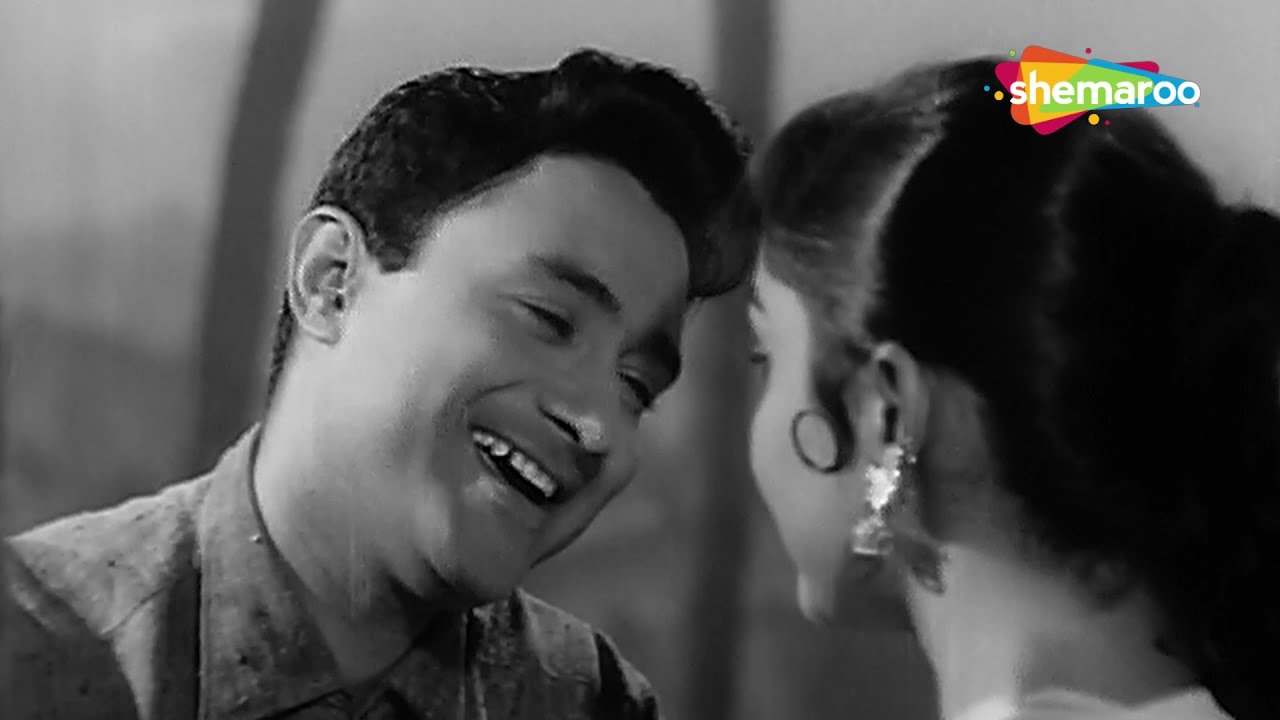
When it comes to romantic songs of Bollywood’s Golden Era, this number from Hum Dono is right up there with the everlasting classics.
Onscreen, Dev Anand (Capt. Anand) engages in romance with Sadhana (Mita).
‘Abhi Na Jaao Chhod Kar’ is a serene duet between Asha Ji and Mohammad Rafi.
The beautiful lyrics capture the innocence of closeness in love, which is brought to life by Asha Ji.
On Medium, a writer summarises: “This song is the story of every relationship – every lover will be able to relate to this song.
“I would like to end this blog with this saying — ‘Old is gold’.”
This song has often been categorised as the ultimate romantic track in Bollywood.
Listening to Asha Ji’s amazing vocals, it won’t be hard to see why.
Haye Re Haye – Kashmir Ki Kali (1964)

Filmed in alluring foreign locations, Shakti Samanta’s Kashmir Ki Kali is a picturesque piece of cinema.
However, the music of the film is in a league of its own. Every song is a chartbuster.
One of them, ‘Haye Re Haye’, is a scintillating duet between Asha Bhosle and Mohammad Rafi.
In the song, Shammi Kapoor (Rajiv) and Sharmila Tagore (Champa) dance gleefully and sing with gusto.
In an interview, Asha Ji revealed that Shammi Sahab taught her how to pronounce “Haye”, leading to a sparkling rendition.
Asha Ji comes neck-to-neck with Rafi Sahab, strengthening their rapport and delighting listeners.
OP Nayyar’s composition and Asha Ji’s boldness make ‘Haye Re Haye’ a signature song, without which Kashmir Ki Kali would be incomplete.
Aaja Aaja – Teesri Manzil (1966)
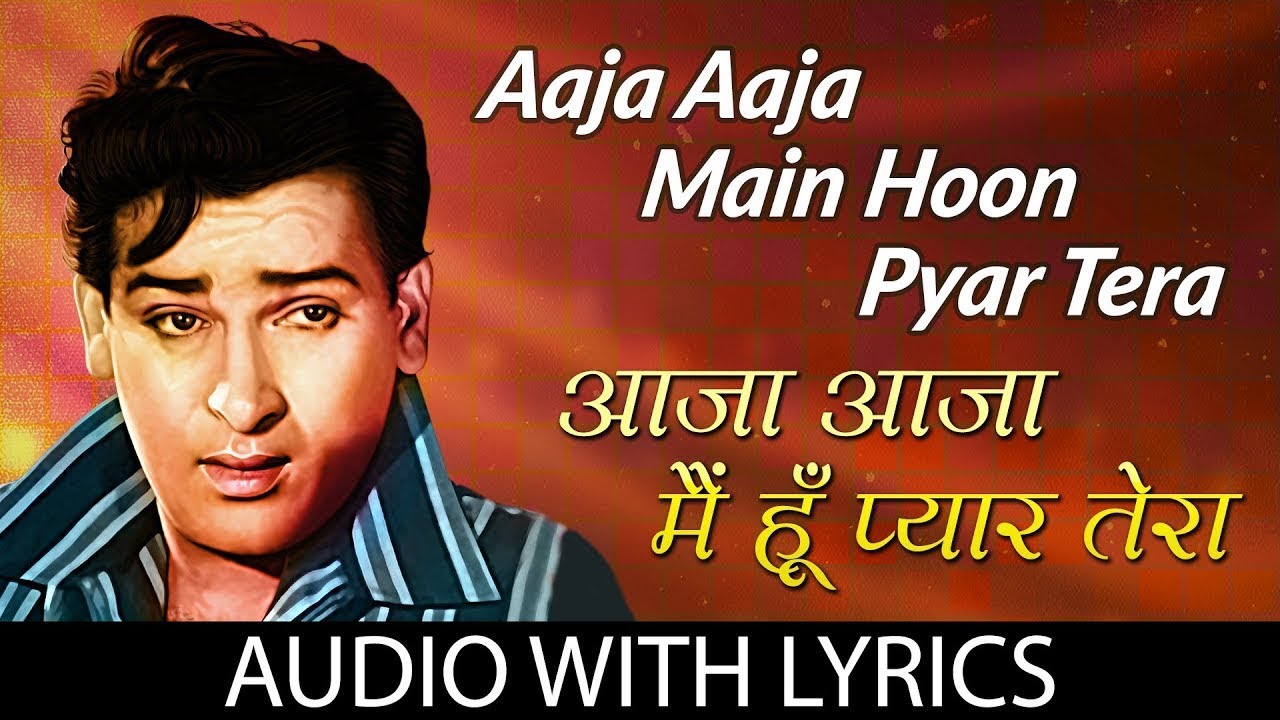
In Vijay Anand’s Teesri Manzil, we hear Asha Bhosle like we never have before.
The disco number sees Shammi Kapoor (Anil Kumar / Rocky) and Asha Parekh (Sunita) swaying with incomparable energy.
That energy is also apparent behind the microphones as Asha Ji and Mohammad Rafi create a masterpiece.
The sharp, fast breaths in the song are facets of the chartbuster.
As Asha Ji works under the baton of her future husband, RD Burman, she shows why she is such a legend.
She recalls: “When this song was recorded, Shammi Kapoor came to me and said, ‘Don’t do such a good job, or Asha Parekh will look better than me!'”
Shammi Sahab is also reported to have said: “If Rafi wasn’t singing for me, I’d have been happy to let Asha Bhosle do the job.”
All this information is a testament to Asha Bhosle’s talent, which makes ‘Aaja Aaja’ an immortal track.
Paan Khaye Saiyan Hamaro – Teesri Kasam (1966)

‘Paan Khaye Saiyan Hamaro’ is a dramatic yet melodious song from Teesri Kasam.
It shows a vivacious Waheeda Rehman (Hirabai) dancing in front of Raj Kapoor (Meeta, Hiraman).
Asha Ji’s rendition is used again in Hatyara (1977).
This song is Asha Bhosle at her finest, underscoring her penchant for inimitable sound and tempo.
During an interview, Shreya Ghoshal highlights the necessity for dramatisation in a song like this:
“I was 13, and I was singing a song by Asha Bhosle, which is all expression and full drama.
“Her singing style is full of drama.”
Shreya then proceeds to sing the song with the dramatic intonations, as it should be.
‘Paan Khaye Saiyan Hamaro’ is a difficult song to sing. Many have tried, but none do it better than Asha Ji.
Garibon Ki Sunno – Dus Lakh (1967)

From Dus Lakh, this emotional track evokes many feelings in the audience.
Asha Ji’s solo version is pictured on Seema Deo (Devki) as she holds the hands of two children.
The song illustrates the issue of poverty and how music provides a voice to those who have none.
Ravi’s composition is a wonder, and Asha Ji decorates it with her magical vocals.
For this rendition, she won her first Filmfare ‘Best Female Playback Singer’ Award in 1968.
This was a year when she faced tough competition from her sister Lata Mangeshkar.
The duo were indeed a force to be reckoned with, but Asha Ji’s ‘Garibon Ki Sunno’ proved untouchable.
Tik Tik Tik Chalti Jaaye Ghadi – Kal Aaj Aur Kal (1971)

This racy number occurs towards the climax of Kal Aaj Aur Kal, a film about experiencing time through the lenses of three generations.
‘Tik Tik Tik’ is a trio of Mukesh, Asha Bhosle, and Kishore Kumar.
It is pictured on Prithviraj Kapoor (Diwan Bahadur Kapoor), Raj Kapoor (Ram Kapoor), Babita (Monica), and Randhir Kapoor (Rajesh Kapoor).
Asha Ji provides playback to Babita, highlighting her verse with power and integrity.
The sincerity in her voice matches impeccably with Kishore Da’s playfulness and Mukesh Ji’s soul.
In this trio, she stands out with vigour.
The song is a delightful relief from the otherwise serious themes in the film.
Dum Maaro Dum – Hare Rama Hare Krishna (1972)

Asha Bhosle joins forces once again with RD Burman for Dev Anand’s Hare Rama Hare Krishna.
‘Dum Maaro Dum’ is the anthem of the film, focusing on Zeenat Aman (Jasbir ‘Janice’ Jaiswal).
She is an innocent girl, lured into drug use via Kathmandu’s hippie culture.
This song is still played frequently, and Asha Ji won a Filmfare Award for it in 1973.
Surprisingly, Dev Sahab did not include the full version of it in the movie, as he didn’t want it to overshadow the film.
But whenever Asha Ji has performed this song onstage, it has not been without thunderous applause and adulation.
For that, ‘Dum Maaro Dum’ is as much of a success as Hare Rama Hare Krishna.
Hone Lagi Hai Raat – Naina (1973)

For ‘Hone Lagi Hai Raat’, Asha Ji teamed up with the iconic Shankar–Jaikishan.
This song shows Padma Khanna, as a courtesan, dancing for Shashi Kapoor (Ravi Verma) onscreen.
Asha Ji’s luscious voice is a charming influence on the film, catapulting it to classic status.
A fan on YouTube comments: “Outstanding performance by the one and only Asha Ji. She deserves a [Bharat] Ratna.”
A review of Naina states: “The songs! This was another very strong point in the film.
“They were all wonderful – in melody, picturisation and general emotional oomph.
“The songs suddenly illuminated the story’s emotional undercurrents in startling clarity.”
For ‘Hone Lagi Hai Raat’, Asha Ji won another Filmfare ‘Best Female Playback Singer’ Award in 1974.
Ek Main Aur Ek Tu – Khel Khel Mein (1975)

This famous song from Khel Khel Mein is a fun duet between Asha Ji and Kishore Kumar.
It portrays Rishi Kapoor (Ajay Anand) and Neetu Singh (Nisha) as they dance.
Asha Ji’s fluctuation between whispering and belting is a lesson for all music aficionados.
‘Ek Main Aur Ek Tu’ is one of Rishi and Neetu’s most popular tracks as an onscreen couple.
Asha Ji and Kishore Da expertly bounce off each other to create an evergreen song that continues to be loved.
A review of Khel Khel Mein declares: “The music elevates the film to another level.
“Songs like ‘Ek Main Aur Ek Tu’ remain timeless hits.”
Yeh Ladka Hai Allah – Hum Kisise Kum Naheen (1977)

In Nasir Hussain’s Hum Kisise Kum Naheen, this chartbuster is a treat to the ears.
Onscreen, Tariq Khan (Sanjay Kumar) and Kaajal Kiran (Kajal Kisharina) wander and sing through fields.
The song is a lilting duet between Mohammad Rafi and Asha Ji. The latter’s high pitch brings the song to success.
Hum Kisise Kum Naheen is a marvel of music, with each song earning a place in the list of RD Burman classics.
But ‘Yeh Ladka Hai Allah’ champions romance and love with an original spark.
In an interview, Dev Anand is asked to choose between Lata Mangeshkar and Asha Bhosle.
He replies: “There are some songs that only require Asha Ji in the way she takes them to high pitches.”
Dev Sahab’s words are evident in ‘Yeh Ladka Hai Allah’.
Yeh Mera Dil – Don (1978)

Asha Bhosle’s sensual number from Don shows Helen (Kamini) trying to seduce Amitabh Bachchan (Don) onscreen.
According to Krishna Gopalan’s book, The Making of Don (2013), it is revealed that composers Kalyanji–Anandji felt that a racy track needed to be created for this film.
‘Yeh Mera Dil’ fulfils this criterion marvellously well. Asha Ji’s vocals are upbeat but also sensitive, setting the theme and pace of the movie.
Talking about her equation with the actress Helen, Asha Ji says:
“She was so pretty that the moment she would enter the room, I would stop singing and look at her.”
“In fact, I would request her not to come when I was recording!
“Do you know that famous story when I told Helen that I would have eloped with her if I were a man! That is true!”
For ‘Yeh Mera Dil’, Asha Ji won a Filmfare Award in 1979.
This song was recreated in Sunidhi Chauhan’s voice in Farhan Akhtar’s 2006 remake, but Asha Ji’s version remains the original entertainer.
Dil Cheez Kya Hai – Umrao Jaan (1981)

Muzaffar Ali’s Umrao Jaan features Rekha as the titular courtesan.
Asha Ji rules the soundtrack, bringing warmth and charisma to each of her renditions in the film.
‘Dil Cheez Kya Hai’, sung in Raga Bihag, is a calming, emotive song that displays Rekha in a space of peace.
Asha Ji brings tranquillity to the number, for which she won a National Award for ‘Best Female Playback Singer’ in 1981.
Speaking about how she prepared to sing this song, Asha Ji says: “For ‘Dil Cheez Kya Hai’, the image of Rekha came to my mind.
“Then I read the book, Umrao Jaan Ada, and I understood the situation. After imbibing all that, I became Umrao Jaan myself.
“I could translate her feelings in the situation into my rendition of the song.”
Tanha Tanha – Rangeela (1995)

Ram Gopal Varma’s Rangeela marked Asha Bhosle’s comeback to playback singing after a significant gap.
AR Rahman’s cool score reintroduces listeners to Asha Ji’s genius.
‘Tanha Tahna’ showcases an ethereal Urmila Matondkar (Mili Joshi) in a sensual avatar.
A fan comments: “When this song was recorded that time, Asha Ji was 64 years old.
“But she sang like a girl of 24 without any help from technology.
“Age is just a number – she proved it.”
For Rangeela, Asha Ji won the Filmfare Special Award in 1996.
As much as for its success and an incredible performance by Aamir Khan, Rangeela should also be celebrated for gifting Asha Ji with a new lease of fame.
Le Gayi – Dil To Pagal Hai (1997)

This zestful duet between Asha Ji and Udit Narayan is a diamond from Yash Chopra’s Dil To Pagal Hai.
It showcases Karisma Kapoor (Nisha) and Shah Rukh Khan (Rahul) dancing onstage.
Asha Ji once again proves that she can sing for younger actresses with equal grit.
The composition by Uttam Singh is powerful, bringing energy and faith to the film’s themes.
Paying tribute to her, Asha Ji’s co-singer, Udit Narayan, says:
“I consider myself fortunate to have had the opportunity to sing with her.”
“She could sing any kind of song with ease.”
That ease is resplendent in ‘Le Gayi’, which speaks volumes to Asha Ji’s contribution to Bollywood music.
Asha Bhosle’s musical journey reflects unmatched versatility, fearless reinvention and enduring charm.
From playful cabaret numbers to soulful tracks, her voice shaped generations of listeners.
These timeless songs are more than nostalgia.
They are a celebration of artistry, resilience and innovation, ensuring her legacy continues to inspire music lovers across the world, truly forever.